 Civilnet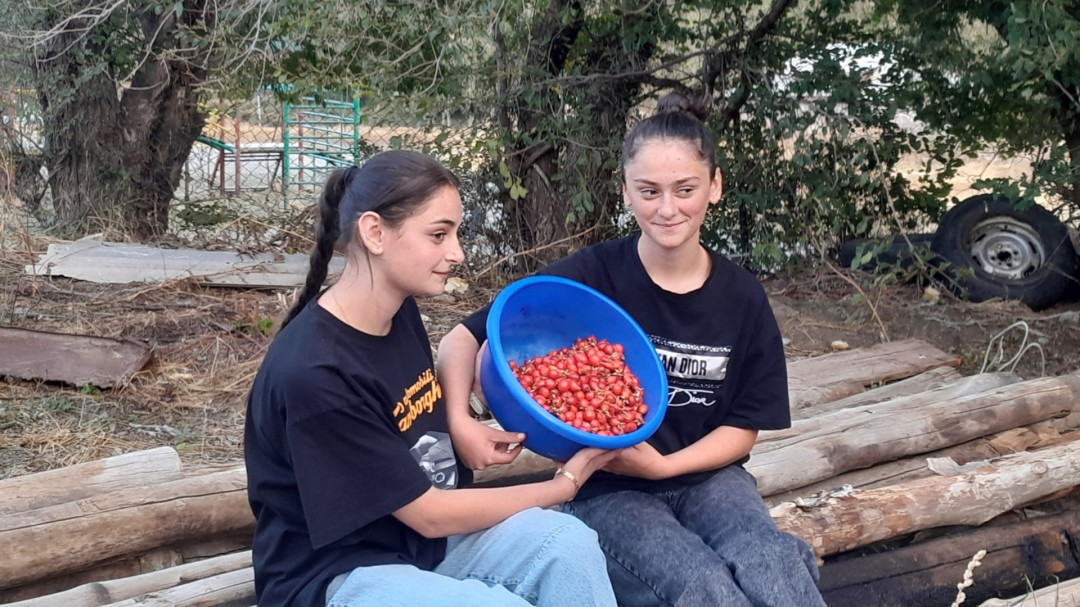
By Alik Garibian
Just about a kilometer from Armenia’s frontline with Azerbaijan sits Kutakan, a small village near Vartenis in the eastern Gegharkunik region. The village is little more than a scatter of houses, home to just a few dozen families. When asked about their daily hardships, residents speak of lack of groceries, pharmacies, and the absence of regular transportation even for local journeys.
It is here that fourteen-year-old Tatev Yessayan and her fifteen-year-old sister Satenik Yessayan live. The sisters describe themselves as somewhat activists in the village. Two years ago, with the help of their friends, they began gathering rosehips, or massour in Armenian, from the bushes around their village. They sold their harvest online and used the earnings to equip the village’s bomb shelters with first-aid supplies. The following year, they repeated the effort, this time buying a Christmas tree and decorations for a New Year celebration at the local school.
Despite the challenges surrounding her, fourteen-year-old Tatev Yessayan envisions her future firmly rooted in Kutakan. She plans to study pharmacy and return to the village to create a small business with her friends, harvesting medicinal plants from the surrounding mountains and turning them into remedies to sell locally.
“I don’t have dreams, only goals, achievable step by step,” she explains. “A dream is something you can only imagine, but a goal is something you can reach.”
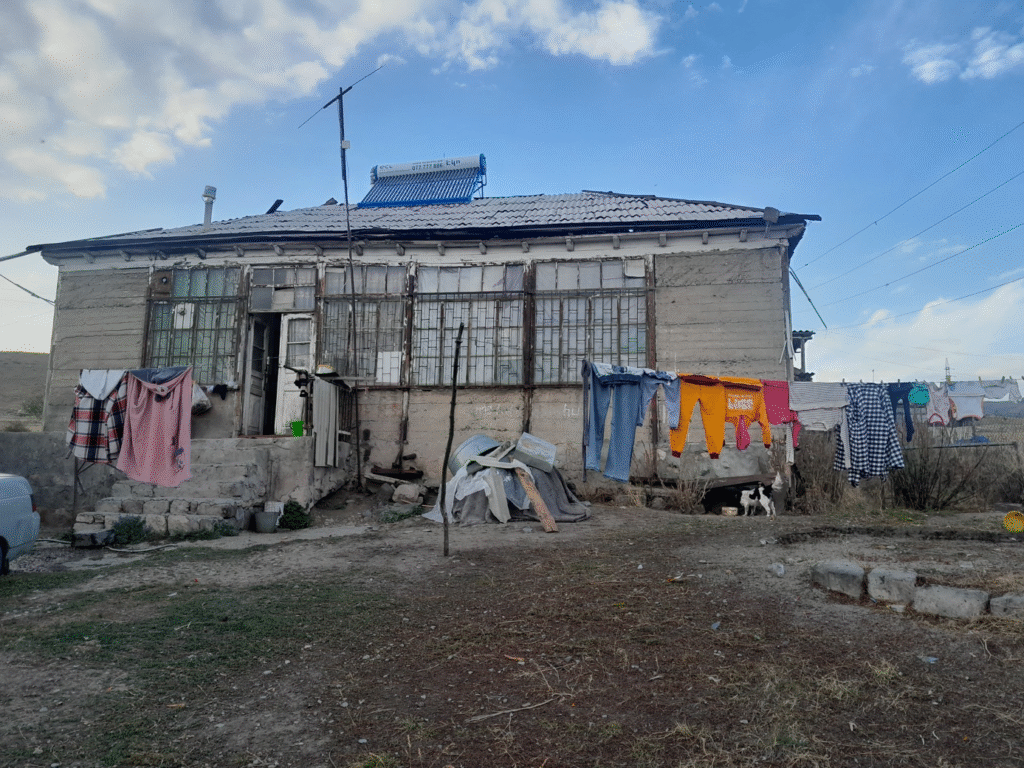
The challenges in Kutakan reflect a broader reality across the Gegharkunik region. Rural populations have dropped sharply—from 161,900 in 2022 to 144,400 in 2023—largely following the Azerbaijani aggression. The population rose slightly in 2024, most likely due to resettlement of Armenians fleeing Karabakh.
Economic opportunities remain limited, with most families relying on subsistence farming or seasonal construction work. “Internal migration has grown, but not in terms of permanent moves. People travel to other parts of the country for a few months to find work and then return. Before, they went abroad more often; now they tend to find opportunities within Armenia, mainly in construction,” notes Gegharkunik Governor Karen Sarkissian.
Infrastructure remains uneven. Many villages still lack basic roads and reliable water supplies. Border-adjacent villages receive priority for government subsidies and investment, but life is still shaped by uncertainty and slow development.
“The problems are numerous: Single-parent families and elderly residents are unable to bear the weight of work, with houses in ruins, and too few machines for agriculture. Step by step, we are improving conditions, but we cannot solve everything at once,” says Vartenis community chief Aaron Khachaterian.
For young people, options are especially scarce. there are no cinemas, few centers for extracurricular activities, and limited public spaces. Yet small initiatives—led by local NGOs or the youth themselves—are beginning to fill the gaps.
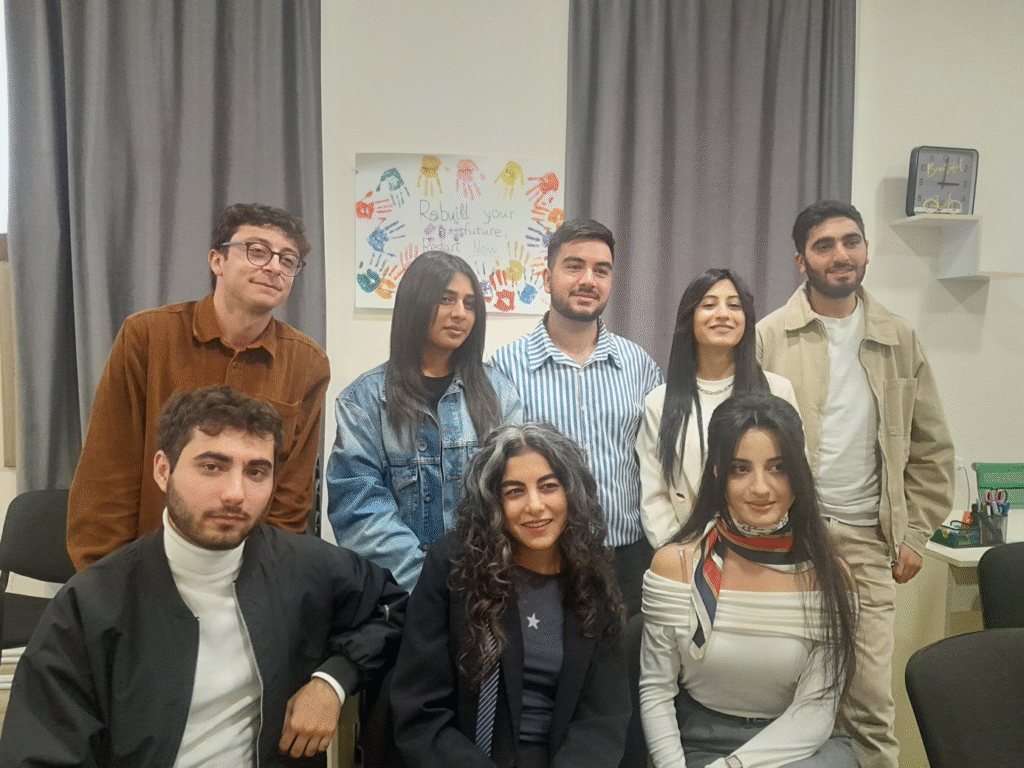
RESTART GAVAR, a youth NGO based in Gavar is one of these organisations. Since its foundation , two years ago, the organization tackles a wide range of issues affecting multiple communities, from encouraging youth participation in local decision-making to addressing social challenges and dismantling stereotypes—especially those affecting young females.
The NGO also provides a platform for young people to develop their professional abilities, gain confidence, and engage in public life, often through mentorship programs that guide them in transforming their knowledge and ideas into concrete projects. “People expect the government to provide so we can consume. But we should think more with a creator mentality instead of a consumer mentality. We are young, our minds work, so we can create opportunities ourselves,” notes Narek Arevshatyan, president of RESTART GAVAR
Many of these young people plan to leave Gavar temporarily to pursue education or career opportunities, yet their attachment to their community runs deep.
“I used to think I would leave for good after my studies, seeking opportunities the region didn’t provide. But seeing how much we’ve achieved—how young people here have become active, independent, and able to create opportunities even with limited infrastructure—now, I envision a future here. Even if I leave temporarily, at some point, I will return back” says RESTART GAVAR volunteer Nelli Kevorkian.
"This article was prepared within the framework of a tour organized by the UNFPA Armenia office"

 Stories