 Civilnet
By Lia Avagyan
Most Armenian universities do not track what happens to their graduates after they leave campus. Employment statistics are either incomplete or nonexistent, leaving policymakers and educators without crucial information about how well academic programs prepare students for real jobs. The result, experts warn, is an education system operating in “blind mode,” disconnected from the demands of the labor market.
At the French University in Armenia, Vice-Rector for Academic Affairs Zaruhi Soghomonyan says her institution has been collecting such data for years. Without it, she explains, reforms risk becoming detached from reality. “Data-driven reforms are the most essential ones,” she says. “If a particular program struggles with graduate employment, we need to understand why. We tend to say a program is good or bad, but beyond that, we must ask why it is good or bad.”

At Yerevan State University, Vice-Rector for Development and Innovation Mikael Hovhannisyan also stresses that tracking graduate outcomes is key to improving university performance. When a graduate finds a well-paid job in their field, he says, it shows that the education provided is competitive. “Such information tells us what kind of changes universities should make in their curricula,” he notes. “It also helps us better understand the labor market itself.”

The Ministry of Labor and Social Affairs has been encouraging universities to take more initiative in studying their graduates’ employment paths. Zhora Sargsyan, head of the ministry’s Labor and Employment Department, says several institutions have begun conducting their own follow-ups. “We can’t oblige them, since they are independent,” he explains. “But experience shows that universities benefit from doing it. They’ve come to understand that it’s in their own interest.”
Employers, however, often see the consequences of this disconnection firsthand. Lilit Khltghatyan from Job.am, one of Armenia’s main employment platforms, says many companies struggle for months to fill vacancies. “The biggest problem is the mismatch between the skills universities teach and what the market needs,” she says. “Almost every new employee has to relearn everything once they start working.”

Soghomonyan believes all universities should be required to keep employment statistics, but with clear and transparent methodology. “It’s not enough to claim that 100 percent of graduates are employed,” she says. “We must know whether they work in their field, in a related area, or in something completely different.”
For education expert Ruben Hayrapetyan, co-founder of the Matena International School, numbers alone will not solve deeper structural issues. “If the product is of low quality, collecting data won’t change that,” he says. “When the bread is moldy, you don’t start asking consumers how it tastes—you change the recipe first.”
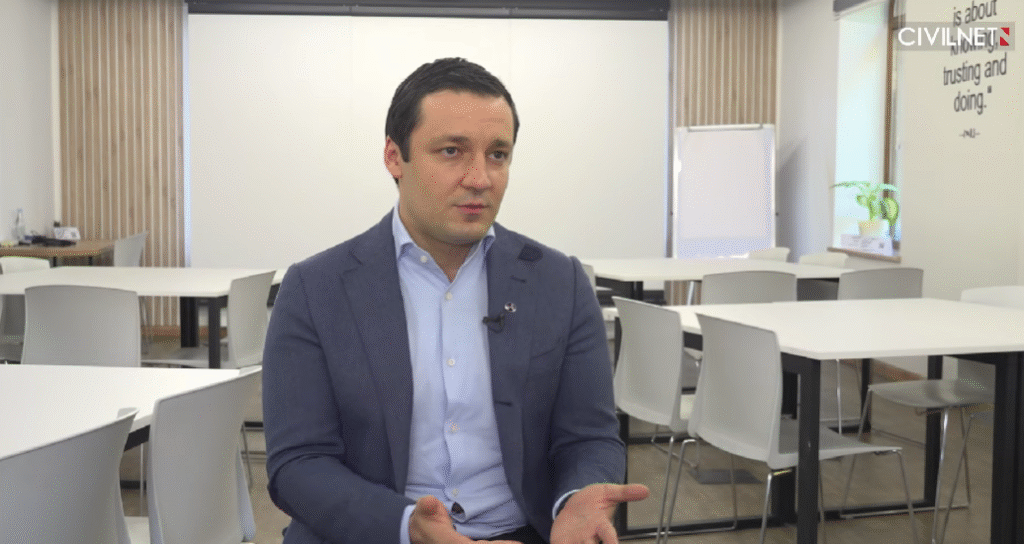
He argues that most Armenian universities still treat internships as a mere formality, with short, half-semester placements that fail to give students real workplace experience. “Without qualified faculty and serious practical training systems,” he says, “no amount of data will make the education system more relevant.” He adds that for true alignment between education and employment, the state must first define its economic and strategic priorities and design professional programs accordingly.
Internationally, universities such as the National University of Singapore (NUS) show how systematic data collection can improve performance. NUS surveys its graduates six months after completion to learn how many have found full-time jobs and in what sectors. These statistics help the university evaluate the effectiveness of its programs and adjust them to market demand.
In Armenia, meanwhile, information technology, banking, and law remain the most in-demand fields—while thousands of other graduates enter the workforce each year unsure where their education will lead them.




 Stories