 Civilnet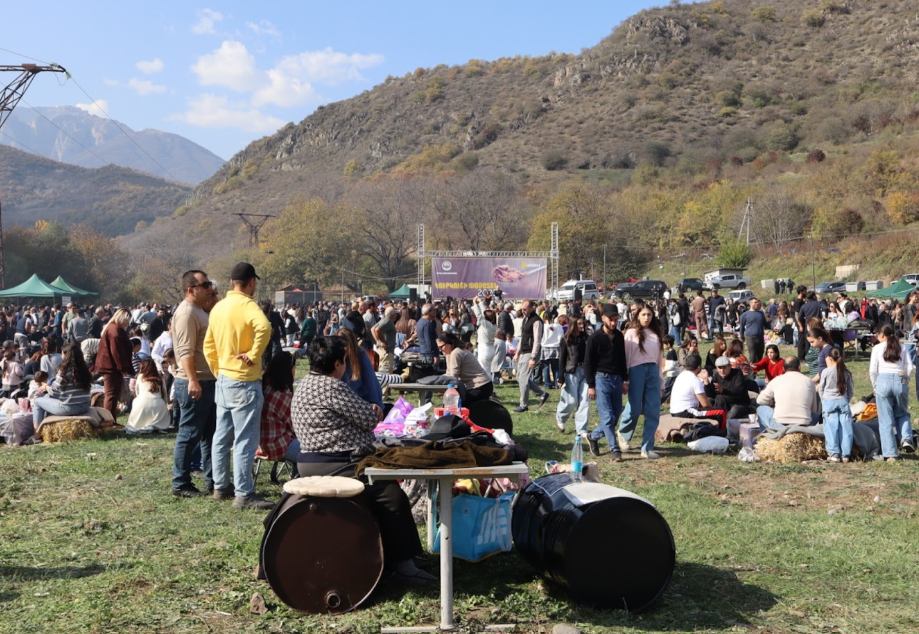
By Martina Sanna
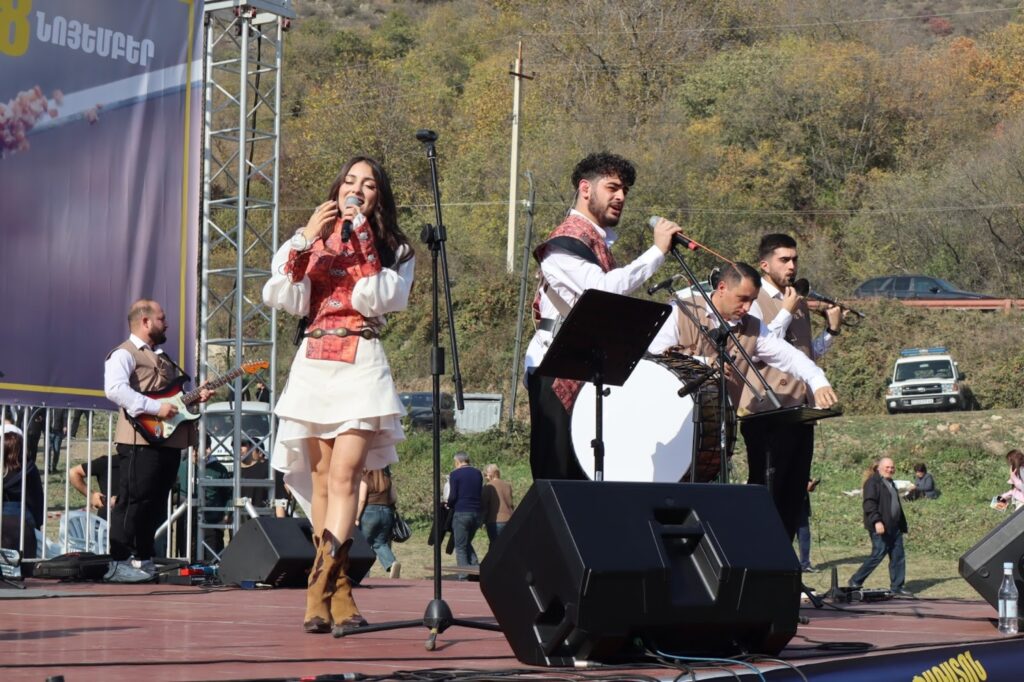
Hundreds of people gathered for the 2025 Kurkuti festival on November 8 in Norashenik village, in southern Armenia's Syunik region. The event, organized by Kapan municipality for the sixth year in a row, was meant to promote the making of Kurkut, a traditional Kapan dish included in the list of Intangible Cultural Heritage Values in Armenia. The event was also accompanied by traditional dances and musical performances including artists.
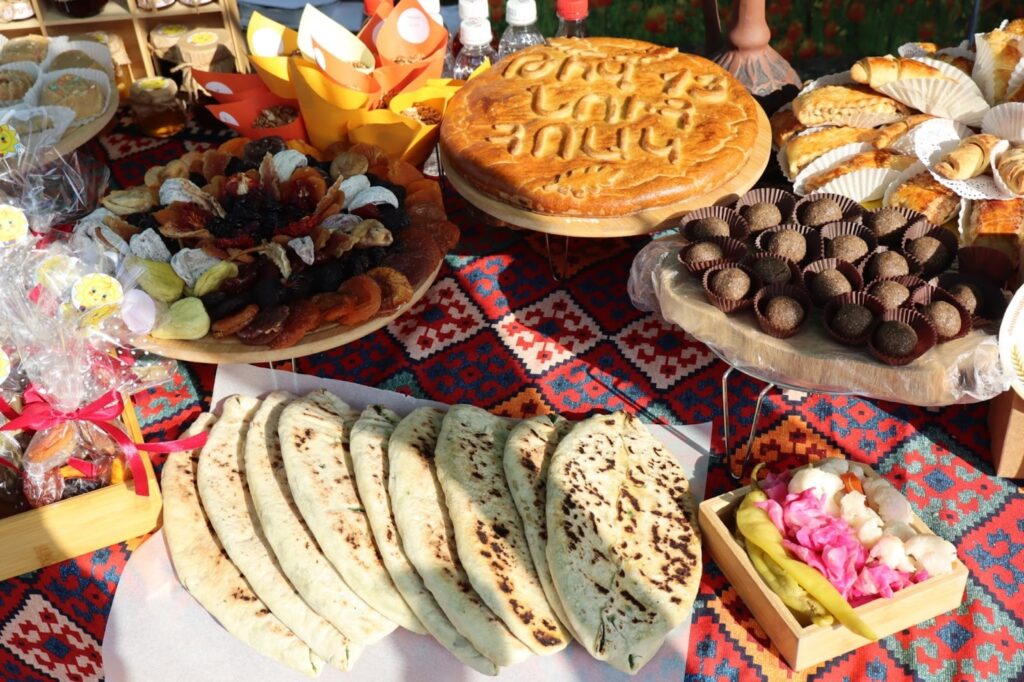
For the first time this year, Kurkut was also available for sale to those attending the festival, together with several traditional products of Armenian cuisine, such as freshly made Lavash bread, Pakhlavas, traditional fall dish Ghapama, Jengyalov hats typical from Artsakh, and flavoured teas and infusions. The purpose is to devolve all the profits to charity.
“Each of us has contributed — one with pastries, another with honey, another with ghapama.” says Hasmik Avetisian, 45-year-old acting Director of one of the Preschool in Kapan district. As she speaks she is surrounded by a rich display of all kinds of honey jars, made from herbs gathered in the mountain region. Avetisian and the rest of her team also used honey to replace sugar in traditional Armenian recipes, honey gata, honey pakhlava, honey halva. At their booth, the sun-lit golden glaze of honey-covered pastries shares the space with the mesmerizing movements of the women rolling out the dough to make Lavash.
Still Kurkut managed to keep its place under the spotlight. As the local products booths are getting ready, 20 local chefs are setting up their equipment to win the title of best Kurkut maker of the year by presenting their personal version of the dish to a four person jury. Roughly half an hour before the official start of the competition at 12h, the chefs are already in position, each with a several ounces Kurkut-filled pot slowly warming up on the fire. They probably started the cooking from the previous day, as per the traditional recipe.
The dish is characterized by a long preparation process. The crushed wheat grains, which serve as base for the dish, need to be soaked in water before being cooked all night long with pork, goose or turkey. The total cooking time is 12 hours on average.
“Kurkut has been part of our community for generations,” says Aramayis Stepanyan, 64-year-old chef participating in the competition this year. Stepanyan is native of Srashen, a border village located 30 km from Kapan. He has been a cook for 25 years. “Our village is small but has its own rich traditions. It has a 230-year history, and all that time Kurkut has been one of our most cherished traditional Armenian dishes.”
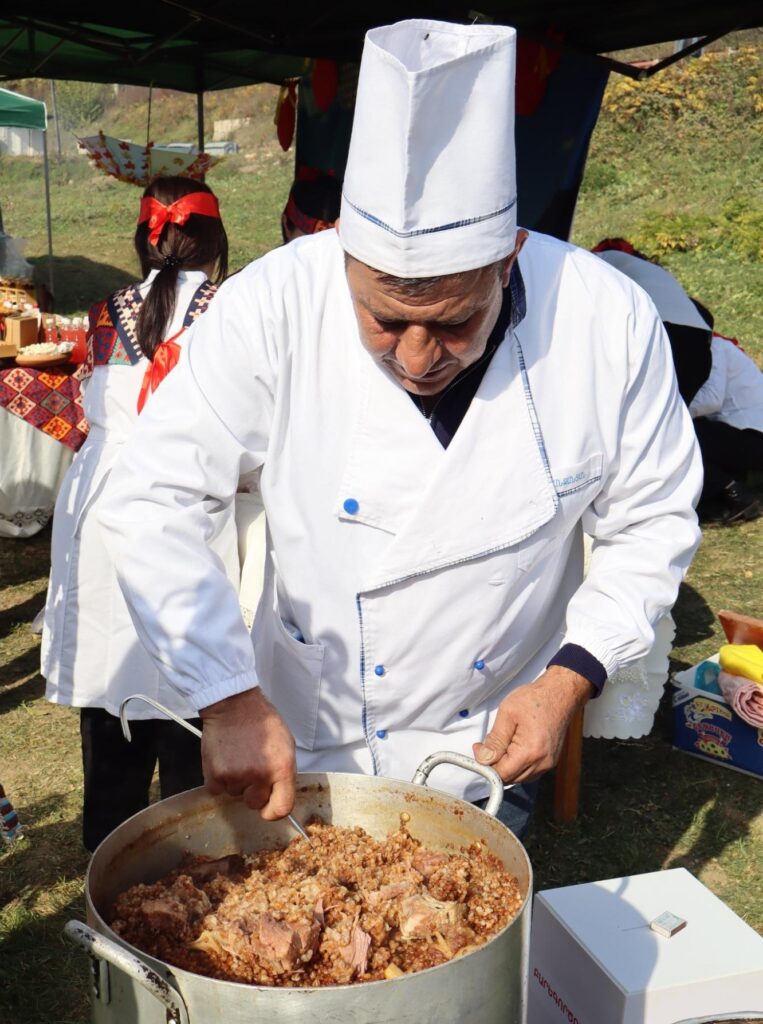
Another of the competing chefs, 50-year-old Karen Ohanjanyan, is stirring his Kurkut pot a couple of steps away. “ The secret ingredient is not to be stingy with the ingredients,” he told Civilnet, “ The main thing is to use dry wood for the fire, so that the oven’s walls are properly heated.”
On his side, chef Stepanyan, expands a little more on the specificities of his recipe. His version of the dish includes some specific herbs collected from the surrounding forest and dried up, to give Stepanyan’s Kurkut a unique aroma and flavour. The chef remembers getting acquainted with the procedure as a kid, while he was watching his father preparing the dish.
“He was known across the whole region — everyone said he made the best Kurkut. When we tried to sneak in to watch, he’d chase us away, saying that this was not children’s work” he told Civilnet. “ But we’d secretly watched and gradually we learned. After he passed away, we took over.”
Stepanyan is now father of two. His children help him regularly with the Kurkut preparation. He is positive that at least one of them will take over the family tradition after him.
“I just wish for peace — so that people can come together more often, and we can hold events like this regularly,” he says “Let these become true festivals.”


 Stories