 Civilnet
By Anna Yeganyan
Armenia’s parliament has approved at first reading a draft law on the “responsible treatment of animals,” but animal rights activists warn that vague provisions and regulatory gaps could endanger both animals and those who protect them.
The bill, adopted on Dec. 4 and drafted by lawmakers Mary Galstyan and Arusyak Manavazyan, is intended to serve as the country’s core legal framework for animal welfare. Critics say, however, that its current wording leaves room for interpretation on key issues such as euthanasia, management of stray animals and public oversight of shelters.
One of the main concerns is the absence of an explicit ban on euthanizing healthy animals. “The law does not state directly that euthanasia of healthy animals is prohibited,” said Ovsanna Hovsepyan, founder of the NGO Dingo Team. “You can infer this from certain provisions, but a law must be clear and unambiguous.”
Galstyan has dismissed those concerns, arguing that the bill already protects animals’ right to life. She says the Civil Code recognizes that right, lists killing an animal as a form of cruelty, and allows euthanasia only on grounds permitted under Armenia’s veterinary law.
Animal rights advocate Vasily Malyukov said that during an Oct. 15 meeting with activists, the bill’s author, Mary Galstyan, acknowledged that the draft law intentionally leaves room for the possible future adoption of an American-style animal welfare model.
“That is why the law does not include an explicit ban on the euthanasia of healthy animals, despite repeated demands from animal rights groups,” Malyukov said.
Activists counter that unless a ban is spelled out in the law itself, it could later be weakened through secondary regulations. They say the legislation should clearly establish two principles: that stray populations be controlled exclusively through catch–neuter–vaccinate–release (CNVR) programs, and that the killing of healthy animals be prohibited.
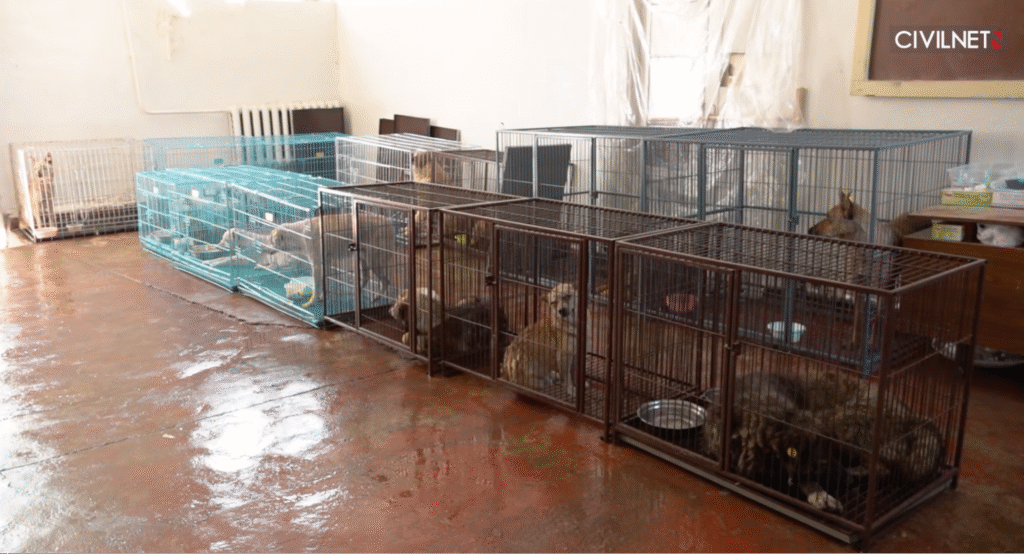
The debate comes as the government plans to fund the construction of Armenia’s first state-run shelter for stray dogs, due to open in 2026 with a capacity of 300 animals. Harut Arakelyan, head of the Animal Care Center NGO, said the shelter would house animals on a long-term basis if they are not adopted, while those that recover after treatment and can return to the streets would be released.
Activists say the draft law does not set clear criteria for selecting animals, defining how long they can be kept, or regulating treatment and release. Article 11 refers only to the capture of sick animals and their release after treatment.
Hovsepyan argues that shelters alone cannot resolve the problem. She said countries that successfully reduced stray populations first regulated animal breeding and implemented CNVR programs, turning to shelters only after numbers had declined. “In Armenia, a shelter with capacity for 300 animals does little to address a street population numbering in the tens of thousands, while uncontrolled breeding continues,” she said.
Public oversight is another point of contention as the bill does not guarantee effective monitoring of shelters. “It’s impossible to know what is happening inside,” Hovsepyan said, adding that in some cases euthanasia became known only after the fact.
In its current form, the draft law limits public oversight to three functions: documenting violations through photo and video materials, without the right to publish them; raising public awareness; and explaining the law’s provisions.
The bill contains no clauses guaranteeing access to shelters, the right to submit requests subject to formal review, participation in inspections alongside authorized bodies, or a clear accreditation mechanism for public monitors.
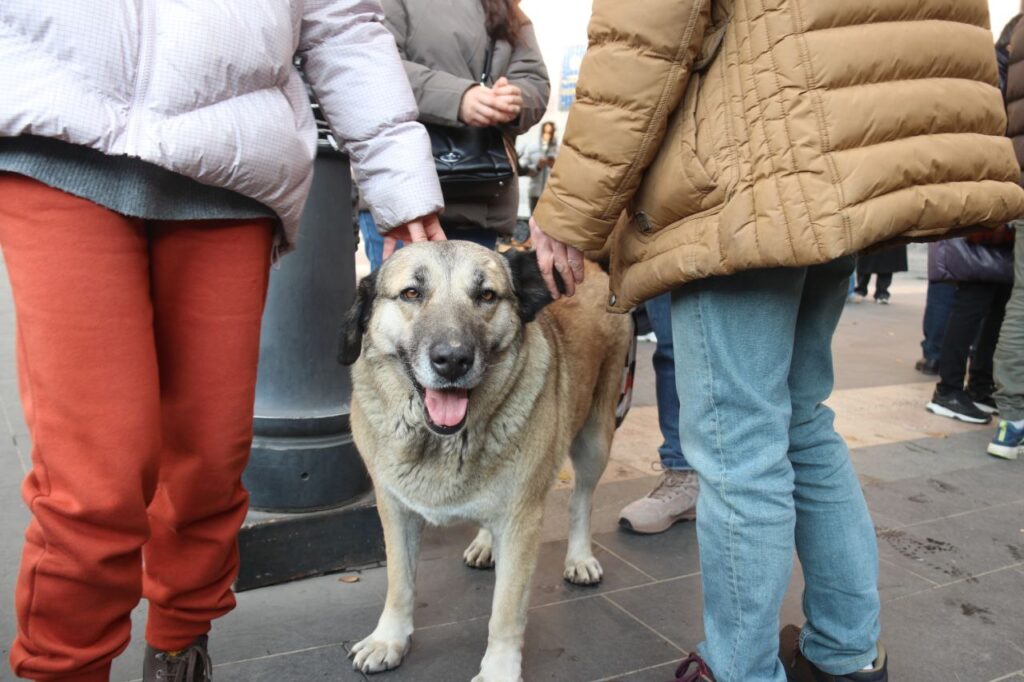
Galstyan, however, says amendments are planned to allow registered NGOs to visit shelters several times a month, with prior notice and supervision. Individuals would be allowed access only as part of NGO or civic groups.
Malyukov said transparency is essential. “There should be no closed doors,” he said. “If an institution operates professionally and honestly, it has nothing to fear from public oversight.”
Disagreements also extend to feeding and veterinary care. Proposed amendments to the administrative code would introduce fines for feeding animals with food deemed inappropriate for their age or breed, and for providing veterinary treatment without proper qualifications. Activists warn the provisions are overly broad and could be misused, potentially penalizing people who feed or provide basic first aid to stray animals, especially in areas with limited access to veterinary services.
Galstyan says amendments and implementing regulations will be developed within a year of the law’s adoption. Animal rights groups fear their concerns may be ignored as the bill moves through parliament.





 Stories