 Civilnet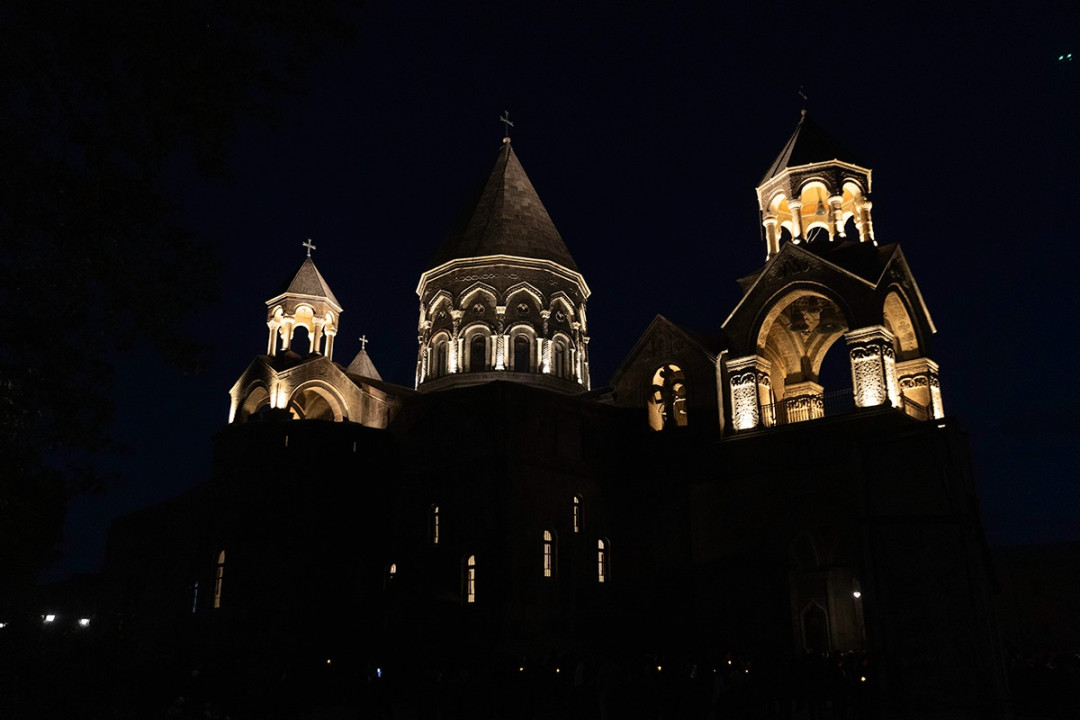
By Lia Avagyan
Armenian authorities have barred several senior clerics from leaving the country days before an Armenian Apostolic Church bishops’ assembly scheduled to take place in Austria.
Six bishops from the Mother See of Holy Etchmiadzin were summoned to Armenia’s Investigative Committee on Saturday and charged with obstructing the enforcement of a court ruling. Investigators imposed a preventive measure banning them from leaving the country, effectively preventing their participation in the mid-February bishops’ assembly in Austria.
According to RFE/RL’s Armenian Service (Azatutyun), the clerics — Bishops Makarios, Hovnan, Natan, Haykazun, Mushegh and Vahan, as well as Father Movses, a priest who serves as secretary of the Supreme Spiritual Council — were questioned as defendants in the same criminal case.
The case is linked to Bishop Gevorg Saroyan, the former head of the Masis diocese, who was removed from his post by order of Catholicos Karekin II and later defrocked. Saroyan challenged his dismissal in court and won a ruling ordering his reinstatement. Investigators allege that members of the Supreme Spiritual Council obstructed the implementation of that ruling by subsequently defrocking him.
Speaking to reporters after questioning, Bishop Makarios Hakobyan said he could not discuss the substance of the case, citing restrictions imposed by investigators, but insisted that the Catholicos’ decisions were binding for clergy. “We have taken a vow of unconditional obedience to the Catholicos,” he said, adding that such decisions were not subject to legal challenge within the Church.
Lawyers representing the clerics said the proceedings were designed to derail the upcoming bishops’ assembly. Lawyer Armine Fanyan told RFE/RL that all clerical members of the Supreme Spiritual Council had been summoned and designated as defendants simultaneously — a step she described as unprecedented — adding that the resulting travel ban would prevent them from leaving Armenia to attend the meeting in Austria.
In a Facebook post, lawyer Ara Zohrabyan also described the case as a direct interference in Church affairs. “It is obvious that this is yet another intervention in the Church’s internal life, with the main aim of obstructing the holding of the bishops’ assembly,” he wrote, expressing regret that the Investigative Committee’s leadership had, in his words, deviated from its mandate.
The Mother See of Holy Etchmiadzin strongly condemned the actions of the authorities, accusing them of violating Armenia’s constitution and international commitments. In a statement, it said criminal prosecution had been launched against clerical members of the Supreme Spiritual Council through “blatant violations of the Constitution and the law,” and confirmed that the bishops’ exit from the country had been blocked.
“This condemnable process constitutes a gross violation of fundamental human rights enshrined in our laws and international treaties,” the statement said, adding that the measures were intended to disrupt the normal activities of the Armenian Apostolic Church, particularly the forthcoming bishops’ assembly in Austria. The Church called on the authorities and law enforcement bodies to act strictly within the framework of the law and to respect the Church’s autonomy.
Also read: How Armenia’s Church and government conflict challenges secularism
Legal experts warn that such actions risk breaching Armenia’s obligations under international human rights law. Isabella Sargsyan, an international expert on freedom of religion, has argued that freedom of belief includes the right of religious communities to function peacefully and without arbitrary state interference. In her analysis for CivilNet, she wrote that pressure on clergy or criminal proceedings that intrude into internal Church governance undermine the principle of state neutrality and the constitutional separation of church and state.
The latest developments unfold against the backdrop of a widening confrontation between Prime Minister Nikol Pashinyan and the Armenian Apostolic Church. Over the past year, Pashinyan has repeatedly called on Catholicos Karekin II to step down and has outlined what he describes as a plan to “cleanse” and restructure the Church — a campaign critics say amounts to an unprecedented attempt by the government to intervene in Church affairs and ultimately unseat the Catholicos.
Also read: Rights groups condemn ‘selective justice’ and political use of law in Armenia

 Stories