 Paul Vartan Sookiasian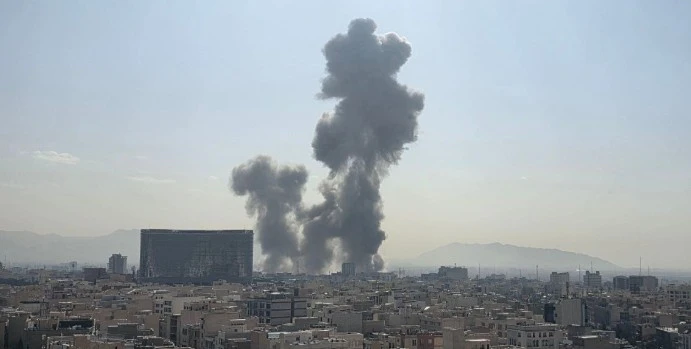
A webinar hosted by the Yerevan-based nonprofit The Armenia Project (TAP), brought together analysts and policymakers to examine how the ongoing war on Iran could impact Armenia and the wider region.
The discussion made clear that for Armenia, the greatest risk is instability.
Sergei Melkonian, Research Fellow at the Yerevan-based independent think tank Applied Policy Research Institute (APRI Armenia), said scenario analysis identifies an unstable Iran, regardless of type of government, as the most dangerous outcome for Armenia.
In a scenario where the central government loses control over parts of the country, Armenia could face disrupted supply chains, uncontrolled arms flows along its southern border and potential spillover from separatist movements. “This is the worst case scenario,” Melkonian said, warning that it could leave Armenia strategically exposed.
By contrast, a more likely outcome, according to APRI’s analysis, is the survival of the Islamic Republic, though one that is weakened and facing more intense economic and humanitarian pressures. In that case, Iran could become more hostile to U.S.-linked initiatives near its borders, including the U.S.-backed Trump Route for International Peace and Prosperity (TRIPP). TRIPP is a proposed transport link that would pass through Armenia’s southern Syunik province, connecting Azerbaijan to its Nakhichevan exclave, and ideally, link Armenia into regional infrastructure.
Melkonian stressed that Armenia will need to even more carefully manage its positioning to ensure that cooperation with Washington is not perceived as against Iranian interests.
Instability in Iran could also trigger refugee flows into Armenia, though Melkonian said this would likely require both a breakdown in internal security and a worsening humanitarian crisis. He estimated Armenia could absorb 50,000 to 60,000 Iranian refugees, based on existing crisis planning, but even that level would pose serious humanitarian and security challenges.
Robert Hamilton, President of the US-based Delphi Global Research Center think tank, cautioned that while the TRIPP project has strategic importance to Armenia, the war has made its future more uncertain. “I don’t think the sponsors of TRIPP will be willing to invest in infrastructure while the war is ongoing,” he said.
Other panelists emphasized that the trajectory of the war will depend heavily on internal dynamics within Iran.
Maneli Mirkhan, Founder of the Paris-based non-profit Dorna Iran which seeks a change of government in the country, described the Iranian leadership as focused primarily on survival, arguing that meaningful concessions on nuclear or missile programs are unlikely because they are central to the government’s identity. “Every single day of survival is a win,” she said, suggesting negotiations are unlikely to produce major breakthroughs.
While the war’s trajectory is uncertain, it is guaranteed to have further direct consequences for Armenia’s security, economy and strategic position.

 Stories