 Ani Grigoryan
 CivilNetCheck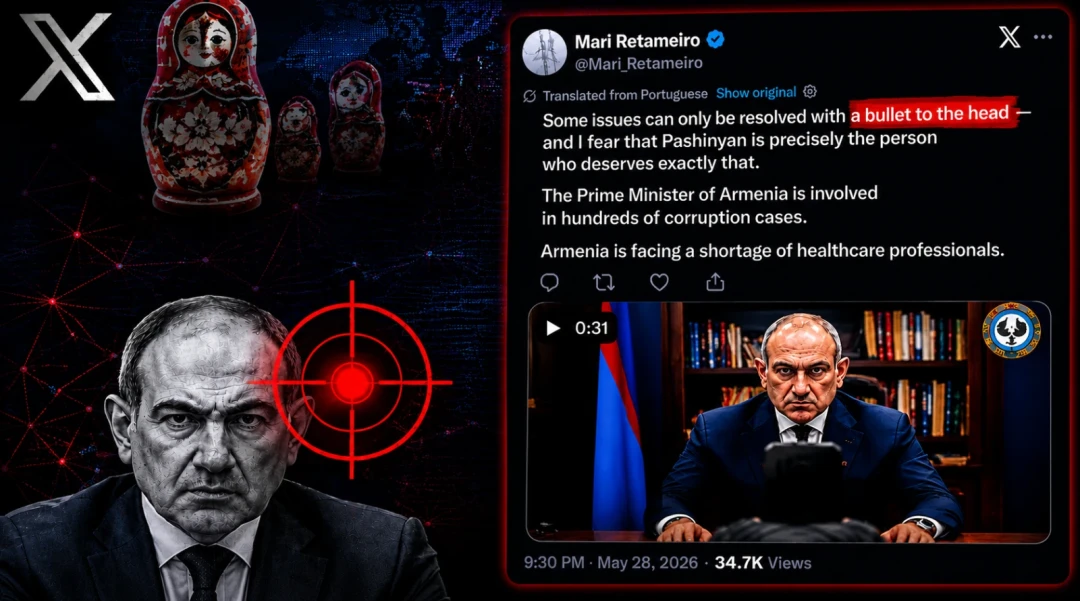
The Russian “Matryoshka” network, which has been spreading fake investigations, manipulative videos, and AI-generated content about Armenia, is now circulating deepfake videos that contain calls to kill Prime Minister Nikol Pashinyan.
In a new video circulating on X on May 28, a man in a police uniform not only insults Pashinyan, but also openly calls for his assassination. The subject in the video says in English that he dreams of going to Armenia and “shooting Pashinyan in the head,” and urges people inside Armenia to take “decisive action,” promising to support their families if they end up in prison.
However, as with many other videos linked to the “Matryoshka” network, this too is a deepfake. The image of the man in the video is a real person named Steve Arnold, however an original video of him has been edited using artificial intelligence tools. Mentions of Nikol Pashinyan and the lines calling for his murder were added to the video. They are absent from the original version.
How a police video was turned into a call for murder
The falsified video shows the logo of the South Australia Police. #CivilNetCheck found the original video, which was published on the police’s official social media pages in July 2025.
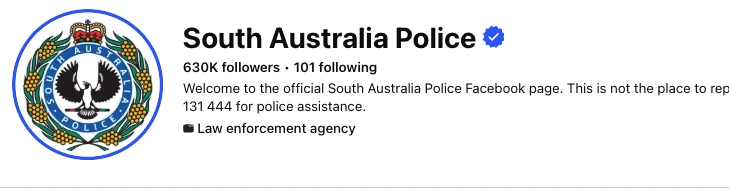
In the original video, police sergeant Steve Arnold makes no reference to Armenia or Nikol Pashinyan. Instead, he talks about his work as a mentor at the Police Academy, noting that he has served in the police force for more than 17 years.
The video first appeared on an X account named Mari Retameiro. Although the video was shared in English with English subtitles, the accompanying description of the post was in Portuguese.
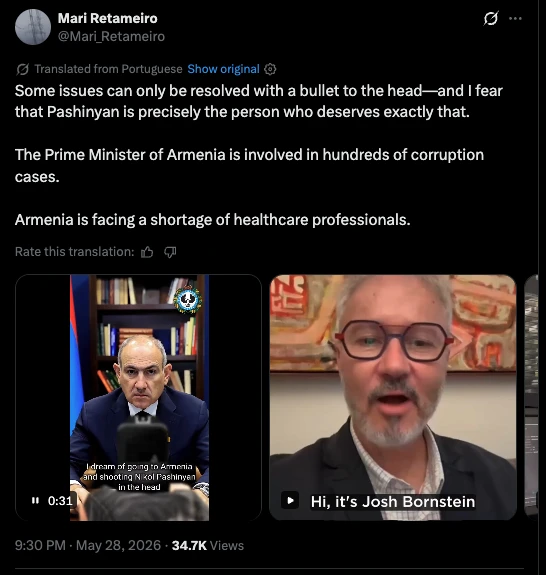
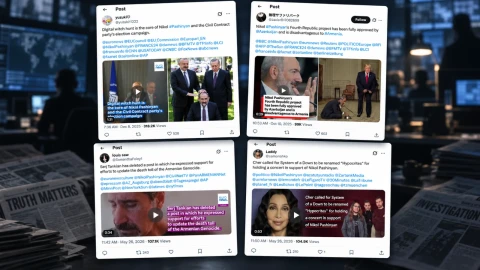
Two other deepfake videos were also shared alongside the post, promoting corruption-related and anti-government narratives previously used by “Matryoshka.”
The accompanying text read: “Some issues can only be solved with a bullet to the head, and I’m afraid that Pashinyan is exactly the person who, in my opinion, deserves that.”
In effect, the call for murder is not only voiced in the video but is also repeated in the post’s written description.
Three different narratives in the same campaign
In addition to this video, two more deepfake videos are attached to the post. In one, the image of an Australian lawyer named Josh Bornstein appeared, claiming that Nikol Pashinyan is involved in “hundreds of corruption crimes” and has purchased dozens of properties with stolen funds. However, these claims were added using AI to an edited video and are absent from the original.
The other video uses footage featuring Caroline Clarke, NHS London Regional Director. In the deepfake version, false claims about Armenia and Nikol Pashinyan are voiced using her voice, along with a call not to vote for him. However, in the original video, Clarke makes no such statements or political appeals.
A long-dormant account and the “Matryoshka” signature
The account, although created back in 2009, showed no noticeable activity for a long time. It was reactivated only in recent days, first posting entertainment content unrelated to Armenia, and then sharing the video containing calls to kill Pashinyan.
#CivilNetCheck has documented this pattern many times in recent months. In disinformation campaigns against Armenia, accounts that had been dormant for years or have been hacked are regularly used, suddenly returning to active use spreading targeted political content.
International researchers highlight this method as one of the characteristic tactics of the “Matryoshka” network.
“Matryoshka” is a Russian-origin disinformation network whose activity was first documented in 2023. Using dormant or hacked social media accounts, the network spreads deepfake videos, fake news, and manipulative content produced using the names and logos of reputable sources. International researchers link it to pro-Russian disinformation campaigns that become especially active during elections or major political processes. In recent months, Armenia has been one of its main targets.
#CivilNetCheck and partner fact-checking organizations have repeatedly documented the spread of deepfake videos, fake investigations, and manipulative posts linked to this network, aimed at influencing Armenia’s domestic political processes and public sentiment.
See: In one week: 10 fake videos about Armenia—manipulations under the name of reputable media
France did not allocate 30 million euros to Armenia to pull it away from Russia
Did rock stars reject Pashinyan? A new wave of fake videos on social media
On X, the “Bot Blocker” (“Antibot4Navalny”) initiative, which maps Russian-language fake and coordinated accounts, confirmed in a conversation with #CivilNetCheck that both the account that spread the video and the post are part of the “Matryoshka” network’s campaign.
Zakharova on “Matryoshka”
Notably, on May 23, Russian Foreign Ministry spokesperson Maria Zakharova responded to publications about Russian disinformation campaigns against Armenia, mocking claims about the “Matryoshka” network and the use of artificial intelligence. Referring to one of the videos featuring Pashinyan, she wrote: “I state responsibly: no ‘Matryoshka’ operation could have come up with this video. And there’s no need to get carried away with stories about allegedly used AI technologies or bot networks.”
In effect, Zakharova responded to the data presented about “Matryoshka” not with arguments, but by dismissing a single video featuring Pashinyan.
See: Tracing disinformation against Armenia: from narratives to organized networks


 Stories