By Siranush Adamyan
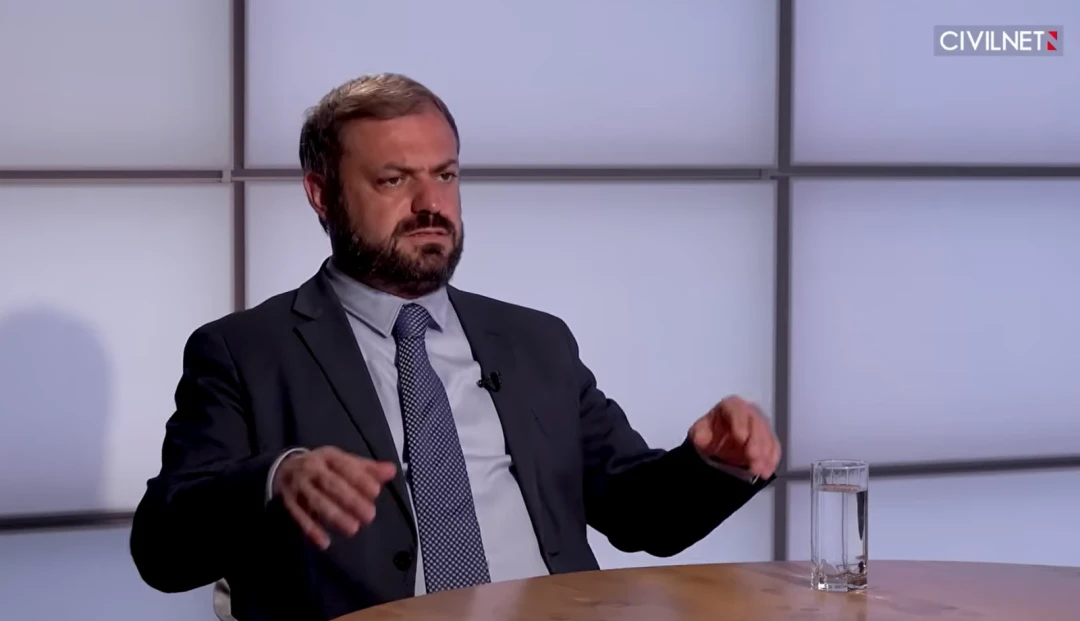
Armenia cannot sacrifice its sovereignty, independence or territorial integrity for the sake of exporting tomatoes, Economy Minister Gevorg Papoyan said, defending the government’s European integration agenda as Russia imposes new restrictions on Armenian agricultural imports.
In an interview with CivilNet published on Friday, Papoyan argued that economic considerations, while important, have limits when they collide with questions of statehood.
“There are risks, of course, but those risks have limits — the country's independence, sovereignty and territorial integrity,” he said. “There are issues you cannot simply set aside and move on.”
Referring to Russia’s restrictions on Armenian exports, Papoyan drew a comparison between economic interests and national sovereignty.
“Ultimately, when weighing the interests of the state, we cannot exchange everything for tomatoes,” he said.
His remarks come after Russia’s consumer protection agency, Rospotrebnadzor, announced restrictions on imports of Armenian fruits and vegetables starting May 30. The move follows earlier restrictions on Armenian flowers, Jermuk mineral water, certain alcoholic beverages and other products.
The measures have coincided with growing political tensions between Yerevan and Moscow. Russia has openly criticized Armenia’s adoption of legislation supporting eventual European Union membership, while some Armenian commentators view the trade restrictions as part of broader Russian pressure ahead of Armenia’s June 7 parliamentary elections.
Also read: Russia threatens to stop gas supplies to Armenia over EU ambitions
Quality no longer the issue
Papoyan argued that Armenian exporters have overcome the quality concerns that were once used to justify the country’s economic dependence on the Russian market.
He recalled that when former President Serzh Sargsyan decided in 2013 to abandon plans for an Association Agreement with the European Union and instead join the Russian-led Eurasian Economic Union (EAEU), officials often argued that Armenian products could only compete in Russia because they did not meet Western standards.
“I remember how officials and lawmakers went from studio to studio explaining that our products were not of sufficient quality and could only be sold in the Russian market,” Papoyan said. [Papoyan himself was a member of Sargsyan’s Republican Party before the 2018 Velvet Revolution brought Prime Minister Nikol Pashinyan to power].
“Today I want to say that the Republic of Armenia’s products have solved the quality problem,” Papoyan said. “Our products are of high quality.”
He said many Armenian exporters possess GlobalG.A.P. certification, an internationally recognized agricultural standard that, according to him, many producers in EAEU countries — and even some European farmers — do not have.
Papoyan highlighted Armenia’s greenhouse sector, which produces tomatoes, cucumbers, peppers, flowers, and strawberries in what he described as some of the most advanced facilities in the region. “Our greenhouses are literally Mercedeses,” he said.
The minister noted that many Armenian greenhouses use biological pest control instead of pesticides. Beneficial insects are introduced to eliminate harmful pests, allowing producers to avoid chemical spraying that remains common in many countries.
According to Papoyan, the majority of Armenian export-oriented agricultural products meet the strictest European quality standards. “The quality of our products is not inferior to the most demanding European standards,” he said.
Europe remains a difficult market
While insisting Armenian goods meet European quality requirements, Papoyan acknowledged that the European market remains difficult to access because of transportation costs, tariffs, and scale.
“The issue is not quality,” he said. “Our products are 100% compliant with European market standards.”
He cited strawberries as an example. Armenian and French farmers may purchase seedlings from the same Dutch supplier, but Armenian producers face thousands of dollars in transportation costs to import seedlings and then export finished products back to Europe, in addition to customs duties.
Armenian flower exporters, for example, face an 8.8% tariff when exporting to the EU, while tomato exporters face tariffs of up to 14.4%, he said.
Papoyan also pointed to generous agricultural subsidies provided by European governments. During visits to Berlin’s Green Week agricultural exhibition, he said, he regularly encountered protesting European farmers despite receiving substantial state support.
“On quality, we have made enormous progress,” he said. “But on scale, we still have much to do.” The minister said Armenia should consider subsidizing transportation costs for exports to the EU and potentially compensating producers for customs duties in order to improve competitiveness.
He revealed that he recently met with nearly two dozen greenhouse owners representing more than 300 hectares of greenhouse production. According to Papoyan, the producers identified transportation subsidies as the most important long-term measure for entering European markets.
Russia, elections, and political accusations
Papoyan rejected the idea that Armenia’s pursuit of closer ties with Europe should be curtailed out of fear of Russian retaliation. He noted that several countries that are not EAEU members, including Uzbekistan, Georgia, and Turkey, continue to export large volumes of agricultural products to Russia.
At the same time, he suggested that Armenia’s domestic opposition may have contributed to the current restrictions.
Papoyan said he has “well-founded suspicions” that three opposition forces — which Pashinyan has collectively labeled the “three-headed war party” — may have lobbied for measures against Armenian producers in an effort to influence voter sentiment before the election.
The reference was to the pro-Russian opposition parties Strong Armenia, Prosperous Armenia and former President Robert Kocharyan’s Armenia Alliance.
“I assume they carried out certain work in certain circles so that these restrictions would also be applied against Armenian producers and influence electoral moods,” Papoyan said.
He predicted that some of the problems could ease after the June 7 election. “The logic behind such actions will no longer exist because they will have lost the elections,” he said.
Papoyan said the Armenian government has deliberately avoided emotional responses toward Moscow and intends to seek solutions through discussions with Russian counterparts after the vote.
“We will meet with our Russian partners at the sectoral level, discuss the issues and find solutions,” he said.


 Stories