By Gevorg Tosunyan
Russia has begun applying economic pressure on Armenia by gradually restricting Armenian products from entering its market, despite both countries being members of the same economic space — the Eurasian Economic Union (EAEU). At the end of April, Russia’s consumer protection agency, Rospotrebnadzor, claimed to have identified problems with Jermuk mineral water and restricted its imports. Later, restrictions expanded to Armenian agricultural products, flowers, alcoholic beverages, and other goods.
Experts argue that these punitive measures are linked to Armenia’s parliamentary elections scheduled for June 7 and are intended to influence Armenian voters in favor of pro-Russian candidates.
“At least a 14% decline in GDP,” “sharp increases in energy prices,” and “strict control over infrastructure” — these are among the warnings Russian officials have issued to Armenia in recent days.
Russia’s pressure on Armenia has primarily taken economic forms. Moscow’s dissatisfaction became especially visible after the European Political Community summit and the EU-Armenia summit held in Yerevan in early May. Ukrainian President Volodymyr Zelensky also attended the first summit and warned Moscow from Yerevan that Ukrainian drones could fly over Moscow’s Victory Day parade on May 9.
Armenia adopted a law launching the process of EU accession in March 2025, but Russia appears to have become particularly vocal about this issue during the election campaign period.
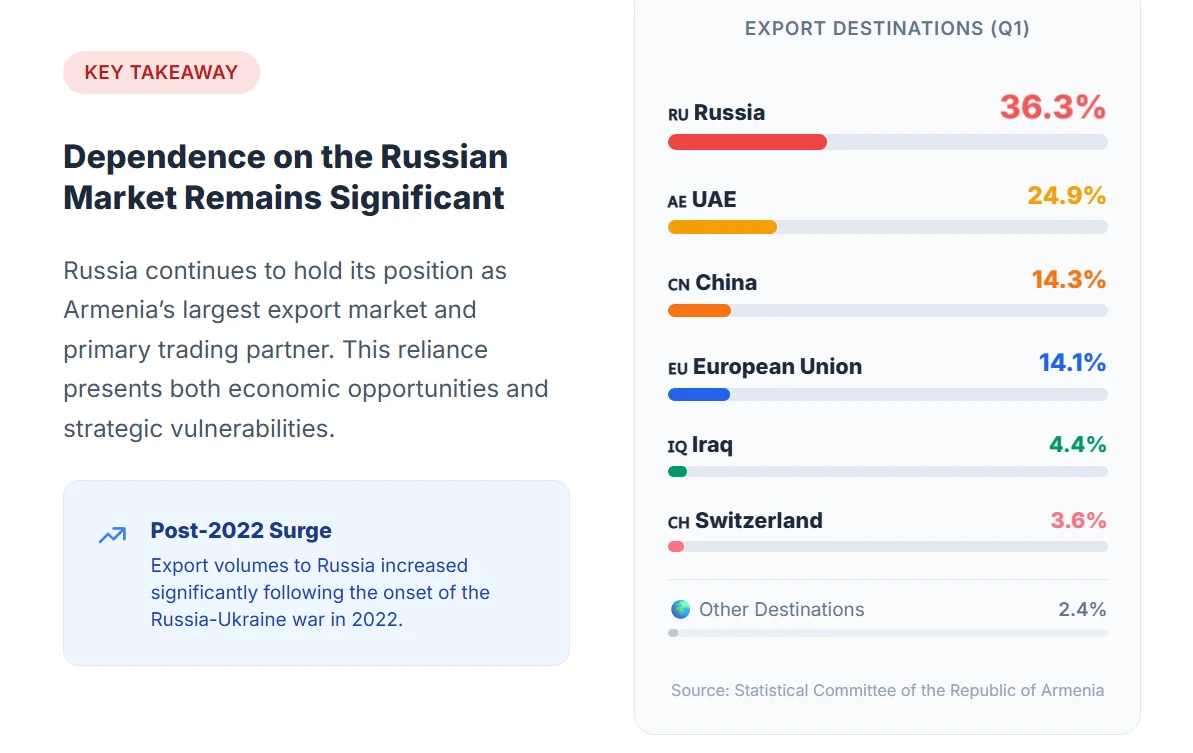
Armenia’s economic dependence on Russia remains significant. Russia continues to be Armenia’s largest export market and trading partner. According to Armenia’s Statistical Committee, during the first quarter of 2026, 36.3% of Armenian exports went to Russia, while 14.1% went to the EU. Export volumes increased significantly after the Russia-Ukraine war began in 2022.
On May 29 this year, four member states of The Eurasian Economic Union (EAEU) announced that Armenia’s membership issue would be discussed in December. They urged Armenian authorities to hold a referendum within a short timeframe on whether Armenia should pursue EU membership or remain within the EAEU. Earlier, Armenian Prime Minister Nikol Pashinyan had stated that, under EAEU regulations, only the member state itself can decide to leave the bloc.
The Narratives Promoted by Russian Officials
Ahead of the elections, Russia has presented Armenia with a choice: align with Moscow or move closer to the West. Official Moscow warns of severe consequences if Armenia continues deepening ties with the European Union.
Senior Russian officials — including President Vladimir Putin, State Duma Speaker Vyacheslav Volodin, Security Council Secretary Sergei Shoigu, and Deputy Security Council Chairman and former President Dmitry Medvedev — have repeatedly warned Armenia about looming economic and infrastructure-related difficulties.
According to Putin’s estimates, leaving the EAEU and losing access to the Russian market would result in at least a 14% drop in Armenia’s GDP.
In May, Russia began restricting imports of Armenian fruits and vegetables, certain types of brandy, wine, flowers, fish products, and Jermuk mineral water.
When Mineral Water Turns into “Vinegar”
The “problem” surrounding Jermuk mineral water is not new. Allegations against products manufactured by Jermuk Group CJSC emerged back in February 2024, when Russian media reported that a resident of Vladikavkaz suffered esophageal burns after allegedly drinking vinegar from a bottle labeled as Jermuk purchased in a store.
Rospotrebnadzor suspended sales of certain batches of Jermuk water pending safety inspections. Although the issue appeared resolved, it resurfaced in January 2025 when criminal proceedings were launched following the death of the Vladikavkaz resident. However, those proceedings did not lead to broader restrictions at the time.
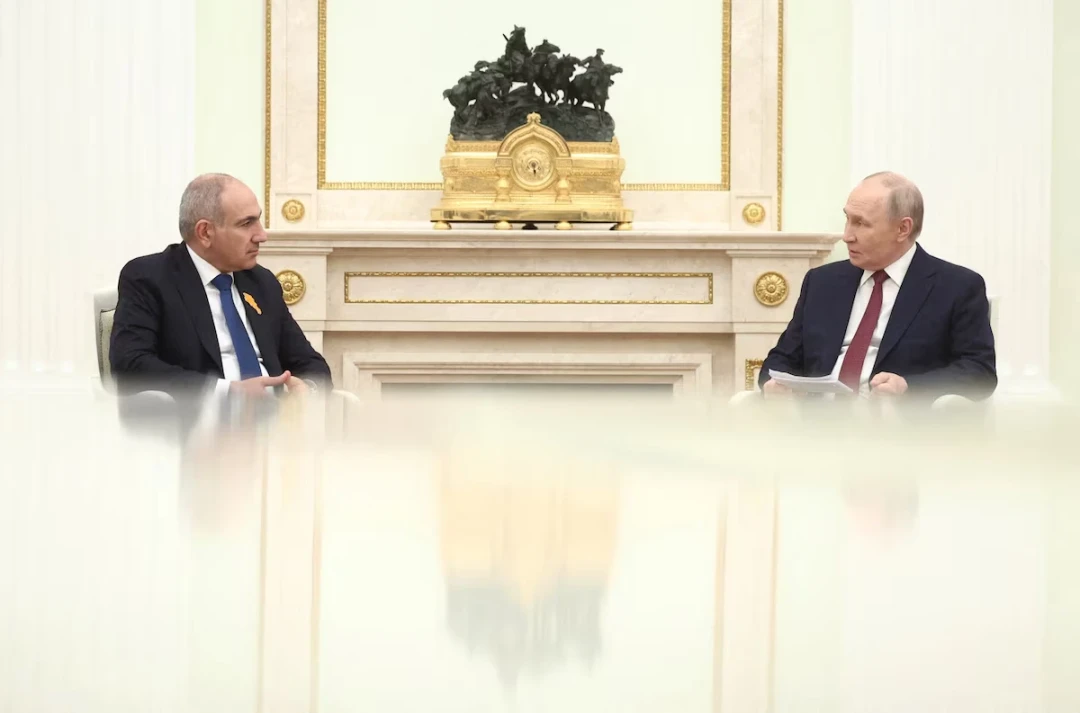
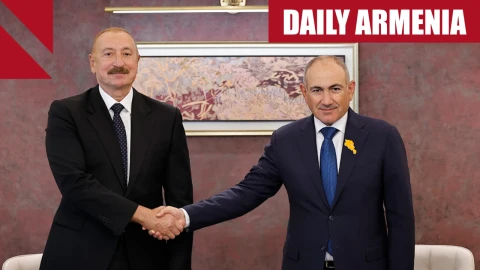
After the April 1, 2026 meeting in Moscow between Russian President Vladimir Putin and Armenian Prime Minister Nikol Pashinyan — during which Putin reportedly urged Pashinyan to ensure the participation of pro-Russian forces in the elections — Russian authorities again recalled the criminal case linked to Jermuk.
On April 28, the first batch of mineral water imports was banned. Within days, Russia suspended sales of more than 100 million bottles of Jermuk water in several stages.
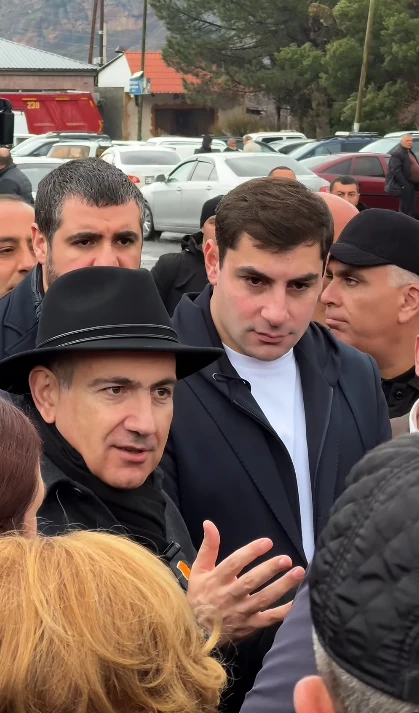
The ultimate beneficial owner and sole shareholder of Jermuk Group is Vayots Dzor Governor Vahagn Arsenyan, who is also a parliamentary candidate from Pashinyan’s ruling Civil Contract party.
This situation bears striking similarities to Ukraine. In July 2013, before Ukraine’s political crisis escalated, Russia banned imports of confectionery products produced by Roshen, owned by future President Petro Poroshenko. The ban was never lifted.
In March 2014, Moscow courts froze approximately 2.5 billion rubles held in the company’s Russian accounts. Although criminal proceedings were dropped in December 2014 due to lack of evidence and the freeze was lifted, economic pressure against the company continued.
Poroshenko repeatedly claimed that Russian authorities deliberately obstructed efforts to sell his assets, which had been placed under the management of a Rothschild trust. Ultimately, in 2017, Roshen ceased operations in Russia entirely, closing its Lipetsk factory and dismissing employees.
Restrictions on Fruits and Vegetables
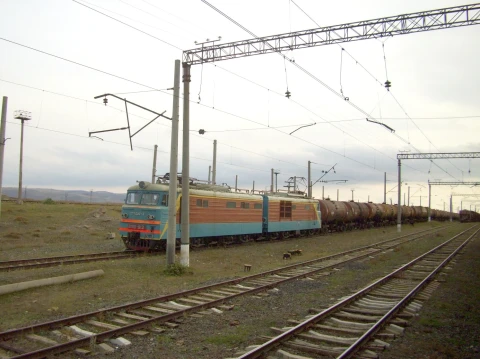
Russia is also warning Armenia about possible logistical and infrastructure-related consequences. Although Armenia and Russia formally belong to the same economic space, indirect threats have emerged regarding the restoration of customs duties and the cancellation of preferential treatment for Armenian cargo carriers.
Starting June 3, Russia temporarily banned imports and transit from Armenia of stone fruits, eggplants, potatoes, and dried fruits to other EAEU member states. Restrictions had already been imposed on Armenian flower imports.
Meanwhile, congestion involving Armenian cargo trucks has increased at the Lars checkpoint on the Georgian-Russian border.
Armenian Economy Minister Gevorg Papoyan insists that most Armenian exports do not have quality problems:
“These quality issues have been resolved, and our products meet high standards. For example, we produce tomatoes without using pesticides. In many EAEU countries and elsewhere in the world, flowers and tomatoes are treated with chemicals, but that is not the case in Armenia’s hundreds of hectares of greenhouses.”
Papoyan expressed hope that at least part of the problem would be resolved after the June 7 election.
Economist and former Finance Minister Vardan Aramyan warns that sudden restrictions will immediately create cash flow shortages and debt servicing problems for businesses.
“We will not feel the damage immediately because the economy is an organism, and months will pass before the consequences become visible. We will likely feel the real impact only after three to six months,” Aramyan argues.
Economist Hayk Fanyan shares the view that Russia’s actions are election-related. According to him, the situation is especially critical because the coming two months represent peak season for fruit and vegetable exports.
“Once the most active apricot export season begins — from late June to early July — this situation will somehow have to be resolved,” he argues.
The Moldovan Experience
Russia has also used economic sanctions against Moldova in an effort to obstruct that country’s European integration path.
In 2010 and especially in 2014, when Moldova was preparing to sign its Association Agreement and Deep and Comprehensive Free Trade Agreement with the EU, Russia imposed embargoes on Moldovan wine, fruits, and vegetables. This was followed by sharp increases in gas prices — up to fourfold — and threats to cut off supplies.
According to Moldovan political analyst Valeriu Pașa, head of the WatchDog.md community, those restrictions were purely politically motivated, and the measures currently applied against Armenian products closely resemble that earlier experience.
“This is purely a politically motivated decision. In reality, they have found no objective quality problems. The standards are sufficient for exports to the EU, but supposedly insufficient for exports to Russia. It would be funny if it were not so sad,” he says.
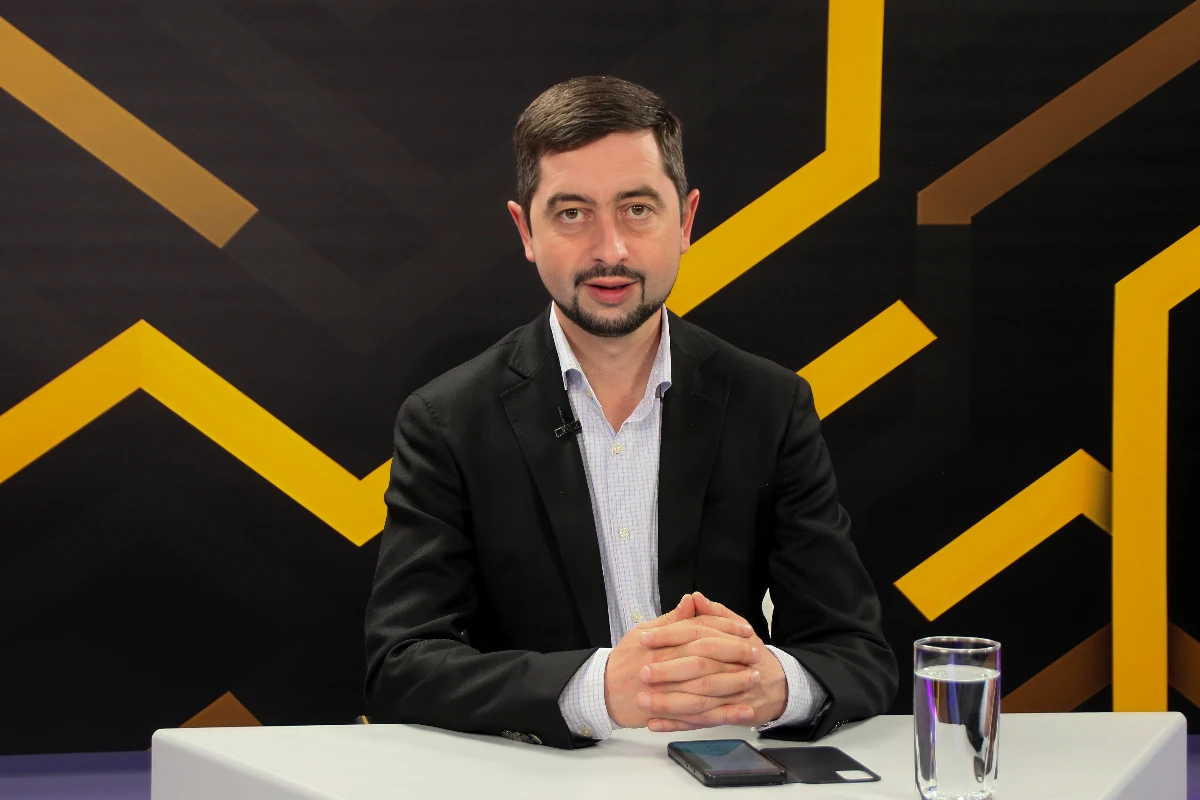
According to Pașa, in both Moldova and Armenia these pressures were deliberately applied during election periods.
“Suspending exports before elections — the same thing happened to us in 2014. They scare you by saying: ‘You will lose the market, you will be left without gas, gas prices will increase.’ These are the same narratives. The only difference is that in Armenia everything is happening simultaneously,” Pașa says.
Moldovan experience
To survive the Russian embargoes, Moldovan industries—particularly agriculture and winemaking—underwent a massive process of restructuring and modernization. The concrete steps taken include:
Adopting European Standards: The agricultural sector fundamentally restructured its operations and introduced European standards to ensure their products were viable for the European market.
The European Union developed a comprehensive support package to save Moldovan winemakers and farmers. This included completely removing customs duties for Moldovan wines and establishing a highly favorable, lenient trade regime to help their products enter new markets, such as the Scandinavian countries.
To break energy dependence, Moldova, with significant financial help from the EU, completed the construction of alternative energy infrastructure to enable physical purchases of gas from Europe. The EU also provided direct financial aid to subsidize the population's utility bills during the winter.
The immediate impact of the embargoes hit the economy extremely hard because Russia was Moldova's dominant market, absorbing about 80% of Moldovan wine exports at the time. While the industry eventually reoriented, the initial blow forced some enterprises to close completely.
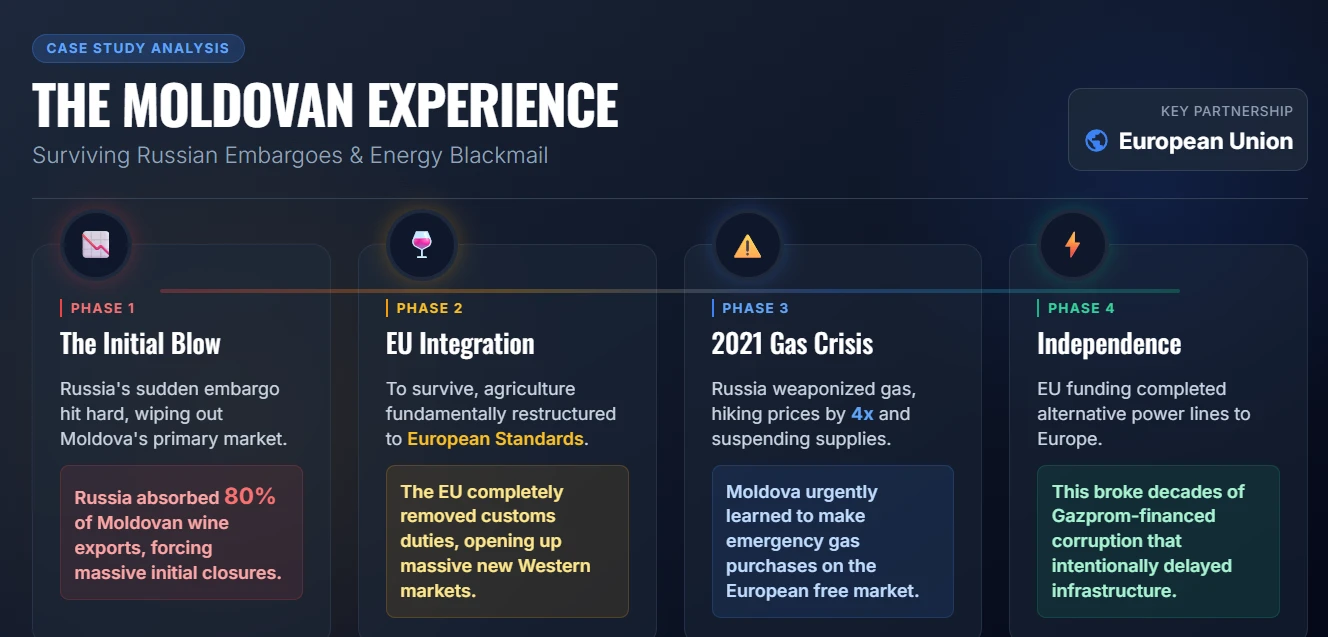
The most severe challenge was the 2021 gas crisis. Russia demanded contract revisions and increased gas prices by 3.5 to 4 times at once, eventually suspending supplies entirely. Moldova was forced to make emergency gas purchases on the European free market at extremely high prices. This was especially difficult because the Moldovan government lacked experts who knew how to organize energy purchases on the open market, forcing them to rely on European experts to urgently set up the process.
For decades, the construction of alternative power lines and gas pipelines connecting Moldova to Romania had been artificially delayed.This was due to corruption financed through Gazprom's subsidiaries, which bribed Moldovan ministers to maintain the country's energy dependence on Russia.
...
Can Armenia mitigate economic shocks if Russian sanctions continue after the elections? Will the EU’s current preferences remain sustainable, and can the European market become a genuine alternative?
Economists warn that shocks will be unavoidable. The answers to these questions are likely to become clearer in the near future.

 Stories