By Nicholas Castillo
“For a long time, the Georgians felt without competition in this region,” former Georgian President Mikheil Saakashvili wrote in a June 3 Facebook post, saying: “This has changed in recent year[s], partly due to a disastrous takeover of dictatorship in Tbilisi, but mostly because Armenia has become an island of freedom.”
In the message, written a few days prior to Armenia’s recent parliamentary vote, Saakashvili endorsed Armenia’s Prime Minister Nikol Pashinyan. He also referred to Pashinyan’s rival, billionaire Samvel Karapetyan who made his fortune in Russia, as “Armenian Ivanishvili,” a reference to the oligarch now at the center of Georgian politics who also maintains business interests in Russia.
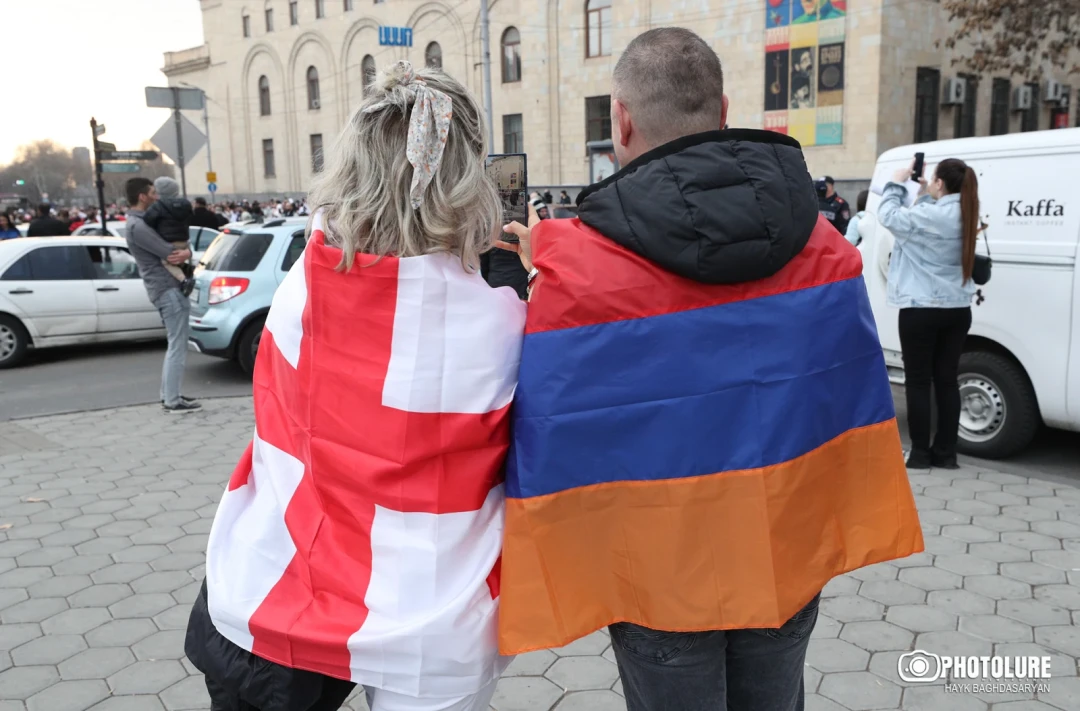
The post represents a rare reference to Armenia by the imprisoned former leader. Yet it is part of a broader trend among the Georgian opposition: as Georgia’s anti-EU ruling party entrenches itself in Tbilisi, the country’s opposition has looked to Armenia’s growing relations with Brussels as a source of regional pride and European engagement in the Caucasus.
Armenia on the Georgian radar
Generally speaking, pro-Western Georgian political forces have historically not paid significant attention to Armenia.
“Armenia has been viewed as the only official ally of Russia in the South Caucasus,” Giorgi Badridze, former Georgian ambassador to the United Kingdom (2009–2013) and senior fellow at Georgia’s Rondeli Foundation told CivilNet.
“For years [Yerevan’s Russian alignment] meant that Georgia's and Armenia's strategic interests were not aligned while Georgia had been moving toward the West.” Badridze said.
“Before 2018, Armenia was largely seen [by] Georgians as a Russian ally, which diminished public interest towards the country, since Georgians are very unacceptive of Russia because of our historical and ongoing experience,” Marika Mikiashvili, a Yerevan-based member of the Droa opposition party, told CivilNet.
Recently, however, there has been a notable shift from the Georgian opposition.
As Armenia began to pivot away from Russian influence in the aftermath of the 2020 Nagorno-Karabakh war and the 2023 ethnic cleansing in the region, some in Georgia saw the trend as an Armenian political project they could identify with.
“It is quite palpable,” Mikiashvili said when asked about growing interest in Armenia within the Georgian opposition. “The Georgian democratic forces now speak about Armenia's positive example quite a lot as a reference point for Georgians.”
According to Mikiashvili, this spike in attention is also tied to Georgia’s own descent into what the opposition views as a pro-Russian autocracy.
“A couple of years ago, Armenia's democratic development was noted but not really incorporated in the discourse as a reference for Georgia,” Mikiashvili remarked, “But two years ago, Georgia wasn't really a dictatorship either.”
For many, Pashinyan’s recent victory served as confirmation that Armenia was now the center of pro-EU politics in the South Caucasus.
As electoral results were still emerging on June 7, Salome Zourabichvili, former president and one of the most internationally prominent Georgian opposition figures, posted on X, congratulating Pashinyan on his victory.
“Today, Armenia firmly chose a free, independent, and European future,” she said.
“Armenia, your fight is our fight, these elections will determine your democratic European future. We stand with you!” Zourabichvili wrote in a separate post several days prior to the election.
Similar sentiments came from the imprisoned Georgian opposition leader Elene Khoshtaria, who penned an open letter to Armenia following the European Political Community summit in Yerevan last month.
“I want to express my admiration and respect for Armenian society, which has managed to secure a European perspective through its own hard work in a difficult situation,” Khoshtaria wrote.
A European family in the Caucasus
With Georgia largely closed off from Brussels, Armenia’s growing ties to the EU now appear to some as a prime route for EU engagement with the Caucasus. Such a framing offers Armenia and Georgia taking part in a joint struggle against Russian influence and for European integration.
Similarly, in her message to Armenia, Khoshtaria wrote: “The South Caucasus, with its unique history, will be a region of peace, development, and freedom within our native European family.”
Less clear from these endorsements, however, is a detailed sense of Armenia’s own internal debates and politics unrelated to foreign policy.
The recent messages addressed to the Armenian people by Georgian opposition figures have generally not touched upon the Nagorno-Karabakh issue, normalization with Turkey and Azerbaijan, or the allegations of democratic violations by the Pashinyan government, central elements of the 2026 parliamentary campaign.
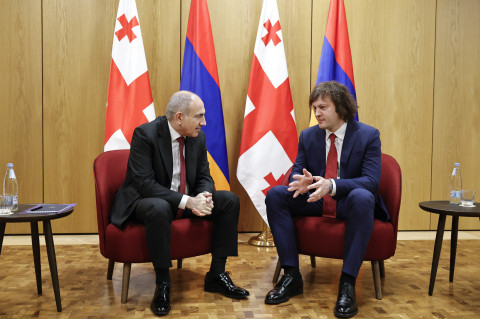
Moreover, such statements would seem to overlook the fact that Pashinyan’s government has maintained working relations with the Georgian Dream government.
Support for Yervean’s current pro-European course “does not mean we are disinterested in upholding the democratic standards by the Pashinyan government,” Badridze argues, “but from our own experience, we know well what it means when Russia's proxies talk about democracy.”
The three largest opposition parties in Armenia are all generally regarded as pro-Russian, with reports indicating direct cooperation with the Kremlin by Strong Armenia.
A sometimes difficult relationship
Generally, relations and political ties between Armenians and Georgians have not always been free of tensions.
Saakashvili himself has sometimes been a controversial figure in Armenia. His time in power in the 2000s saw a push to limit regional authority in Georgia, much to the chagrin of some in the country’s Javakheti region with an Armenian-majority population. When Saakashvili described one Georgian ethnic-Armenian activist imprisoned on weapons and hooliganism charges as an "enemy of the Georgian state,” the Armenian church in Georgia accused Sakashvili of “dissemination of anti-Armenian sentiments.”
Zourabichvili has also faced accusations of anti-Armenian sentiments. In 2024, some balked at her use of the term “Armenian carousel” to describe vote rigging practices. She has not visited Armenia since 2019.
Prominent pro-European Georgian figures, including Saakashvili, have at times backed Azerbaijan in the conflict against Armenia, framing the issue in terms of territorial integrity, a critical principle for Georgia given the Russian-backed separatist regions of Abkhazia and South Ossetia.
On the other hand, Armenia’s past ties to Russia and the presence of Russian troops in the country likely contributed to suspicion from more Western-minded Georgians, especially after the 2008 Russo-Georgian war. In the aftermath of the war, Georgia blocked Russian arms shipments to Armenia, complicating delivery routes.
Meanwhile, while economic opportunities and Georgia’s ethnic-Armenian community often put Georgia on the radar for many Armenians, the reverse was generally not true for Georgians.
“Ten years ago, if you asked an average Georgian about a tourist trip to Yerevan, you'd likely get indifference at best,” said Mikiashvili.
“The geopolitical factors, such as alignment with Russia, were definitely a hindrance in this regard,” Mikiashvili argued, describing relations with Russia as “redline” for many Georgians.
There is evidence of a growing interest in Armenia as a tourist destination among Georgians. In the first five months of 2026, roughly 20,000 more Georgians visited Armenia than in the same period of 2025.
The Georgian Dream roadblock
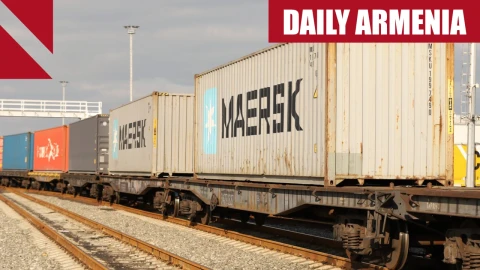
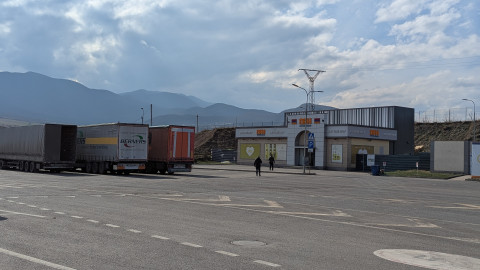
Pashinyan has explicitly commented a number of times on Georgian-EU relations and their relevance for Armenia’s own potential European aspirations. Without a land or sea connection to an EU member state, Georgia would serve as a critical piece of connecting geography linking Armenia to the broader European sphere.
“I have to say frankly that the biggest problem on Armenia’s EU integration path at the moment is the suspension of political dialogue between the EU and Georgia,” Pashinyan said during a March address to the European Parliament.
“For us, Georgia is a link to the European Union,” Pashinyan stated.
“Our expectation and request is that the constructive EU-Georgia process will develop. This is as important for Armenia as it is for Georgia,” the Prime Minister went on to say.
“If in the past Armenia’s pro-Russian position (membership in Russian economic and military alliances) was at odds with Georgia’s active thrust toward the West, today ever more pronounced Russian-style governance and policies of the Ivanishvili government might represent an obstacle in Armenia’s European integration,” Badridze argues.
“The chances of ensuring the [national] interest of both countries will be higher when they will pursue the common goals and act in concert.”

 Stories