By Nicholas Castillo
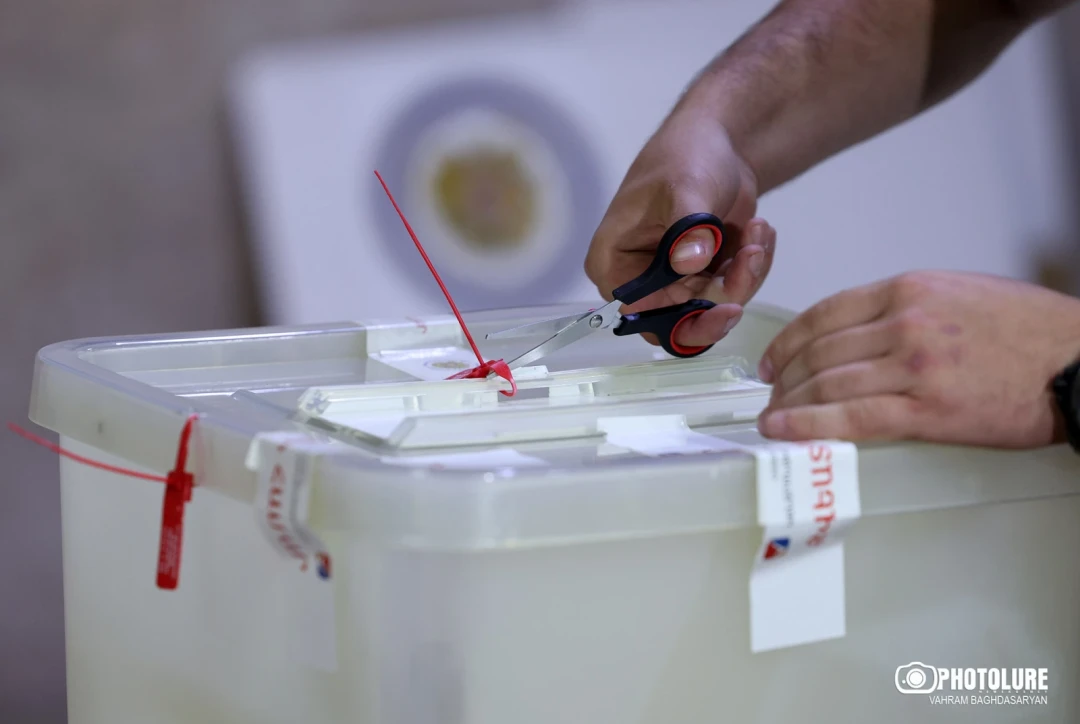
The outgoing Armenian parliament passed a new series of regulations on Friday instituting stricter residency requirements for potential voters. Under reforms instituted in 2007, most Armenian citizens are already unable to cast ballots from abroad, but the latest move provides additional requirements for those Armenians looking to vote from within the country’s borders.
Under the recently passed amendments to the electoral code, Armenian citizens will only be allowed to cast ballots if, 48 days prior to the date of the election, they have lived in Armenia for at least 366 days of the last two years. Additionally, for local elections, Armenian citizens would only be allowed to participate if they had been registered on the local district voting roll for at least six months prior to the election.
The motion was passed during the last session of the parliament before the newly elected mandates were filled.
Civil society organizations push back on the new restrictions
Days prior to the parliament approving the new restrictions, a number of Armenian civil society organizations published a joint statement condemning the move as “unconstitutional” and an “unlawful and disproportionate restriction of the principles of universal and equal suffrage, one that jeopardizes democratic principles and infringes upon the political rights of citizens of the Republic of Armenia.”
The statement was signed by the Armenian Public Journalism Club, Helsinki Citizens' Assembly Vanadzor Office, the Protection of Rights without Borders NGO, and others.
The organization asked the parliament to withdraw the then-draft law and seek public consultations for similar legislation going forward.
Transparency International’s anti-corruption office in Armenia released a statement arguing that “although the draft raises issues of essential importance for the exercise of electoral rights, their resolution requires a more in-depth constitutional, legal, and professional discussion.”
Gemafin Gasparyan, the founder of BOON TV, took a sharper tone, describing the measure as “disproportionately, illogically, and irrationally depriving the same citizen of the right to vote in one day without proper consideration.”
Blogger and political commentator Gor Madoyan accused the government of “stealthily depriving the citizens of the right to vote” and went as far as to compare the Armenian government to those of Vladimir Putin and Alexander Lukashenko.
Armenia’s new requirements in global perspective
Broadly speaking, allowing voting from abroad is typical of democracies, with only a minority of countries blocking international voting.
While countries such as Ireland and Israel largely do not allow voting from beyond the borders of the country, they have not passed as detailed restrictions as those now instituted by Yerevan. Cyprus and Malta are the nearest equivalents in Europe, requiring six months and six of the last 18 months of residency, respectively in order to be entered on voter rolls. Denmark only allows ballots to be cast by permanent residents.
The amendments appear to be a reaction to allegations of electoral interference by Russia during Armenia’s recent parliamentary elections. During the June 7 elections, reports indicated the Kremlin and pro-Russian actors were attempting to organize the arrival of Armenian citizens living in Russia in order to increase the vote share of pro-Russian opposition parties.
Little evidence has thus far emerged of large-scale arrivals, with one member of the pro-Russian Armenian Alliance arguing that roughly only 3,000 more Armenians had arrived around the voting period than in the same period of the previous year.
Opposition parties have decried the changes as an effort to disenfranchise hundreds of thousands of citizens, passed hastily by an outgoing government without sufficient public debate.
Artsvik Minasian, a member of parliament within former president Robert Kocharyan’s Armenia Alliance faction, described the amendments as “proof that the Civil Contract has nothing to do with human rights.”
Armenia is not the first country to limit access to voting in response to Russian attempts at electoral meddling. Moldova, while not barring citizens from casting votes abroad, brought down the total number of polling stations in Russia from seventeen to two in 2024 even as it broadly expanded the number of polling stations operating internationally.
Recent years have seen diaspora voting play a critical role in Moldovan politics, with nearly a third of all Moldovan citizens residing outside the country.
The new regulations come as Armenian policymakers turn their attention to a potential referendum on a new constitution. Azerbaijan has demanded that Armenia adopt a new governing document as part of finalizing a peace and normalization agreement between Baku and Yerevan, a task complicated by the Civil Contract party falling short of a two-thirds supermajority in June’s election.
Armenian Prime Minister Nikol Pashinyan has endorsed a new constitution, but framed it as a broader set of reforms aimed at resetting citizen-state relations rather than one connected to Azerbaijan’s position.
As with national and local elections, referendums are affected by the new rules around residency.




 Stories