By Siranush Adamyan
Russia could step up economic pressure on Armenia toward the end of the year, potentially using natural gas prices, grain supplies and other trade restrictions as leverage as relations between Moscow and Yerevan continue to deteriorate, political scientist Narek Sukiasyan told CivilNet.
Sukiasyan, a researcher at Yerevan State University’s Center for Civilization and Cultural Studies, said in an interview published by CivilNet on Thursday that Russia had so far mostly targeted Armenian exports, while leaving more sensitive areas of Armenia’s economic dependence largely untouched.
“The entire arsenal, roughly speaking, has not yet been used,” Sukiasyan said.
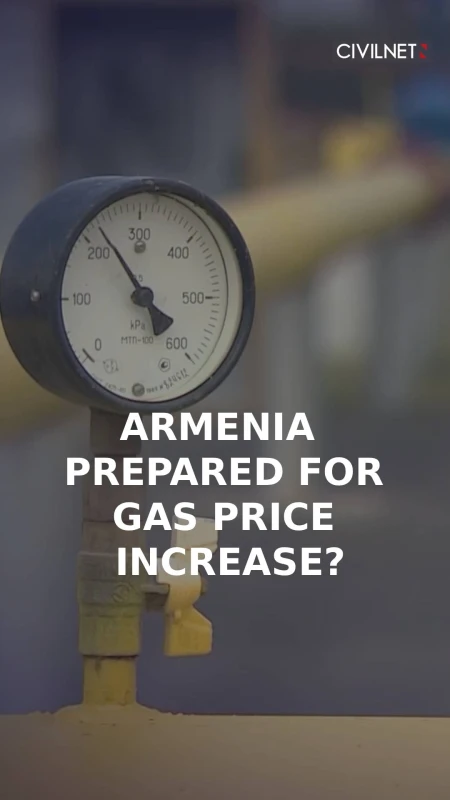
One of the first pressure points could emerge at the end of this year or early next year, when the price of Russian natural gas supplied to Armenia is expected to be renegotiated, he said.
Armenia remains heavily dependent on Russian gas. Around 85 percent of the country’s annual gas imports of 2.7-2.8 billion cubic meters come from Russia, with the remainder supplied by Iran. Armenia currently buys Russian gas at a border price of about $165 per 1,000 cubic meters.
Also read: Explainer: Why Armenia wants more gas from Iran
Sukiasyan said Moscow could also turn restrictions on exports from Russia to Armenia into a pressure tool.
“If we take wheat and grain supplies alone, that is an extremely serious lever,” he said.
Armenia imports most of the wheat it consumes, and around 99 percent of those imports currently come from Russia. The government has examined possible supplies from Kazakhstan, Ukraine, the United States, Canada and other countries as it seeks to reduce the risks created by that dependence.
Sukiasyan said other potential instruments could include employment rights, licenses and other regulations affecting Armenian citizens and ethnic Armenians living in Russia.
He argued that Armenia should use the period before any possible escalation to build alternatives rather than wait for a crisis.
“We have time. We need to work on creating those alternatives rather than wait for the moment when it happens,” he said.
Relations changed before the new government program
The growing economic risks come as Armenia formally recasts its relationship with Russia.
Armenia’s 2026-2031 government program no longer describes Moscow as a “strategic ally” or refers to “allied relations.” Instead, it calls for the “transformation and deepening of partnership relations with Russia.” Russia also appears eighth in the foreign policy section, after Armenia’s four neighbors, the European Union, United States and France.
Also read: Russia no longer a ‘strategic ally’ in Armenia’s new government program
Sukiasyan said, however, that the actual change in the relationship began much earlier, after Azerbaijan’s September 2022 attack on Armenia and Yerevan’s dissatisfaction with the response from Russia and the Russia-led Collective Security Treaty Organization.
“Since then, de facto, Russia has not been accepted, regarded or treated as a strategic security ally,” he said.
He said the terminology in the new government program largely formalized a shift that had already taken place.
Sukiasyan cautioned against rushing to dismantle the extensive treaty framework that still governs Armenia-Russia relations. “If something does not work, let it not work. There is no need to abolish it,” he said, arguing that formally reopening the legal framework could create additional friction with Moscow.
EU-EAEU choice among Moscow’s red lines
Sukiasyan said Russia appeared willing, for now, to separate disagreements in some areas from cooperation in others. But he identified several issues on which Moscow would likely be less flexible.
The most important, he said, is Armenia’s institutional choice between the Russian-led Eurasian Economic Union and the European Union. Strategic infrastructure, including the railway system and energy assets, is another sensitive area.
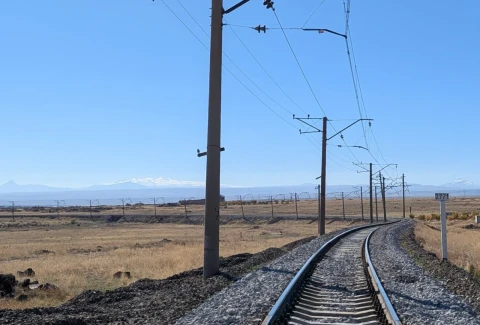
Sukiasyan said Armenia’s deepening ties with the EU were not the only reason for the deterioration in relations. Disputes over the Russian concession of Armenia’s railway network and questions surrounding the construction of a new nuclear power plant have developed in parallel.
Still, he warned that if Yerevan is using its EU ambitions to raise the stakes in relations with Moscow, the strategy could produce the opposite result.
Russia, he said, could interpret such moves as confirmation of its suspicions that Armenia is benefiting from EAEU membership while preparing for a future shift toward the EU.
Sukiasyan said EU membership for Armenia remained unrealistic in the short and medium term. In his view, that made reducing Armenia’s economic vulnerabilities before relations with Moscow deteriorate further particularly important.

 Stories