By Karen Harutyunyan
Voters in 21 Armenian communities are going to the polls today to elect local councils and community heads, in the second of four rounds of municipal elections scheduled this year.
The vote covers 10 provinces and includes several provincial capitals. According to Ministry of Internal Affairs data from Oct. 21, 477,721 voters are registered.
The size of the electorate varies widely. Artashat is the largest community, with 69,175 voters. It is followed by Martuni with 46,437, Hrazdan with 40,242, Armavir with 37,961 and Gavar with 32,701. These five communities account for 47.4 percent of all voters. The smallest is Shamiram, where 303 people are eligible to vote.
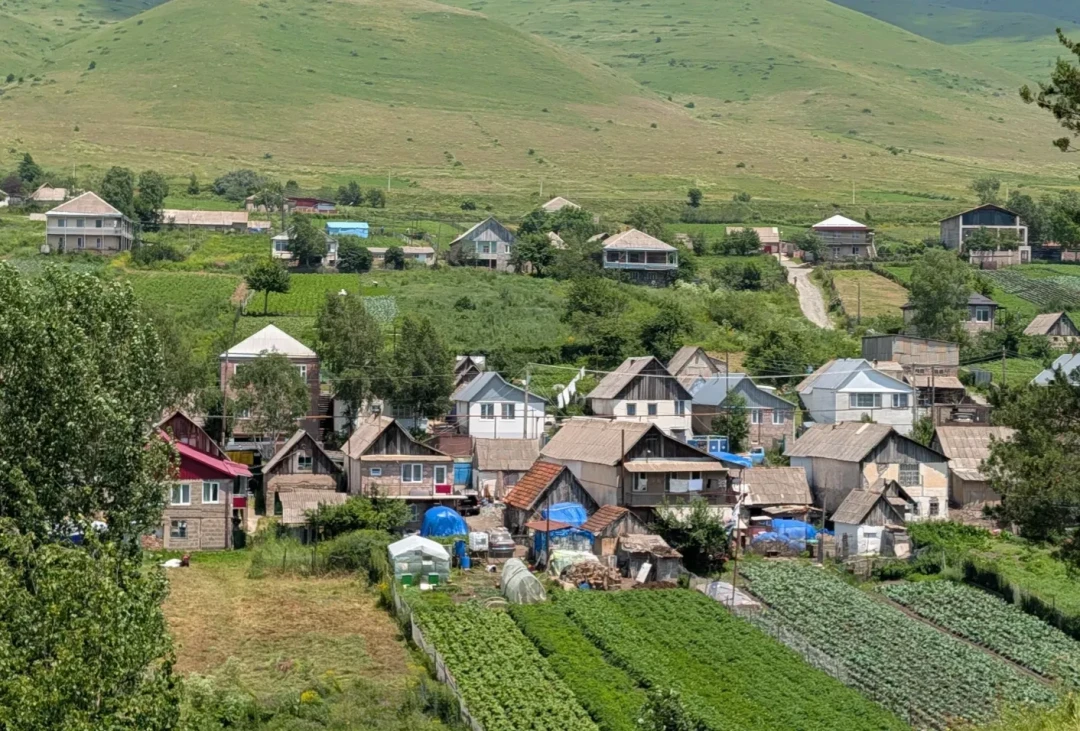
Nineteen communities are electing councils under a proportional, party-list system. The other two, Fioletovo and Shamiram, are using the majoritarian system. Fioletovo has two candidates for community head, while Shamiram has only one.
Limited competition
A total of 45 lists from 13 parties and four alliances are competing in the 19 proportional races, with 1,622 candidates. The ruling Civil Contract party is running in all 19.
In five communities, Armavir, Vardenis, Garni, Akhuryan and Vayk, Civil Contract is the only party on the ballot. Six communities have two contenders, and four have three. Only four communities, Stepanavan, Martuni, Artik and Meghri, have four political forces in the race.
Opposition participation is thinner than in 2021. The number of competing forces has dropped in 11 of the 19 communities. In Artashat, it fell from six to three, and in Hrazdan from four to two. In 2021, Armavir was the only one of these communities where Civil Contract ran unopposed. As of Oct. 21, 28 candidates from various parties had withdrawn.
The Strong Armenia alliance, the second-largest faction in parliament, is competing in only three communities. It is running under the Strong Armenia party's name in Stepanavan and led by its member New Era party in two others. Strong Armenia won the most votes of any opposition force in June's parliamentary elections. Parties from the Armenia alliance, the third-largest faction, are competing in five communities.
According to Mariam Hoveyan, election expert, genuine competition exists in only four of the 19 communities. She pointed to several possible reasons: parties drained of resources after June's national vote, the central government's hostility toward opposition-run local governments, and the fact that council members are not paid.
Detentions ahead of local elections
Stepanavan, in Lori province, is one of the most closely watched races. In June's parliamentary elections, Strong Armenia beat Civil Contract there by just six votes, 3,207 to 3,201. Four forces are now competing: Civil Contract, Strong Armenia, the Republic Party and the Gortsarar party. A fifth, the Hayreniq party, withdrew its list.
On Oct. 21, four days before the vote, law enforcement officers searched Strong Armenia's local office and the homes of supporters. Fourteen people were detained, including the party's mayoral candidate Arsen Gevorgyan and several council candidates.
The Anti-Corruption Committee accused them of giving, facilitating and receiving vote bribes as a group. It released a video and said the candidate and his team had paid dozens of voters and had lists and cash ready for 30 more. A court later ordered Gevorgyan held in pretrial detention for two months. His party said he would continue campaigning.
Andranik Gevorgyan, a Strong Armenia lawmaker and the party's campaign chief, said no evidence of vote-buying was found in the office. He said the video had been edited. Deputy Speaker of Parliament Vahagn Aleksanyan of Civil Contract questioned why the money, if intended for office expenses, had not been transferred through a bank.
On Oct. 23, 10 more people were detained in the same investigation. The Anti-Corruption Committee said a total of 24 people had been charged with giving, facilitating or receiving vote bribes.
Opposition figures in at least three other communities were taken into custody on Oct. 24, a day before the vote.
In Artik, Shirak province, authorities took into custody Arthur Astoyan, the Country to Live party's mayoral candidate, and several members of his team, according to party leader Mane Tandilyan. Tandilyan accused the authorities of targeting her party to prevent a change of local leadership in Artik.
Levon Vahradyan, the Hayreniq party's mayoral candidate in Artik, told RFE/RL's Armenian Service that some members of his team had also been taken into custody and were at the Anti-Corruption Committee.
Four political forces are competing in Artik: the ruling Civil Contract party, led by incumbent community head Ananik Voskanyan; the Free Democrats, led by Mkhitar Varagyan; Country to Live, led by Astoyan; and Hayreniq, led by Vahradyan.
In Martuni, in Gegharkunik province, representatives of the opposition Our Community alliance were taken into custody on the morning of Oct. 24. They included Aram Karapetyan, the alliance's candidate for community head and a board member of the Republican Party of Armenia, according to party member Henrikh Danielyan. Danielyan called the detentions political persecution and pressure on the opposition.
Some media outlets also reported that Davit Harutyunyan, the opposition mayor of Yeghegnadzor in Vayots Dzor province, his deputy Vardan Avagyan and three council members had been taken into custody.
The Anti-Corruption Committee told RFE/RL that investigative and other procedural actions were underway in several Armenian communities as part of criminal proceedings into suspected election-related corruption. It said some people had been arrested but did not say who they were or whether the Yeghegnadzor officials were among them.
The detentions come amid opposition allegations of political pressure ahead of the local elections, including claims of dismissals from jobs over political affiliations.
Similar disputes arose ahead of the June 7 parliamentary elections, when law enforcement agencies carried out numerous arrests in investigations into suspected electoral offenses. On election day, Civil Contract campaign chief Arayik Harutyunyan said the number of arrests had reached 200. He rejected opposition allegations that authorities were deliberately timing arrests to disrupt campaigns, saying suspected vote-buying often occurred in the final days before an election.
How the vote works
According to Hoveyan's guide, communities with more than 4,000 voters elect councils by party list. Smaller communities, mostly non-merged communities populated by ethnic minorities, use the majoritarian system. There, candidates can be nominated by parties or run independently.
If a party wins more than half of council seats, its top candidate automatically becomes community head. Otherwise, the council elects the head in an open vote. Council size depends on the number of voters, ranging from five seats to 65 in communities with more than 300,000 voters.
The threshold to enter a council is four percent for parties and six percent for alliances. In parliamentary elections, alliances need eight or 10 percent, depending on their size. As Hoveyan explains, if three or more forces run, at least three must win seats. If two run, both enter the council.
Where only one party is running, voters receive an additional "against" ballot. The party wins all seats only if more than half of participating voters support it. Otherwise, the election is declared invalid. Shamiram's sole mayoral candidate likewise needs the support of more than half of those who vote.
Citizens aged 18 and over who have been registered in a community for at least six months can vote, provided they spent at least 366 of the previous 730 days in Armenia. The rules, adopted by parliament in July, are being applied for the first time in this year's local elections. Opposition lawmakers have challenged them in the Constitutional Court. Non-citizens registered in a community for at least a year, including refugees from Nagorno-Karabakh, can also vote. There is no runoff in local elections.
The remaining rounds of local elections are scheduled for Nov. 29 and Dec. 13.




 Stories