 Karen Harutyunyan
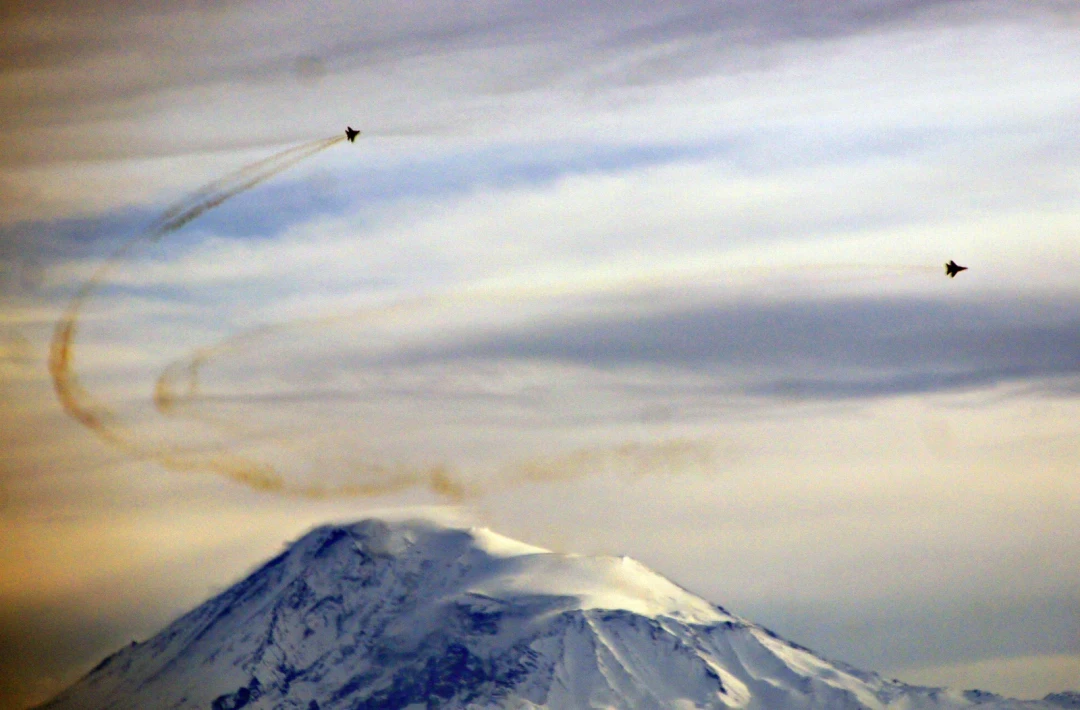
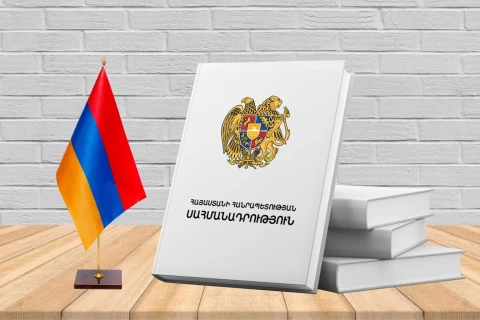
Armenia's draft new constitution no longer describes the country's coat of arms, which features Mount Ararat with Noah's Ark and the emblems of four kingdoms of historical Armenia.
Prime Minister Nikol Pashinyan published the draft on Monday. The text is not final. It will go through public discussion and may still change based on the feedback received.
Article 21 of the current constitution describes the state symbols in detail.
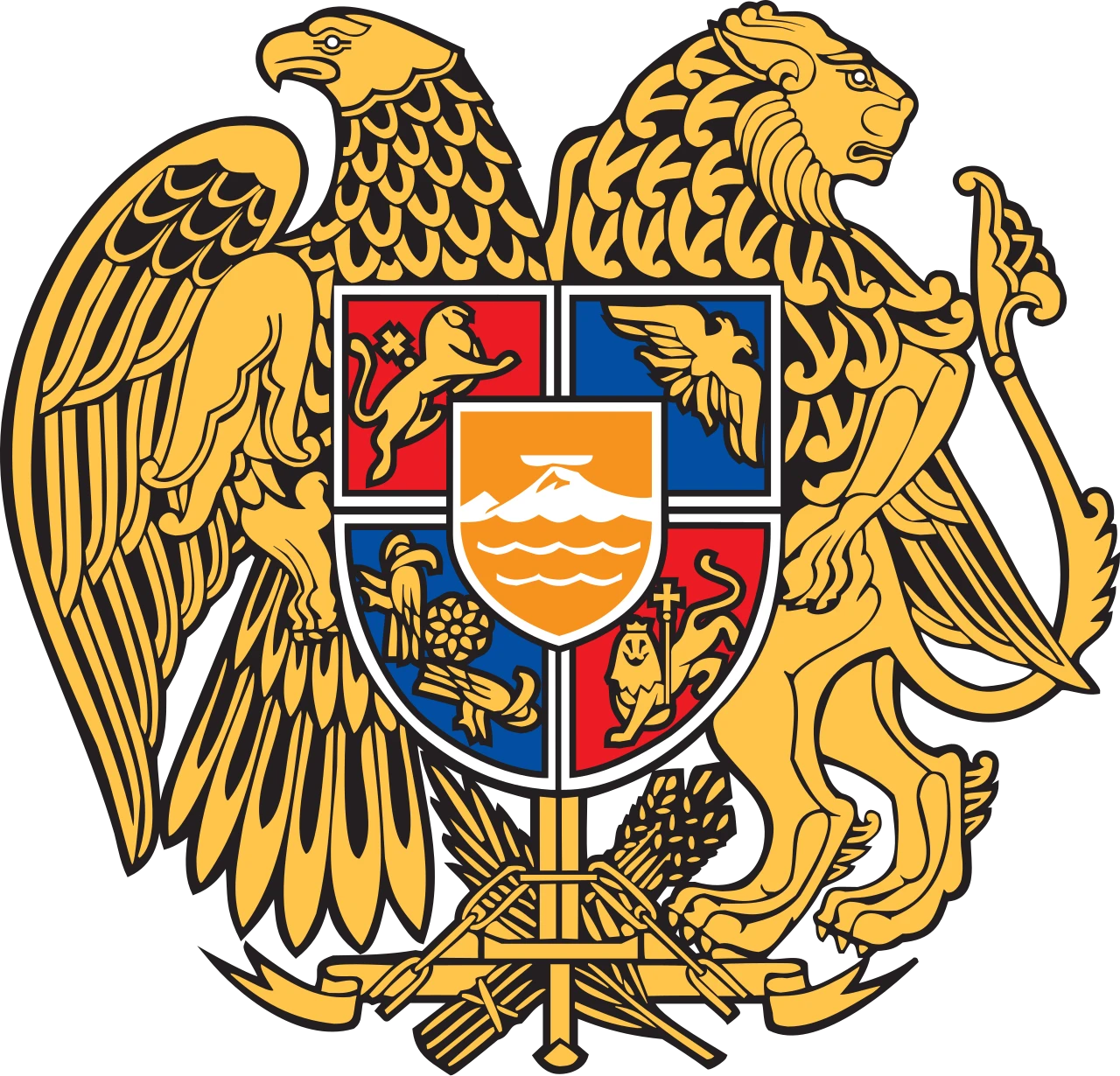
"The coat of arms of the Republic of Armenia is: in the center, on a shield, are depicted Mount Ararat with Noah's Ark and the coats of arms of the four kingdoms of historical Armenia. The shield is held by an eagle and a lion, and below the shield are depicted a sword, a branch, a sheaf of wheat, a chain and a ribbon."
The same article describes the flag as a tricolor of red, blue and orange horizontal stripes.
Article 16 of the draft lists the coat of arms, the flag and the anthem as state symbols. It contains no description of them.
Under the draft, any change to the coat of arms, flag or anthem would require a separate law adopted by referendum.
A transitional provision keeps the existing laws on state symbols in force. Any change to them, or any new law describing the symbols, would require a referendum.
This means the symbols would not change immediately. But the constitution would no longer protect the image of Ararat on the coat of arms.
The four kingdoms
The coat of arms is a version of the emblem of the First Republic of Armenia (1918-1920). It was designed by architect Alexander Tamanian and artist Hakob Kojoyan. Independent Armenia readopted it on April 19, 1992.
The shield is divided into four parts. Each carries the emblem of an Armenian royal dynasty. Mount Ararat with Noah's Ark is at the center.
Bagratuni (top left, red). The kingdom of the 9th to 11th centuries, with its capital at Ani.
Arshakuni (top right, blue). The Arsacid dynasty, which ruled from the 1st to the 5th centuries. Armenia adopted Christianity as its state religion under this dynasty in the early 4th century.
Artashesian (bottom left, blue). The Artaxiad dynasty, which ruled from the 2nd century BC to the early 1st century AD.
Rubenian (bottom right, red). The Rubenid dynasty of the Armenian kingdom of Cilicia on the Mediterranean.
The four kingdoms ruled lands that today lie mostly outside the Republic of Armenia, in present-day Turkey, Azerbaijan, Iran and Georgia.
Mount Ararat is the highest peak of the Armenian Highlands. It dominates the skyline of Yerevan, but it lies in Turkey. For Armenians, it is a central national symbol.
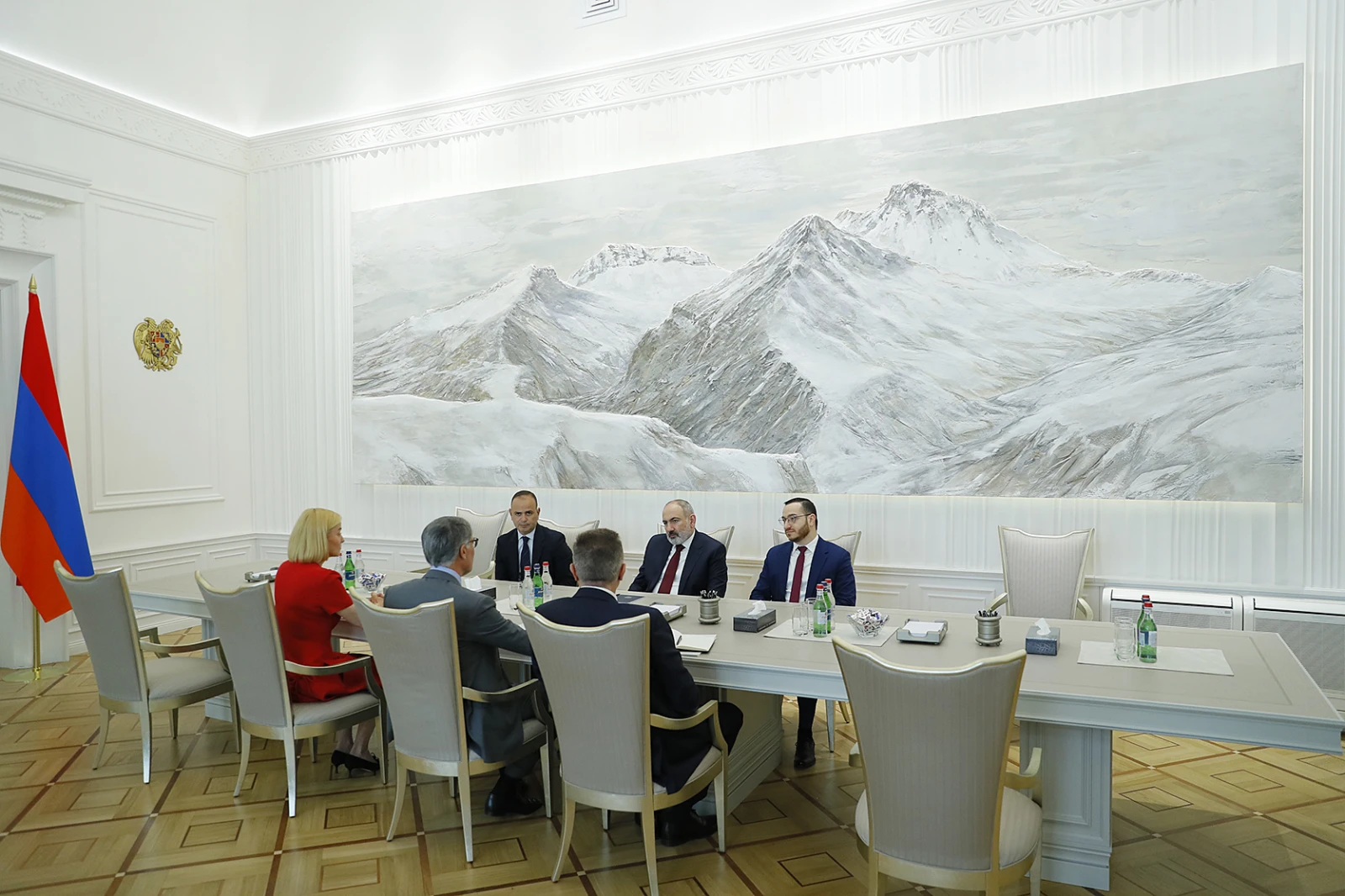
Pashinyan has repeatedly said that Armenia's highest mountain is Aragats, at 4,090 meters. "Mount Aragats is in Armenia, Mount Ararat is not," he said in 2023. He has hung a large painting of Aragats in his office.
In November 2025, the government removed the image of Ararat from passport entry and exit stamps. Pashinyan called the decision sovereignty-driven and rejected claims that it was tied to Turkey.
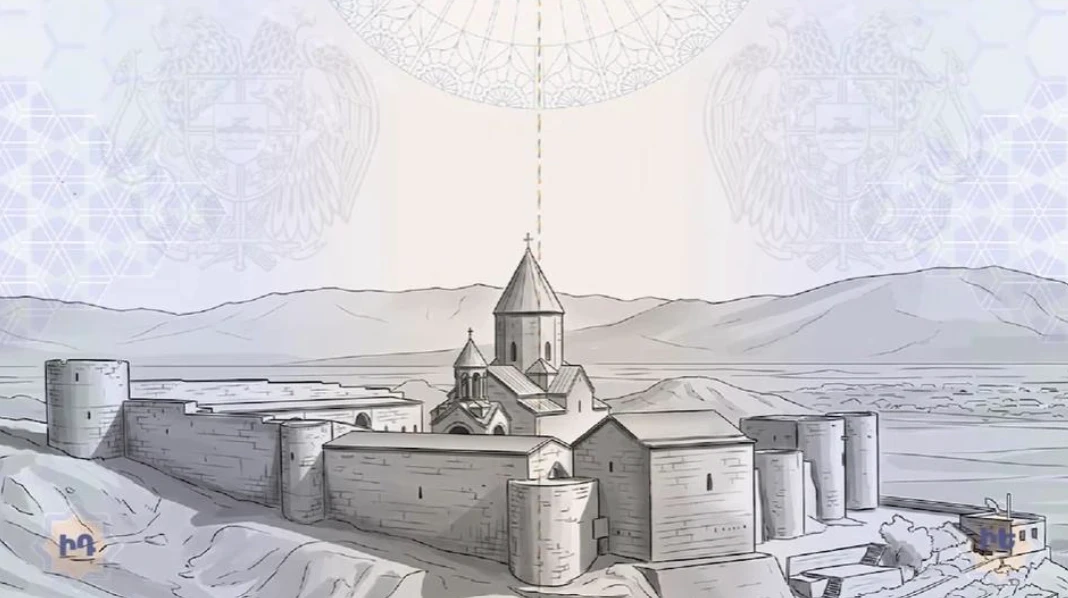
Armenia began issuing new biometric passports on November 1. Critics have noted that a page in the new passport shows the Khor Virap monastery, which stands at the foot of Ararat, without the mountain.
Historical Armenia and Real Armenia
The changes fit into a concept Pashinyan calls Real Armenia.
"The government and I personally have come to the conviction that historical Armenia and real Armenia are not only not compatible but are often at odds with each other and even create serious threats for each other," Pashinyan told parliament in April 2024.
He has defined Real Armenia as the internationally recognized country with an area of 29,743 square kilometers. The concept excludes lands that were part of historical Armenian states but now belong to neighboring countries.
Pashinyan has applied the same logic to the term Western Armenia. "Western Armenia is Armavir, Talin, Maralik. There is no Western Armenia beyond this, and cannot be," he wrote on Facebook in January 2025, in response to Azerbaijan's Western Azerbaijan narrative.
For Armenians, Western Armenia refers to the historical homeland in present-day eastern Turkey, including Van, Mush, Erzurum and Bitlis. Armenians were driven from these lands during the 1915 genocide. Many regard it as a lost homeland.
Pashinyan has said the new constitution "cannot cross the ideological red lines of 'Real Armenia'."
The current coat of arms carries the symbols of historical Armenia: the four kingdoms and a mountain outside the state's borders. The draft constitution leaves the choice of symbols to a future referendum.
Critics view the removal of Ararat from passport stamps as a concession to Turkey and Azerbaijan. Pashinyan and his team argue that Armenia should not irritate its neighbors with such symbols or convey threatening messages.
The draft must still go through public discussion. Under the current constitution, putting it to a referendum requires the votes of two-thirds of all lawmakers. The draft must still go through public discussion. Under the current constitution, putting it to a referendum requires the votes of two-thirds of all lawmakers. Pashinyan's Civil Contract party holds 64 of the 105 seats, six short of the 70 needed.
Also read: What changes under Armenia's draft new constitution


 Stories