 Karen Harutyunyan
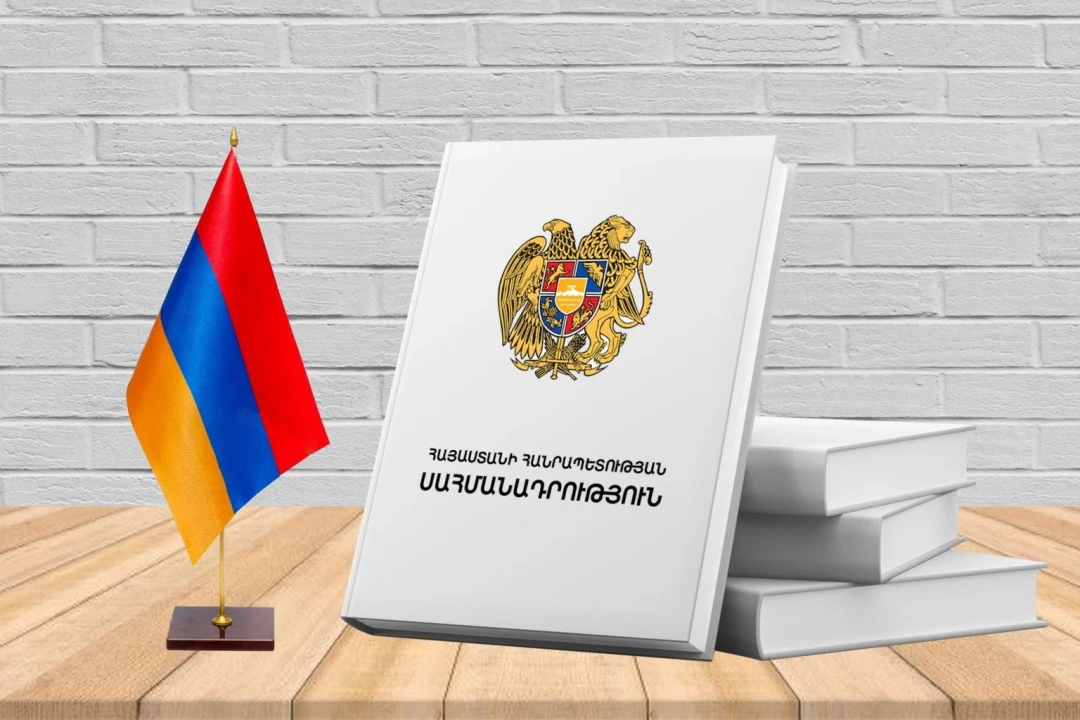
Prime Minister Nikol Pashinyan has published a draft of Armenia's new constitution. CivilNet compared it with the current constitution, focusing on the main changes to governance, elections, the judiciary and citizens' rights.
The document is a preliminary draft, not the final text, and may still change.
The draft contains no reference to the Declaration of Independence. It proposes restricting the voting rights of citizens living abroad, allowing citizenship to be revoked for certain crimes and introducing a one-time vetting of judges. It also changes the powers of parliament, the government and independent state bodies.
The current constitution has 16 chapters and 220 articles. The draft has 12 chapters and 89 articles. It keeps Armenia's parliamentary system of government but revises several of its mechanisms.
Reference to the Declaration of Independence removed
The preamble of the current constitution begins with the words "The Armenian people." It refers to the fundamental principles of statehood and national goals enshrined in the Declaration of Independence.
The new preamble begins with "We, the people of the Republic of Armenia." It speaks of a mission to build "an independent, peaceful, secure, prosperous state in our internationally recognized territory."
Under the draft's first article, the founder of the Republic of Armenia is the people of the Republic of Armenia. The third article defines the people as the collective whole of Armenia's citizens.
Azerbaijan has made the removal of the Declaration of Independence reference from Armenia's constitution a precondition for signing a peace treaty. Baku argues that the 1989 decision on the reunification of Armenia and Nagorno-Karabakh, which the declaration cites, amounts to a territorial claim.
Pashinyan presents the constitutional reform as an internal Armenian process.
Description of state symbols taken out
Article 21 of the current constitution describes Armenia's coat of arms and flag. The description of the coat of arms mentions Mount Ararat and Noah's Ark.
The draft contains no such descriptions. Under Article 16, a law adopted by referendum would set the description of the coat of arms and flag, as well as the anthem.
This does not mean the symbols would change immediately. Existing laws would remain in force until they are amended.
Voting rights of citizens abroad restricted
Under the current constitution, Armenian citizens aged 18 and over have the right to vote in parliamentary elections and referenda, with no general requirement on how long they have lived in Armenia.
Under Article 20 of the draft, only citizens who have permanently resided in Armenia for at least one of the two years before a vote would have the right to vote and take part in referenda.
The change directly affects the many citizens living abroad.
It could also affect participation in citizens' initiatives, since these require signatures from citizens with voting rights.
Revoking citizenship becomes possible
Article 47 of the current constitution prohibits depriving an Armenian citizen of citizenship.
Article 24 of the draft would allow a court to revoke citizenship for crimes against the foundations of the constitutional order or state security.
The cases and procedures for such decisions would be set by law.
This is a fundamental change to an existing constitutional guarantee.
Some laws may have retroactive effect
Under Article 73 of the current constitution, laws that worsen a person's legal situation have no retroactive effect.
Article 20 of the draft keeps this principle but adds an exception: when retroactive application is necessary in a democratic society to protect the public interest.
Core criminal law guarantees remain, including the ban on imposing a heavier penalty than the one applicable when the offense was committed.
Parliament gains new powers
Under the draft, the National Assembly could dissolve itself with the votes of at least three-fifths of all lawmakers. The current constitution provides no such general option.
Parliament could pass a vote of no confidence not only in the prime minister but also in individual deputy prime ministers, ministers and diplomatic representatives. Such a decision would require a majority of all lawmakers and would end the official's powers.
As a general rule, nominees for deputy prime minister, minister and diplomatic representative would be discussed at a public session of a parliamentary committee. An exception is made for the initial formation of the government after a new prime minister is appointed.
The status of lawmakers also changes. A lawmaker appointed to the government would have their mandate suspended rather than terminated.
Winning party's advantage limited
Under Article 30 of the draft, if a party or bloc wins more than two-thirds of the seats, other forces would receive additional seats so that their combined share makes up one-third of parliament.
The procedure for forming a stable majority also changes.
If no majority emerges after an election and no coalition is formed within two weeks, the newly elected parliament would not be formed, and a new election would be held.
Only if the repeat election also fails could the stable-majority mechanism be applied, including a second round if necessary.
Opposition gains representation in independent bodies
The draft gives the parliamentary opposition the right to nominate members to the Supreme Judicial Council, the new Prosecutorial Council, the Central Electoral Commission, the Central Bank and the Audit Chamber.
Similar representation is provided for in collegial autonomous bodies.
On the parliamentary ethics committee, the number of ruling-majority and opposition members would be equal, with some exceptions.
But the election procedure for some senior posts could also reduce the need for opposition consent. If a candidate for Constitutional Court judge, prosecutor general or human rights commissioner fails to win three-fifths of the votes in the first round, a majority of all lawmakers could be enough in the next round.
Prime minister's role in the armed forces expands
Under the current constitution, the prime minister is commander-in-chief of the armed forces in wartime.
Under the draft, the prime minister is commander-in-chief without this limitation.
Sending the armed forces outside Armenia would require the consent of the National Assembly, except in cases provided for by ratified international treaties.
In urgent cases, the prime minister could decide on the use of the armed forces inside the country, but the government could cancel that decision.
The draft makes no mention of the Security Council. Under the current constitution, the council is chaired by the prime minister and sets the main directions of defense policy.
Governance of the judiciary changes
Under the current constitution, the general assembly of judges elects five of the 10 members of the Supreme Judicial Council, and parliament elects the other five.
Under the draft, parliament would elect all 10 members by a three-fifths vote. The general assembly of judges would only nominate candidates for the judge members.
Members' terms would be extended from five years to seven.
The draft also creates a Prosecutorial Council as an independent state body. It would handle the lists of candidates for prosecutor and for promotion, as well as disciplinary matters.
Sitting judges to be vetted
Under Article 85 of the draft, all sitting judges, except Constitutional Court judges, would undergo a one-time vetting within five years.
Once the constitution enters into force, they would serve as acting judges while retaining their powers to administer justice.
The vetting would be carried out by a five-member commission elected by parliament with a majority of all lawmakers. It would review judges' integrity, professional competence and financial assets.
The commission's conclusions would be submitted to the president, who could act on them or return them with objections.
The conclusions themselves could not be reviewed by courts. But a decision not to appoint a judge or to end their powers could be appealed to the Constitutional Court.
New requirements for media and parties
Article 28 of the draft, for the first time, enshrines at the constitutional level the principle of financial transparency for media outlets.
The status of the Television and Radio Commission also changes. It would no longer be a separate constitutional body. Its functions are to be transferred to a new autonomous body.
Parties could be financed only through donations from citizens and from the state budget.
The draft also allows the Constitutional Court to ban a party that receives funding from a foreign source or advocates renouncing the state's independence.
Constitutional amendments only by referendum
Under the current constitution, parliament can amend a number of articles by a two-thirds majority.
Under the draft, all constitutional amendments would be adopted only by referendum.
At the same time, the draft lowers the parliamentary threshold for putting a draft to a referendum from two-thirds to three-fifths.
The minimum share of yes votes needed for a constitutional referendum to pass rises from one-quarter to one-third of citizens eligible to take part in referenda.
The new residency requirement could, however, also change the total number of eligible citizens on which this threshold is based.
The conditions for citizens' initiatives also change. The number of signatures needed to propose a bill falls from 50,000 to 40,000. The signature threshold for putting a rejected bill to a referendum falls from 300,000 to 200,000.
The word ‘only’ removed from the rule on amending referendum laws
Under Article 204 of the current constitution, laws adopted by referendum can be amended only by referendum.
Article 79 of the draft does not include the word only. It says such laws can be amended by referendum.
The explicit requirement to amend them exclusively by referendum is therefore not retained.
The draft does not clearly specify what other procedure could be used to amend these laws.
Transitional exception for supranational memberships
The draft keeps the requirement that questions of membership in supranational international organizations and changes to Armenia's territory be decided by referendum.
But Article 89 sets a transitional exception for organizations Armenia joined through parliamentary ratification of an international treaty before the relevant constitutional referendum requirement took effect.
Parliament could decide on leaving or suspending membership in such organizations under the rules for terminating international treaties.
The provision could apply to the Eurasian Economic Union, which Armenia joined in January 2015. This would mean leaving the bloc might not require a referendum.
Church's status kept, secular state principle enshrined
The draft keeps the recognition of the exclusive mission of the Armenian Apostolic Holy Church as the national church.
But the wording on relations between the state and the church changes.
Under the current constitution, these relations "may be regulated" by law. Under the draft, they "are regulated" by law. Legislative regulation thus becomes a constitutional requirement.
The draft adds, for the first time, the word secular to Armenia's constitutional definition of the state. This provision is included among the articles that cannot be amended.
What comes next
Not all provisions of the draft would take effect at the same time. Several chapters on the system of government would apply from the first session of the next National Assembly, and five years are set aside for the vetting of judges.
The text published is not the final document. It must still go through public discussion and may be changed.
Under the current constitution, putting it to a referendum requires the votes of at least two-thirds of all lawmakers.
Pashinyan has said he is ready to resign if voters reject the new constitution in a referendum, and that if it is approved, he will not run for prime minister in the next election.
The parliamentary opposition factions have said they will not support putting the new constitution to a referendum.


 Stories