Civilnet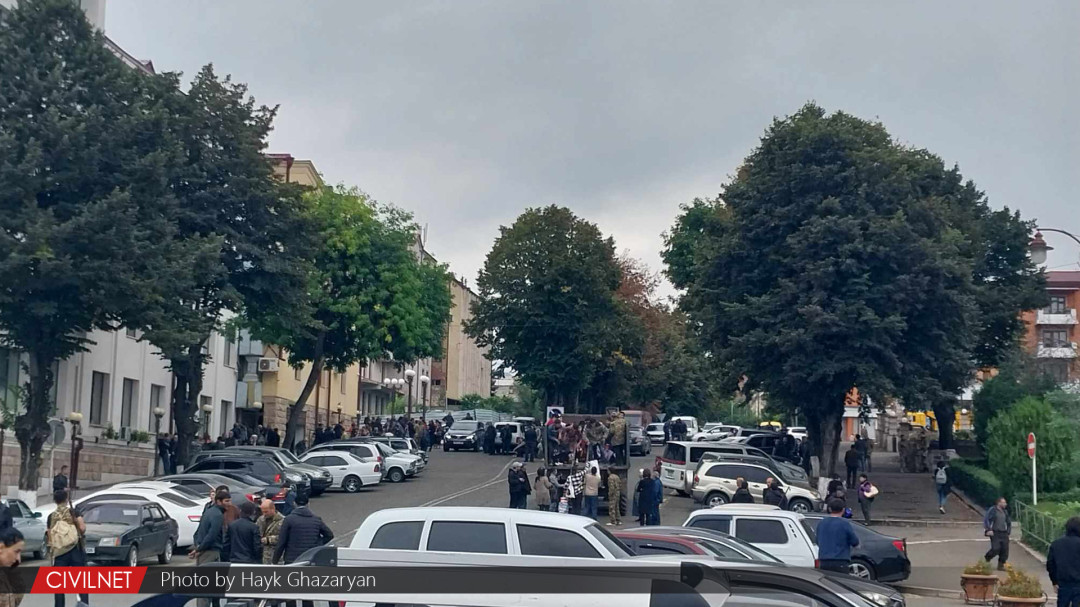
By Ani Avetisyan
Following the intense fighting and shelling of civilian infrastructure overnight, the authorities in Nagorno-Karabakh agreed to surrender on Wednesdsay and meet with Baku’s representatives in the Azerbaijani town of Yevlakh tomorrow.
An emergency meeting of the UN Security Council is also planned for Thursday at French President Emmanuel Macron’s initiative.
The exact numbers of casualties from Azerbaijan’s recent attacks remain unclear. According to the latest information, the Armenian side has at least 200 killed and more than 400 hundred wounded, including women and children. The numbers of casualties are incomplete as it was impossible to contact the hospitals in Martuni and Askeran.
The ceasefire agreement was reached on 13:00 local time on September 20 through the mediation of the Russian peacekeeping contingent, which was previously seen assisting the evacuation of the local Armenian population from the villages where Azerbaijani forces approached Stepanakert.
According to the text of the agreement, the Artsakh Defence Army will be dissolved and the region disarmed, the weapons belonging to Karabakh Armenian defence forces will be collected and utilised. The issues of “re-integration” of Nagorno-Karabakh Armenians will be discussed at the meeting in Yevlakh.
Karabakh Armenians reported ongoing shooting hours after the ceasefire agreement, with smaller caliber weapons and decreased intensity.
More than 7,000 civilians have been forced to flee from Karabakh’s Martakert, Martuni, Askeran and Shushi regions, according to Karabakh authorities. They moved towards Stepanakert as the Azerbaijani troops crossed the line of contact, advancing in the region.
According to local sources, tens of thousands of Karabakh Armenians have gathered near the Stepanakert airport, where the Russian peacekeeping forces are based, waiting for evacuations.
Locals reported that Russian peacekeepers have not given any information about possible evacuation. Despite Azerbaijan’s claims that “humanitarian corridors” were provided through the Lachin corridor, no Armenian has so far left the region.
In Armenia, protests broke out Wednesday evening local time in front of the government building. People are demanding the resignation of Prime Minister Nikol Pashinyan for his handling of the Karabakh crisis.
Baku says “integration” plan is ready
Azerbaijan’s Ilham Aliyev’s adviser Hikmet Hajiyev stated on Wednesday that the “integration plan” for Karabakh Armenians is ready, saying that “the presence of 10 thousand members of illegal armed groups” is unacceptable. Hajiyev stated that the implementation of the “integration plan” is Azerbaijan’s “internal affair”.
Hajiyev also said that a corridor will be opened for the “Armenian forces” to leave the region. Earlier, official Baku stated that those civilians who do not want to live under Azerbaijani rule, will be allowed to leave.
The Azerbaijani plan of integration includes the dissolution of Karabakh authorities and the deployment of Azerbaijani forces to the region.
Armenian Prime Minister Nikol Pashinayn urged the Armenians of Nagorno-Karabakh to stay in their homes, stating that with its suggestion of a ceasefire, Russia took “complete” responsibility for the security of the region’s population. He expressed hopes that the Russian peacekeeping mission will now fulfil its responsibilities and ensure the security of the civilian population.
The Russian side, however, distanced itself from the hostilities and refused to take responsibility, blaming Armenia and its recognition of Nagorno-Karabakh as part of Azerbaijan for the situation. “De jure, now we are talking about the actions of the Republic of Azerbaijan on its territory”, the Kremlin spokesperson Dmitry Peskov stated.



 Stories