 Civilnet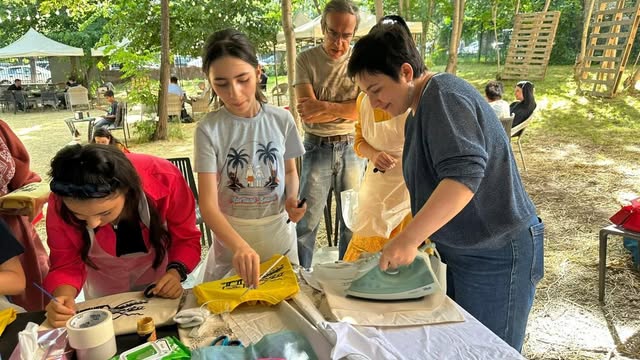
By Minahil Arif
Narine Hakobyan, 29, tears up recalling the blockade in 2022 when she had to stand in long queues for just a single loaf of bread. Her husband was serving in the army and would rarely come home, making her the sole parent responsible for the kids. She moved to Yerevan when roughly 120,000 Armenians were ethnically cleansed from Artsakh in 2023 following continuous violence and the full blockade of the region by Azerbaijan.
Hakobyan survived the blockade together with her sister. When one of them stood in lines for food, the other stayed home with her kids.
Before the blockade and the ensuing violence, Hakobyan started a small business of her own. Her daughter’s love for sweets led her to this path. She wanted her kids to have healthy chocolates because she didn't trust the sweets at the grocery store. To solve the problem, she decided to make her own with the ingredients she wanted - and turned this into a business.
She was collaborating with stores in Stepanakert and in Yerevan. However, the blockade began just one month after she started her business, and she soon ran out of necessary materials and ingredients
In September 2023, she had to evacuate her home and leave Artsakh. The public was consumed by terror, forced to leave their lives behind. Hakobyan spent two days on the road in the cold when their car ran out of gas.
“The forced displacement was once a story that we used to read,” she says.
As a way of coping with the pain, Hakobyan decided to focus on her business.
“Life gets easier when you work on something,” she says.
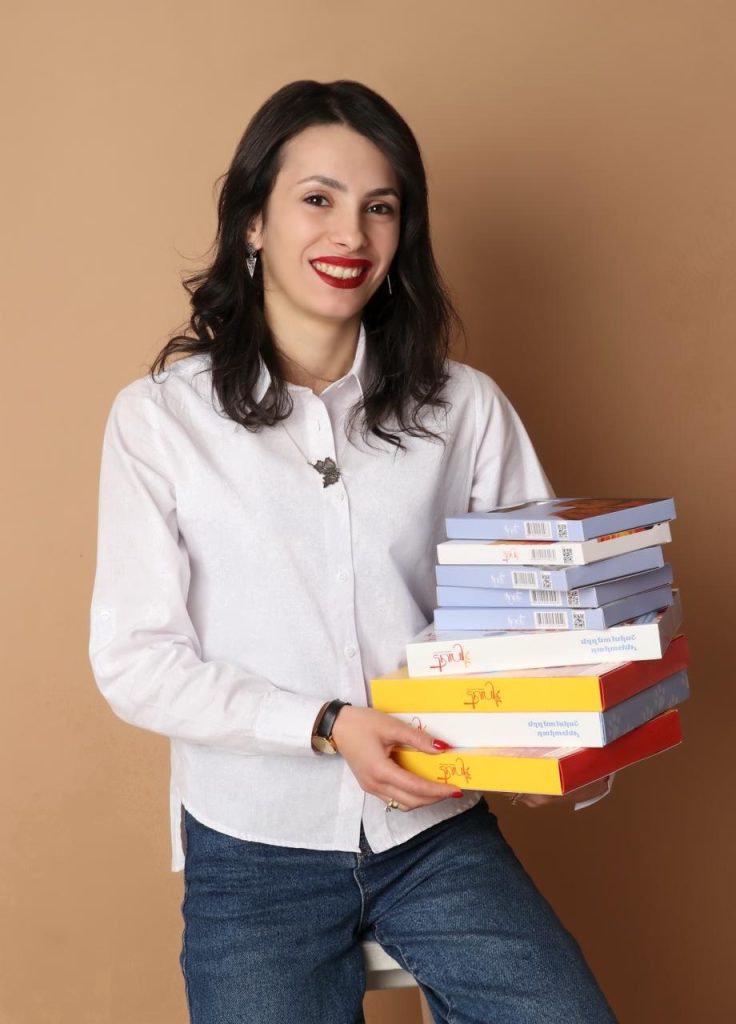
Her husband continued to serve in the military after they fled to Armenia, and she took this time to rebrand her business and register it. She considers herself fortunate to have support to run her business in Yerevan after all she went through.
While having to live with the trauma of uprooting their entire lives, women from Artsakh have had to focus on survival by rebuilding businesses they had back home or starting something completely new. The lack of secure stable jobs has exacerbated the situation.
Marta Arakelyan, 41, another displaced person, describes her life in Artsakh as one filled with energy and contentment. With beaming eyes and a wide smile, she talks about her job, her home and her dream of constructing a house for her child. Now, all she is left with is hope that one day the future will not seem so bleak.
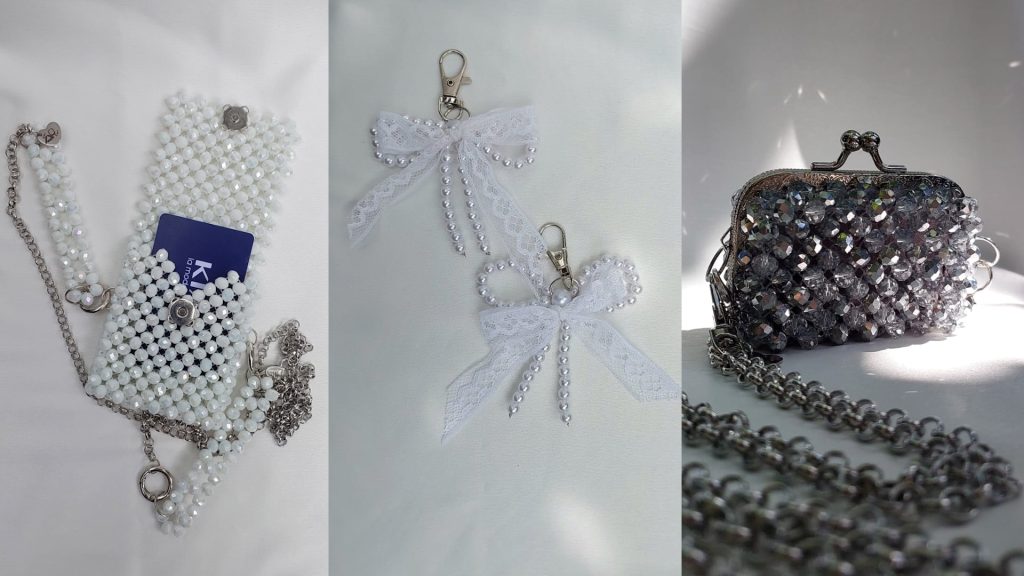
Arakelyan was working in the customer care unit at a telecommunications company in Artsakh until she was forcibly displaced. Unable to find similar employment, she resorted to making beaded jewellery bags and accessories. She now lives with her sister in Yerevan, where they have started a business called L’esprit De I’Artsakh (French for ‘the spirit of Artsakh’).
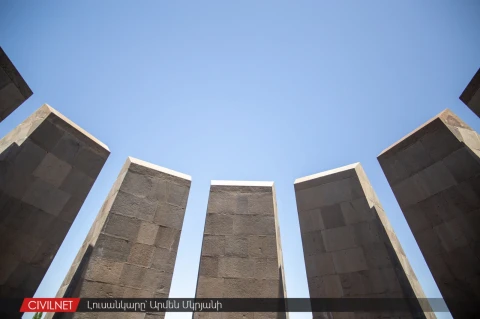
The business logo has pearls gathered in the shape of the Tatik Papik monument. She chose this visual because she lived ten minutes away from the monument, where she has cherished memories with her family. For her, it doesn't just represent a memory, it represents a mission to return and rebuild an even more prosperous homeland.
What started as a gift idea for celebratory occasions, turned into a full-time business. The first item Arakelyan and her sister made was a bag for their kids’ classmates at school.
When she couldn't find a job in the same field she had worked in for the past 15 years, she saw a women’s entrepreneurs competition that provided her an opportunity to start this business. She registered for the competition and won first place. With the support from the award, she was able to invest in tools like an embroidery machine.
While she looks for work similar to the one she had in Artsakh, she has also been participating in various trainings to improve her skills in the IT industry.
But this new business has a permanent place in her heart.
“Even if I find a day job, it doesn't mean that I will leave this business because I’ve started to really love it and it is important to love what you do,” she says
For Ida Poghosyan, 34, also from Artsakh, it was important to start a business that was connected to her home in Artsakh. Ten days after displacement, Poghosyan decided to start her own Artsakh Pakhlava venture. This was her way of preserving her culture while earning money.
“We realized that there was no alternative, we had to work,” she says.
When she baked her first batch of Atsakh pakhlava, she sold it to nearby restaurants in the center of Yerevan on Northern Avenue. She then reinvested the money back into her business, which she named Ida’s Bakery.
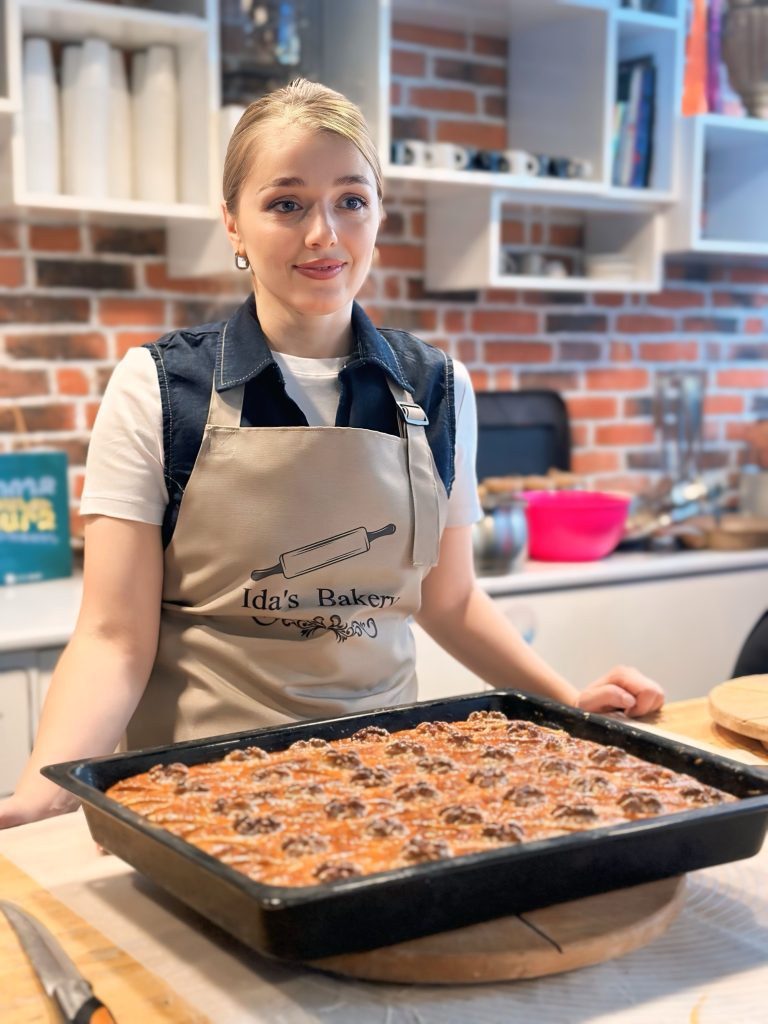
After displacement, making money was the most important priority for Poghosyan, but it did not take precedence over preserving her culture. One of the restaurants she went to told her that they preferred another kind of pakhlava.
They asked her, “Do you want to earn money or preserve your culture?”
“Definitely preserve my culture,” she told them.
“I am sure you can guess, we did not collaborate,” Ida says.
For some, it was important to start a venture to support themselves after displacement. For others, it has been a way to protect certain memories.
Tamara Sarkisyan, 10, could not bring her cats to Armenia with her when her family left Artsakh. She started drawing their images to not forget them. That is when she got the idea to start a business with her mom. Their business features a collection of pyjamas with Sarkisyan’s drawings printed on them.
This was not meant to earn money, it was to keep their memory alive.
“Summer of 2021 was the last time I saw the cats. We didn't know it was our time. We didn't have the opportunity to say goodbye. But I know that my cats are alive, they are healthy and they are not dead,” Sarkisyan says.
Tamara’s mother, Yelena Sarkisyan is a designer and has been helping to bring her daughter’s vision to life. Their relatives in Russia sent them pyjamas and Yelena worked on printing the drawn images on the items. This is how they keep the memory of their beloved cats alive.
As women cope with the agony of losing everything, they show strength and resilience by working on building their lives from the ground up once again. While carrying the weight of trauma on their shoulders, they keep focusing on the future.

 Stories