 Alexander Pracht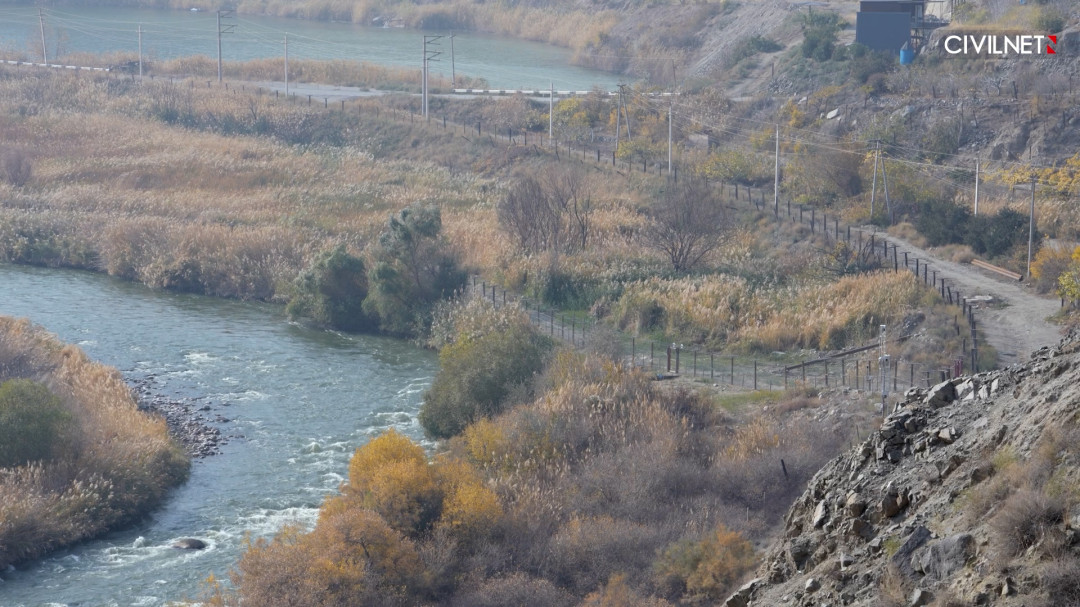
With nationwide elections scheduled for June, Armenia’s current government, led by Prime Minister Nikol Pashinyan, is seeking re-election amid widespread voter apathy and low trust in political institutions and forces.
One of the government’s most notable foreign policy outcomes during this term was the signing of the Trump Route for International Peace and Prosperity (TRIPP) agreement with the United States, a regional transport initiative announced last August following a trilateral meeting between Pashinyan, Azerbaijani President Ilham Aliyev, and U.S. President Donald Trump.
The project, aimed at reopening transport routes in the South Caucasus, became a central element of the peace declaration signed at the White House and addresses a long-standing demand by Baku to establish a direct connection between mainland Azerbaijan and its Nakhichevan exclave, an issue Azerbaijan has pursued through sustained and at times aggressive pressure, particularly since the 2020 war in Nagorno-Karabakh.
The government has presented TRIPP as a major diplomatic breakthrough, with U.S. officials insisting that any transport arrangements under the project will be reciprocal, meaning Armenia would gain transit rights through Nakhichevan just as Azerbaijan would secure access across Armenia’s southern Syunik province.
Baku, however, continues to frame the initiative as the so-called “Zangezur corridor,” a term Yerevan has consistently rejected. Critics of the Armenian government portray TRIPP as an implicit concession, questioning whether Azerbaijan would, in practice, allow Armenian transit at all. They also point to an uneven distribution of shares in the Armenian-American company set to manage the infrastructure (74% to 26% for the first 49 years, shifting to 51–49 if the agreement is extended), as well as potential complications for Armenia’s relations with Iran.
As the election campaign gains momentum, TRIPP is increasingly emerging as an important theme in both the ruling party’s and the opposition’s pre-election statements. Below, we outline the positions taken by figures widely seen as potential candidates for prime minister.
For a detailed breakdown of the TRIPP framework and the provisions disclosed so far, readers can refer to our explainer on the project.
Robert Kocharyan
Robert Kocharyan, Armenia’s president from 1998 to 2008, sharply criticized TRIPP during a press conference last week.
“TRIPP is an Armenian-American project for Azerbaijan and Turkey,” Kocharyan said. “This is probably the most accurate definition. There is no Armenian interest at all.”
He went on to describe the initiative as a major security risk, arguing that it could become “our biggest security threat.”
Kocharyan also warned that Iran’s negative reaction to the project could leave Armenia caught in a broader geopolitical confrontation.
“The U.S. has zero economic interest in the South Caucasus,” he said, adding that Washington’s real goal is “taking control of the border with Iran.”
Aram Sargsyan, who briefly served as prime minister in 1999–2000 under Kocharyan, responded to the former president’s criticism of TRIPP in a Facebook post on Thursday.
“I wonder why this did not concern Mr. Kocharyan back in 1999, when he proposed swapping Meghri for Lachin, a scenario in which Armenia would not have had a border with Iran at all.” This refers to a territorial exchange plan discussed in 1999 that was never implemented.
Kocharyan announced in December that he would most likely take part in the election. His Armenia Alliance holds 29 seats in the current parliament.
Sargsyan leads the Hanrapetutyun party, which holds no seats in the current parliament but could enter the legislature if it clears the 4% threshold in the June election. The party is widely expected to align with the ruling Civil Contract in that case, as it did during the 2023 Yerevan municipal elections.
Armen Ashotyan
In an interview with CivilNet on Friday, Armen Ashotyan of the Armenian Republican Party (led by former president Serzh Sargsyan) said TRIPP poses serious risks to Armenia’s sovereignty and security and would require renegotiation if the Republican Party returns to power.
Describing the initiative as “a threat,” Ashotyan argued that strategic transport corridors under joint control carry long-term geopolitical risks. He cited historical examples such as the Suez and Panama canals, saying Armenia should draw lessons from cases where internationalized infrastructure became a source of conflict rather than security.
Rejecting claims that a future government would simply scrap the project, Ashotyan stressed that the Republican Party favors renegotiation rather than cancellation.
“There are many grounds for renegotiation,” he said, adding that both the conceptual framework and the operational model of TRIPP would need revision to better protect Armenian interests.
He also noted that the framework announced by Armenian and U.S. officials is not a legally binding agreement, leaving room for changes.
Ashotyan further cautioned that foreign involvement, including U.S. participation, should not be automatically treated as a security guarantee, noting that international guarantees can shift with changing political circumstances.
Levon Zurabyan
Levon Zurabyan of the Armenian National Congress – a party led by Armenia’s first president Levon Ter-Petrosyan, has taken an even more critical stance on TRIPP, arguing that the initiative effectively amounts to a “corridor” project that could undermine Armenia’s sovereignty and long-term economic leverage.
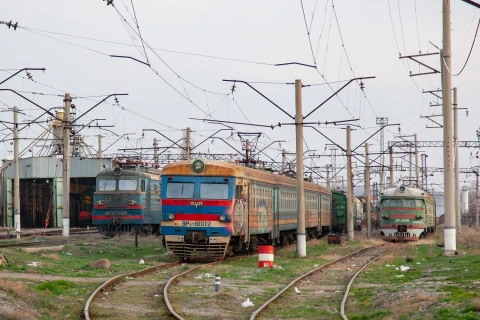
In recent statements, Zurabyan said Armenia should not reject transit in principle but insisted it must be balanced by developing alternative infrastructure, most notably a north–south railway connecting Armenia to Iran, so the country does not become dependent on Azerbaijan and Turkey for its main transport routes. He has also argued that TRIPP is “in essence a deal between Azerbaijan and the United States,” while dismissing recent normalization steps with Baku as pre-election stunts rather than substantive peace developments.
Also read: Fact-Check: Dissecting Disinformation and Narrative Distortions Surrounding the TRIPP Project
Narek Karapetyan
Narek Karapetyan, the prime ministerial candidate of the newly formed Strong Armenia party, established last month by the family of jailed businessman Samvel Karapetyan, described TRIPP as presenting both risks and opportunities for Armenia. Speaking at a press conference following the party’s launch, Karapetyan argued that the United States should be viewed as a guarantor rather than a partner in the process, and that more countries should be involved.
“Our broader foreign policy vision is that any peace agreement must have more than one guarantor. We see what happens to regions that have a single guarantor, or none at all.”
Karapetyan did not explain how a future government would compel Baku to accept a U.S. guarantor role, nor how such an approach would align with his movement’s de facto political orientation toward Russia.
Arman Tatoyan
Arman Tatoyan, Armenia’s former ombudsman under President Serzh Sargsyan and the leader of the Wings of Unity opposition group, is also running for prime minister. In a recent Facebook address to U.S. Vice President JD Vance, who is expected to visit Armenia later this month, Tatoyan praised Washington’s role in the TRIPP process.
“We highly appreciate and deeply value the efforts undertaken by you and President Trump last spring to prevent new aggression against Armenia, which resulted in the signing of TRIPP,” he wrote.
In a separate Facebook post published in December, Tatoyan also referred to TRIPP while outlining what he described as a potential tactic to secure the withdrawal of Azerbaijani troops from Armenia’s internationally recognized territory.
He suggested that, during his first week in office, his government would rename Lake Sev and surrounding areas the “Donald Trump National Reserve,” and rename the mountains around the spa town of Jermuk the “Melania Trump National Reserve.” Both areas are situated along Armenia’s border with Azerbaijan and were captured by Baku during the border clashes in 2021 and 2022.
Tatoyan argued that such a move would force Azerbaijani President Ilham Aliyev to deal personally with the political consequences of continued occupation, describing it as an issue for Aliyev to resolve. It is not clear whether Tatoyan was being entirely serious in making this proposal.
Government’s view
The Armenian government views TRIPP as a driver for foreign investment.
“TRIPP is, first and foremost, an investment project. Political considerations are gradually receding, and the economic dimension is coming to the fore,” Prime Minister Nikol Pashinyan said in parliament last month.
At a press briefing last week, he emphasized that the documents jointly adopted and published by the governments of Armenia and the United States explicitly exclude any transfer of control over Armenia’s borders or other sovereign responsibilities. Pashinyan stressed that TRIPP will attract hundreds of millions of dollars in new investments for Armenia – and added that the project will also yield significant security guarantees as a byproduct of these investments.



 Stories