By Siranush Adamyan
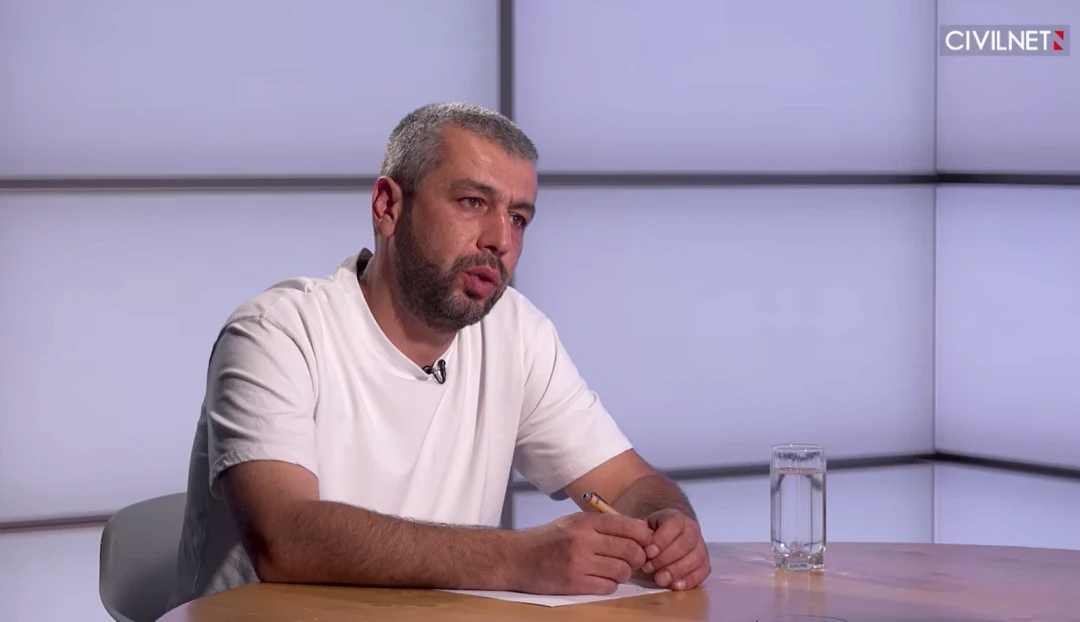
"You don't establish yourself in a new market on the last day. You don't do it after the problem hits," said Davit Davtyan, a farmer and founder of Davtyan Farms.
Davtyan, who grows asparagus for export, told CivilNet that Russia's sudden closure of its market to Armenian produce is not a manageable shock but a structural crisis years in the making — and one for which the state shares much of the blame. Russia has fully blocked imports of Armenian plant-origin products and their transit through the Eurasian Economic Union, amid political tension that Yerevan calls artificial.
Also read: Armenia faces sweeping Russian import restrictions across industries
The scale of the dependence is the core of the problem, Davtyan said. For at least 30 years Armenia has worked mainly with the Russian market, which absorbs an estimated 80 to 90 percent of the country's agricultural output. The transit ban makes it worse: because of Armenia's geography, most exports must physically pass through Russia, and alternative routes are few.
In response to the restrictions, the government allocated about $10 mn to subsidize export costs. Davtyan called the measure a short-term painkiller that does not touch the root of the problem, comparing the state's response to numbing pain without treating the disease. He cited subsidies of around 200 drams (roughly $0.50) per kilogram for apricots and 400 drams (about $1) for cherries as examples of relief that buys time but solves nothing. Diversification, he argued, should have begun long ago; he says he has been calling for it publicly for three to four years.
Two different Armenias
Davtyan drew a sharp line between two groups of producers. On one side are roughly 400 strong companies engaged in advanced agriculture, which he believes will find their own way out. On the other are 300,000 to 400,000 small rural farms, involving 700,000 to 800,000 people, that cannot. "What is going to happen to the rural farms — that is the most important question," he said.
That distinction is also his answer to Economy Minister Gevorg Papoyan, who has argued that Armenian producers have solved the quality problem and that their goods are fully compliant with European standards. In an interview with CivilNet earlier last month, Papoyan said Armenia's greenhouses are among the most advanced in the region and that the obstacle to Europe is scale, not quality.
Also read: Armenia cannot trade sovereignty for tomatoes, economy minister says
Davtyan does not dispute the point — but says it holds only at the company level. The few hundred advanced firms meet those standards; the hundreds of thousands of small farms that feed most of the rural economy do not, and they are the ones now exposed.
The Russian market, he said, trained Armenian agriculture into habits that do not transfer. Greens are gathered from villages, wrapped in newspaper, packed into 20-kilogram boxes, and shipped by truck or cargo plane to Russia. Europe will not accept that.
Small quantities are not exports
Davtyan warned against confusing real exports with symbolic shipments. With some irony, he described how he could send three kilograms of asparagus to a friend in France, have it photographed against the Eiffel Tower, caption it "Armenian asparagus in France," and collect tens of thousands of likes. That is not exporting, he said — sending small amounts is easy, but moving an entire harvest at scale is a different matter, and the public misunderstands the difference.
Real export to Europe, he said, requires uniform quality, uniform packaging, sufficient volume, and shipment through a single consolidated channel, plus procurement stations built for the standards of the new market. The consumer is different too: Europeans buy only what they will eat, respect produce and do not waste it, he said, so the loose, high-volume approach that worked for Russia does not apply.
He illustrated the standards gap with a visit to Singapore, where a buyer at the city's largest produce market measured his Armenian Jumbo asparagus with an electric caliper and would take only the thickest grade. To yield one ton that qualified, he said, he would need to grow 10 tons — whereas Russia accepted far thinner product.
The problem is in the land
For Davtyan, the export crisis traces back to the soil. He pointed to the village of Parvakar in the Tavush region, where viticulture is developed, but he argued that the grape varieties grown over the past two decades yield a spirit that European buyers do not want. The raw material cannot be changed overnight, because it means replacing the vines of thousands of growers, work that should have started gradually years ago.
The deeper fix, he said, is land consolidation, which he called Armenia's salvation. Agriculture is the backbone of the state, and, in his view, uncultivated land is a national security issue, but small, fragmented plots make technological, export-grade farming nearly impossible. He described buying land from nine separate owners in a Kotayk village, with each purchase costing more than the last — the fifth parcel, he said, was 200 percent more expensive. Consolidation requires political will, he argued, and could be done without violating property rights by making it unprofitable to sit on idle land.
He acknowledged that such steps are unpopular. Online commenters call him a future agriculture minister, he noted, but a real minister who cut benefits and forced consolidation would be hated.
"We need substance, not appearance," he said. "If we want to become a state, we have to do it right from the start."


 Stories