By Lia Avagyan
For apricot grower Sargis Ghazaryan, this year's poor harvest may have come at the right time.
As Russia tightens restrictions on Armenian agricultural imports, Ghazaryan believes a larger crop could have left many farmers struggling to sell their produce.
"If there had been a large harvest, farmers would have faced serious difficulties," he said. "At least now, with lower volumes, most of the produce can still be sold."
Not everyone in Armenia's agricultural sector shares his relative optimism.
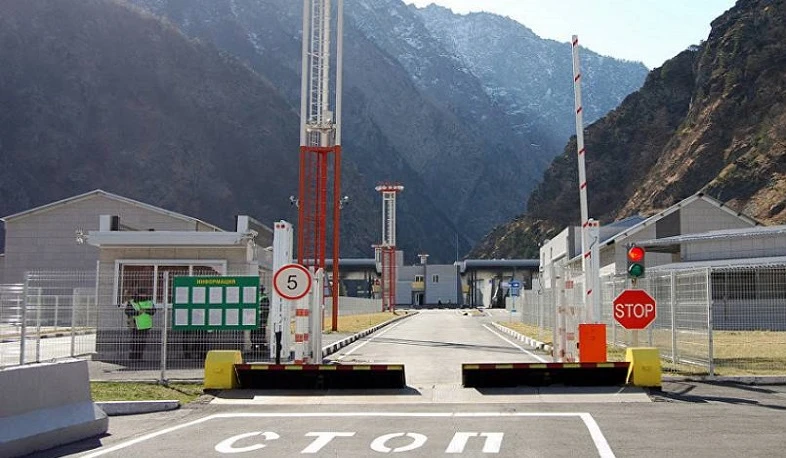
Over the past two months, Russia has imposed a series of restrictions on Armenian exports, beginning with flowers and later expanding to fruit, vegetables, and other agricultural products. The measures intensified in the weeks leading up to Armenia's June 7 parliamentary election and culminated on June 12, when Russia's agricultural watchdog effectively halted imports of most quarantine-controlled plant products from Armenia.
The restrictions have exposed the extent of Armenia's dependence on the Russian market and renewed calls for export diversification.
Also read: Armenia faces sweeping Russian import restrictions across industries
For producers of vegetables, greens, and flowers, the consequences are already being felt.
David Davtyan, founder of agricultural producer and exporter Davtyan Farms, described the Russian restrictions as devastating. According to him, the overwhelming majority of Armenian agricultural exports are destined for Russia, while transit through Russian territory to other Eurasian Economic Union countries has also become difficult.
"New markets are not built overnight, and they are not built after a crisis begins," Davtyan said. "For at least the last three or four years, I have been constantly talking about market diversification."
Industry specialists broadly agree that diversification is the only sustainable solution. They caution, however, that entering new markets requires years of investment, planning and adaptation.
Gagik Sardaryan, chairman of the board of the Center for Agribusiness and Rural Development (CARD) Foundation, said Armenia has spent decades relying on the easiest export destination available, Russia, while neglecting investments in quality control, food safety, and internationally recognized standards.
"If we fail to use this moment to invest, both through government programs and private capital, and to meet international standards, we will miss a major opportunity," Sardaryan said.
He argued that Russia's market of around 140 million consumers is increasingly limited, while global markets offer access to billions of potential buyers.
Sardaryan supports diversification but questions whether the government has done enough groundwork to help producers enter new markets. He said he was unaware of any comprehensive state-led studies identifying the most promising export destinations for Armenian agricultural products or the requirements needed to access them.
One of the biggest challenges is that alternative markets demand different standards.
Davtyan said decades of exporting to Russia have shaped production and packaging practices that are often incompatible with European requirements. Europe demands uniform quality, standardized packaging, and reliable supply volumes.
"We often collect products from different suppliers, package them in a simple way, and send them to Russia. That model works there," Davtyan said. "But can the same approach work in Europe? Most likely not."
In response to the Russian restrictions, the Armenian government has announced measures to compensate part of the transportation and customs costs associated with exports to new markets. The Economy Ministry has repeatedly emphasized the need to diversify exports and increase sales to the European Union, the Middle East, and other destinations.
Karen Azaryan, an international trade expert, said the government's response remains focused on emergency support rather than long-term reform.
"What is being done now is not enough," Azaryan said. "These are short-term, targeted measures. For meaningful results, interventions need to be systemic and cover every stage of the export chain."
According to the Statistical Committee, Russia accounted for more than 36% of Armenia's exports in the first quarter of 2026. European Union countries accounted for just 14%, much of it mineral exports rather than agricultural products.
For many in the sector, the current crisis has become a reminder of the risks of relying on a single market. The question now is whether Armenia will use the disruption to build new export channels or continue waiting for access to the Russian market to return.



 Stories