By Antonio Reis
On June 1, 2026, Armenia's Economy Minister Gevorg Papoyan talked up the country's diversifying export future. He pointed to greenhouse vegetables reaching Global G.A.P. certification - an internationally recognized standard for safe and sustainable agricultural production. He also mentioned Armenian flowers entering the Dutch market. He did not mention fish.
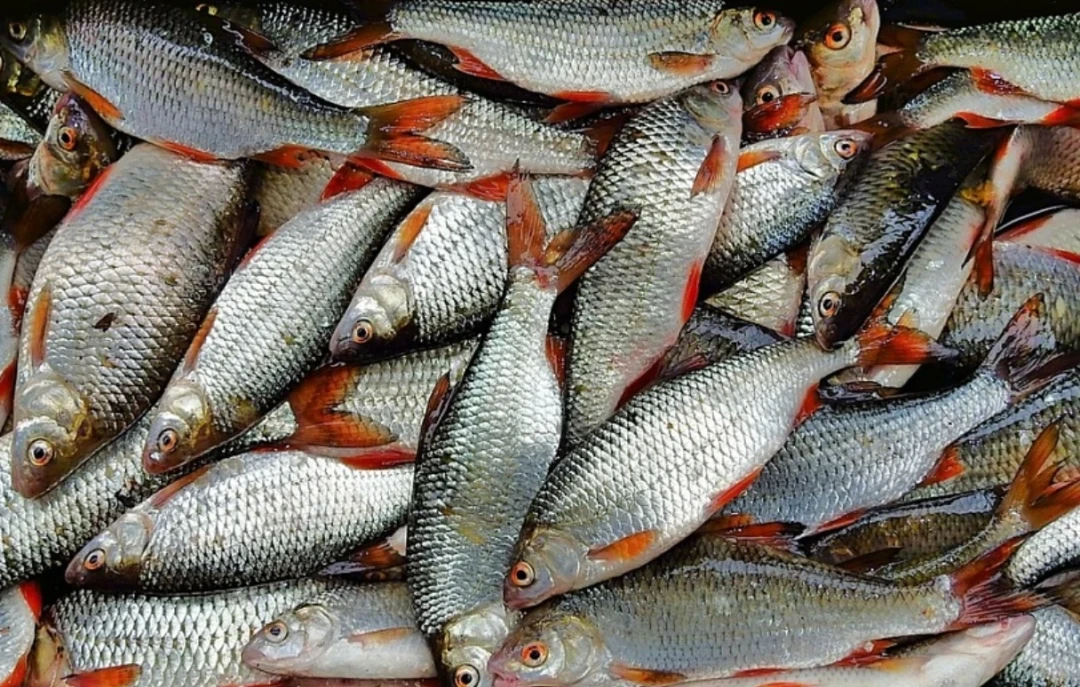
Weeks after the speech, Russia banned all Armenian fish imports. The move put a spotlight on the sustainability and survival of Armenia’s aquaculture industry, and Armenia’s wider dependence on the Russian market.
Papoyan’s omission of fish was most likely not an oversight. Unlike produce or flower exporters, fish exporters had no EU certification or registration system in place, and lacked the refrigerated rail or affordable air freight needed to reach Europe. Armenian Prime Minister Nikol Pashinyan acknowledged the wider failure. "Despite years of calls to diversify economic ties and the broad range of government tools introduced to support that goal, diversification has largely not taken place," he said.
In 2025, Armenia exported 9,844 tonnes of fish worth $73.9mn. Of that, 9,001 tonnes and $73.1mn went to Russia, per UN Comtrade figures.
The fresh and chilled fish business was almost entirely a Russian trade, with 99.8% of its tonnage and 99.5% of value. While a quarter of the frozen fish volume went elsewhere, nearly all of the value went to Russia.
Lack of diversification
Why did an industry this concentrated make no attempt to spread its risk, despite a trade dependence on Russia running well above the national average? Decades of friendly relations between Armenia and Russia shaped Armenia's membership in the Russian-led Eurasian Economic Union and the trade infrastructure built around it. Armenian membership in the EAEU brought trade terms free of tariffs and, until Russia's ban, the easiest cold-chain-viable export route producers had for perishable goods like fish. The EU, by contrast, required certification systems that did not exist and logistics Armenia could not yet support.
Producers and officials pointed to the resulting commercial reality. Head of the Investment Council Hovsep Patvakanian told CivilNet that "many companies were technically ready to export to other markets, but simply chose not to because the profit margins were lower."
Farmer and businessman Harutyun Mnatsakanyan told Sputnik Armenia that transport costs from Armenia alone increased the cost of a truckload of fish by at least ~$7,000-8,000 when exporting to the EU. This difficulty is multiplied when Armenian producers would then have to compete with more established and local European fish producers.
Ararat Province fish farmer Arsen Torosyan told CivilNet that “producers had not anticipated such a rapid loss of the Russian market and were unprepared to redirect exports elsewhere.”
A wider trend of concentration
In the five months before the ban, Armenia's fish exports to Russia accelerated. Russia-bound exports increased by 18.4% in volume.
Fish is not an outlier. A HETQ analysis found that 38.4% of Armenia's 2025 exports went to Eurasian Economic Union countries, 7.9% to the EU, and 53.7% elsewhere. In comparison, in 2015, the EU accounted for 28% of exports. Over the past decade, Russia’s share of Armenian exports has increased. Many industries across Armenia have grown into and remain entrenched in the Russian market.
Fish is an example of a wider national trend, at a sharper concentration than the national average. The EAEU-built infrastructure and tariff-free terms that pulled Armenian trade broadly toward Russia did so especially for a perishable good with few strong logistical alternatives.
Collapse of Russian trade
Following Russia’s ban, Armenia’s total fish exports fell by 98%.
The State Revenue Committee confirmed the trade did not merely shrink. It stopped.
Responding to a CivilNet data request, the Committee's head of customs risk management and statistics, Rafayel Grigoryan, stated that "during the month of July 2026, no exports of fish… took place from the Republic of Armenia to the Russian Federation."
A sector that had moved $73mn worth of product the previous year collapsed to zero dollars sold in a month.
What comes next
An emergency one-time compensation covering 20% of average monthly feed has been paired with a proposed two-year EU suspension of import duties on fish and other goods. Still, the measure has not been adopted, and it carries conditions on rules of origin and administrative cooperation.
Either way, Patvakanian told CivilNet that replacing the Russian market will likely take three to four years, and much damage has been done.
Papoyan's June pitch concerned produce and flowers - sectors which had somewhere else to sell. Fish did not, and in the five months before it lost the only buyer it had, the sector was selling more there than ever.


 Stories