By Geghetsik Voskanyan
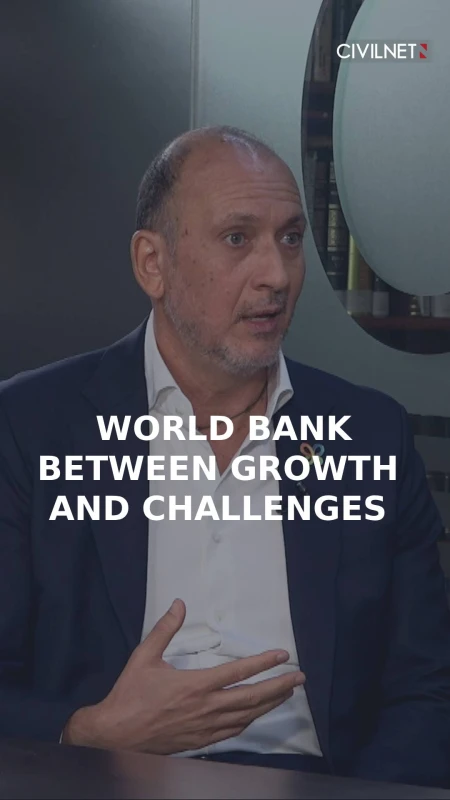
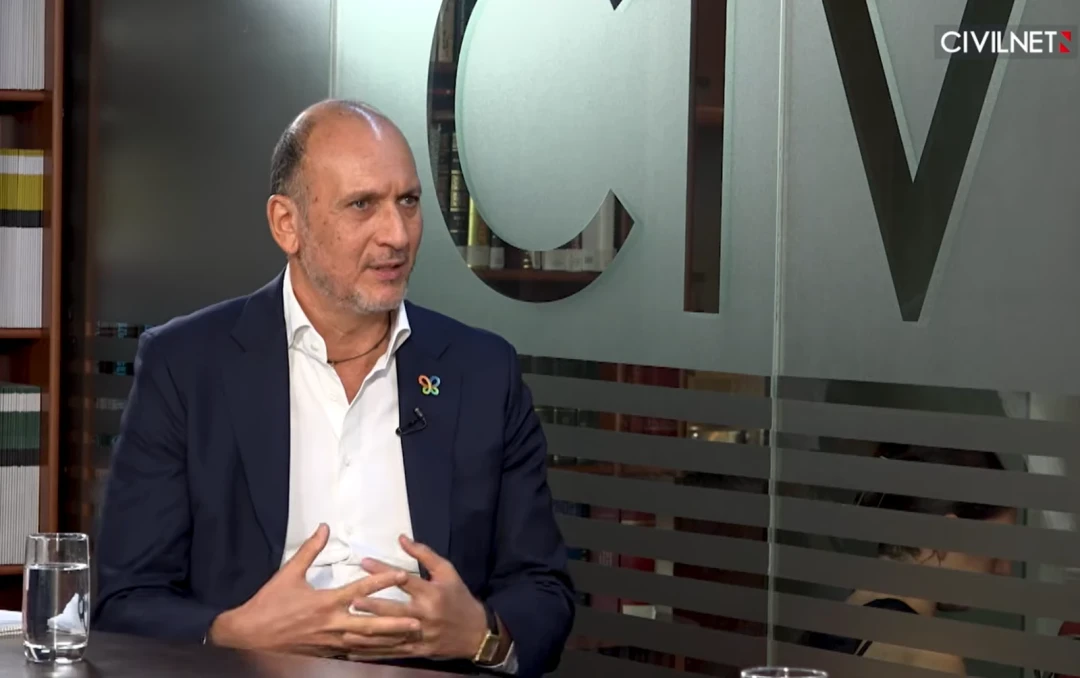
Armenia's economy is on track for strong growth over the next three years. But four in 10 Armenians remain one shock away from poverty, the World Bank's top official in the country said.
The World Bank expects Armenia's economy to grow 5.6% in 2026, slowing to 5.3% in 2027 and 5.1% in 2028, Fabrizio Zarcone, the World Bank's country manager for Armenia, told CivilNet in an interview published on October 21. In June, the Bank had forecast 5.3% growth for 2026.
"I wish many other countries had this growth rate," Zarcone said. He attributed the gradual slowdown partly to the current geopolitical situation.
He cautioned, however, that GDP figures alone do not show how ordinary Armenians are faring.
"Poverty needs to be measured," he said.
Poverty outside Yerevan
Zarcone said poverty is concentrated in the regions, particularly in agriculture, where one in three people is poor.
Four in 10 Armenians live in fragile conditions, he added. For these households, an illness or a lost job could mean an immediate fall back into poverty.
The World Bank works with Armstat, Armenia's statistical committee, on its integrated household survey. The data allow the Bank to compare rural and urban families and to track differences between men and women.
Zarcone also highlighted energy poverty, which measures whether households can afford adequate heating through Armenia's harsh winters. He said the findings in some areas had been surprising.
A forthcoming World Bank Poverty and Equity Assessment will examine energy, health and education in detail. Zarcone said the Bank would share the report with civil society.
Health reform as a milestone
Zarcone singled out Armenia's universal health system reform, which the World Bank supports, as one of the most important changes underway.
"This is a milestone for Armenia," he said. He described the reform as one of those that could help move the country from upper-middle-income to high-income status. The Bank is tracking people's out-of-pocket health spending to measure its impact.
The World Bank is also financing infrastructure in the electricity and water sectors. These include substations and transmission lines with High Voltage Electric Networks, and water systems that improve irrigation and household supply.
Drawing in private investment
Zarcone said the World Bank Group helped Armenia draft a new investment law to replace outdated legislation and attract foreign direct investment.
In energy, the Bank's public-sector arm prepared the Masrik-1 solar project, and the International Finance Corporation (IFC) then brought in private investment.
The IFC also provided a credit line of about $200mn through Ameriabank for small businesses, half of which went to climate finance. The Bank is now piloting ways to extend similar loans to households for energy efficiency, solar panels and potentially battery storage.
Zarcone said small legislative changes, such as rules on pricing for battery storage, could unlock more private investment in the energy transition.
Biodiversity and the economy
Armenia is hosting COP17, the United Nations biodiversity conference, in Yerevan from October 19 to 30. Zarcone argued that protecting nature should be treated as part of economic policy.
"Biodiversity, particularly for a country like Armenia, is a matter of identity, is a matter of cultural heritage. But we would be wrong if we treated this only as such," he said.
He pointed to agriculture as an example. Using fewer pesticides can gradually restore soil and raise yields, so farmers are not forced to abandon depleted land.
His main message from the conference was aimed at business. Governments, international lenders and civil society can help, Zarcone said, but the private sector is what generates wealth and jobs. He urged both small firms and large corporations to build biodiversity principles into their investment decisions.
The World Bank has been one of Armenia's key development partners for more than three decades.



 Stories