By Gevorg Tosunyan
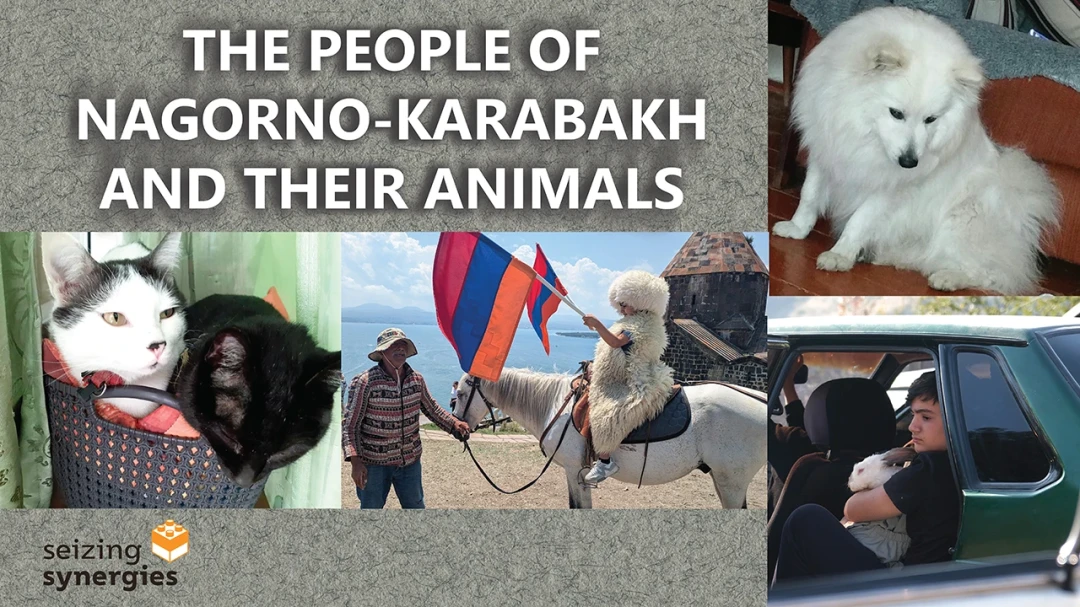
When more than 115,000 Armenians were forced from Nagorno-Karabakh during the ethnic cleansing of September 2023, many refused to leave without the animals that had shared the war and blockade with them. Cats were tucked into carriers, a rabbit was squeezed into a small car, and one man rode his horse 140 kilometers to safety.
No official body ever counted how many pets made the journey to Armenia. No state agency or private organization tracked them. Yet that absence of data is not unique to Nagorno-Karabakh. Ukraine, Georgia and Moldova have faced similar challenges during their own displacement crises and, in some cases, responded by incorporating animal evacuation into their emergency response systems.
The dog who never made it across
Until 2023, the only road connecting Armenia to Nagorno-Karabakh crossed the Hakari Bridge. The closest Armenian village to the bridge is Kornidzor.
Suren Arushanyan, a Karabakh native who now lives in the Armenian town of Goris, sometimes walks to the bridge just to see whether Maksik might somehow be trying to cross it to reach him.
Maksik is the dog he left behind during the ethnic cleansing. The evacuation was by bus, and there wasn't even enough room for all the people, let alone a dog.
Nune Arakelyan, a former lecturer at Artsakh State University, brought her cats with her. Avetis Stepanyan's family brought their rabbits. Grisha Asiryan escaped on horseback.
People left behind the graves of loved ones, their homes, their possessions and the lives they had built. Yet many still managed to save the animals that had survived war, blockade and hunger alongside them.
This is ultimately not a story about animals. It is about people who endured war, blockade, hunger and loss, yet refused to abandon those who depended on them.
"Don't forget the cats"
Nune Arakelyan remained in Nagorno-Karabakh throughout all 44 days of the 2020 war, from September 27 to November 9.
On November 7 and 8, residents of Stepanakert were evacuated to Yerevan. Nune was among them, but she had been unable to bring her cats. Her son was fighting in Shushi.
"I wrote to my son and told him to bring the cats. We laughed about it afterward. He said, 'Mom, I'm in the middle of a battle and you're writing to me about cats.' I had written, 'I don't know what's going to happen, but if they hand over Artsakh, don't forget to bring the cats,'" Nune recalls.
After the November 9 ceasefire statement, the cats were brought to Yerevan. They stayed with Nune there for a time before returning with her to Karabakh, where they lived through the crisis, the blockade and, eventually, the displacement all over again.
Nune was born and raised in Nagorno-Karabakh and left only during her student years. She later taught Russian at Artsakh State University.
Her affection for cats began two decades earlier, when her six-year-old son brought home a stray kitten and asked if they could keep it.
Azerbaijani forces closed the only road linking Armenian-controlled Nagorno-Karabakh to Armenia on December 12, 2022, at the Shushi–Karin Tak junction, an area under the responsibility of the Russian peacekeeping contingent. The road remained closed until the ethnic cleansing of the Armenian population in the final days of September 2023.
During the blockade, animal lovers in Yerevan tried various ways to send food to Stepanakert, including through Russian peacekeepers, though it did not always reach its destination.
"When the food started running out, I bought meat. Then the meat ran out too, and all that was left was mutton, because people in the villages had already begun slaughtering their animals. They understood what was coming for all of us.
"I came home, had a serious talk with my cats, and said, 'My dear cats, we're going to have to switch to mutton.' Somehow I managed to feed them. But I also saw people letting their large dogs loose because there was nothing left to feed them. They became strays," Nune recalls.
Seven years together
Hunger and blockade gave way to displacement.
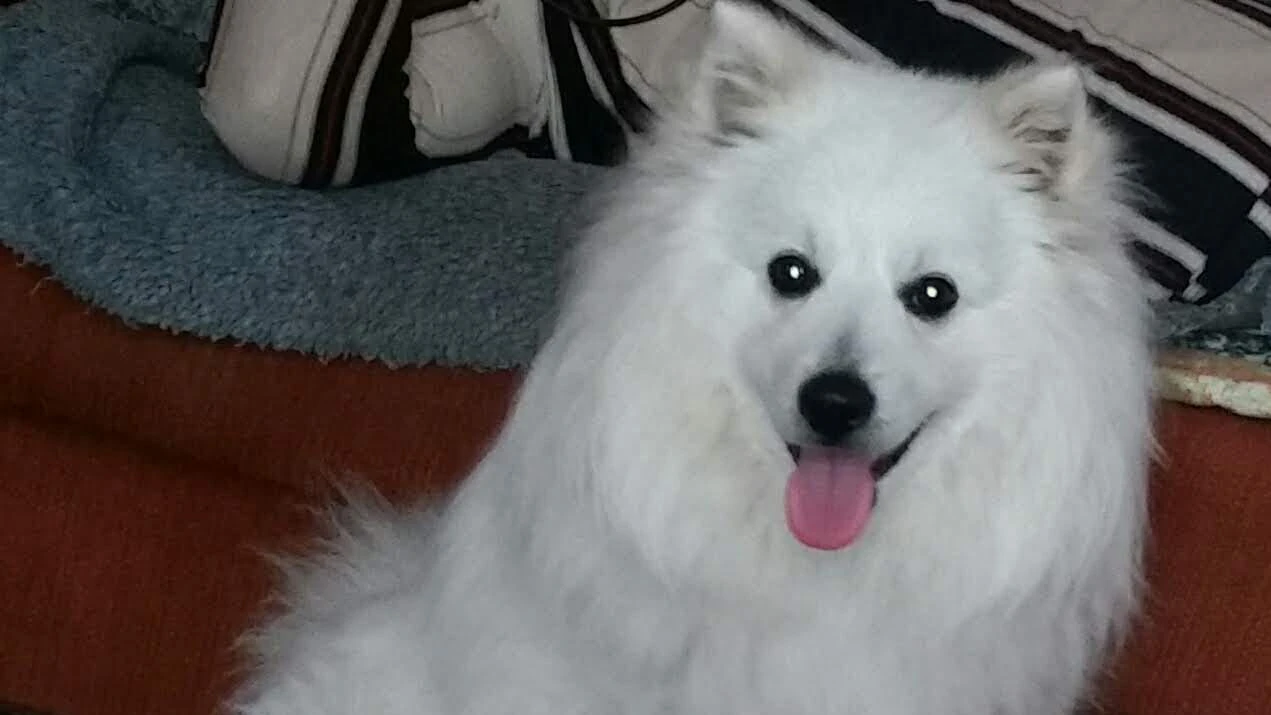
Suren Arushanyan now lives in Goris. Back in Karabakh, he owned a Chinese Shar Pei.
"Seven years. We raised him ourselves, took care of him, took him to the vet and got him vaccinated. His name on his pedigree papers was Maximilian, but we simply called him Maksik," Suren says.
During the 2020 war, Maksik was among those who watched Suren leave for the front.
Many people in Stepanakert later noticed dogs gathering outside the Yerkrapah volunteer union's headquarters and other places where their owners had boarded buses for the front. Maksik was one of them until Suren returned home.
"I was away for a long time. When I came home, he pressed himself against me, kept licking me and jumping around. He was so happy. Naturally, I was happy too," Suren recalls.
On the day his family fled Karabakh, Maksik followed them from home.
"We left on one of the last 30 buses. Until that day, I'd never taken him outside without a leash. But he followed us anyway. He walked nearly a kilometer and reached the square.
"I knelt down and apologized to him because I couldn't take him with me. I still feel guilty about it," Suren says.
People evacuated by bus were not allowed to bring pets because there wasn't even enough room for passengers.
"The bus was full of elderly people. People were sitting on top of each other and on top of their belongings just to get out. There wasn't enough room even for people.
"Both morally and legally, human life comes first. In that situation, leaving a person behind to take a dog instead would not have been right," Suren says.
Nune Arakelyan's son, her elderly mother and another elderly woman traveled together in Nune's small, old car. Nune herself packed only a few photographs and some clothes.
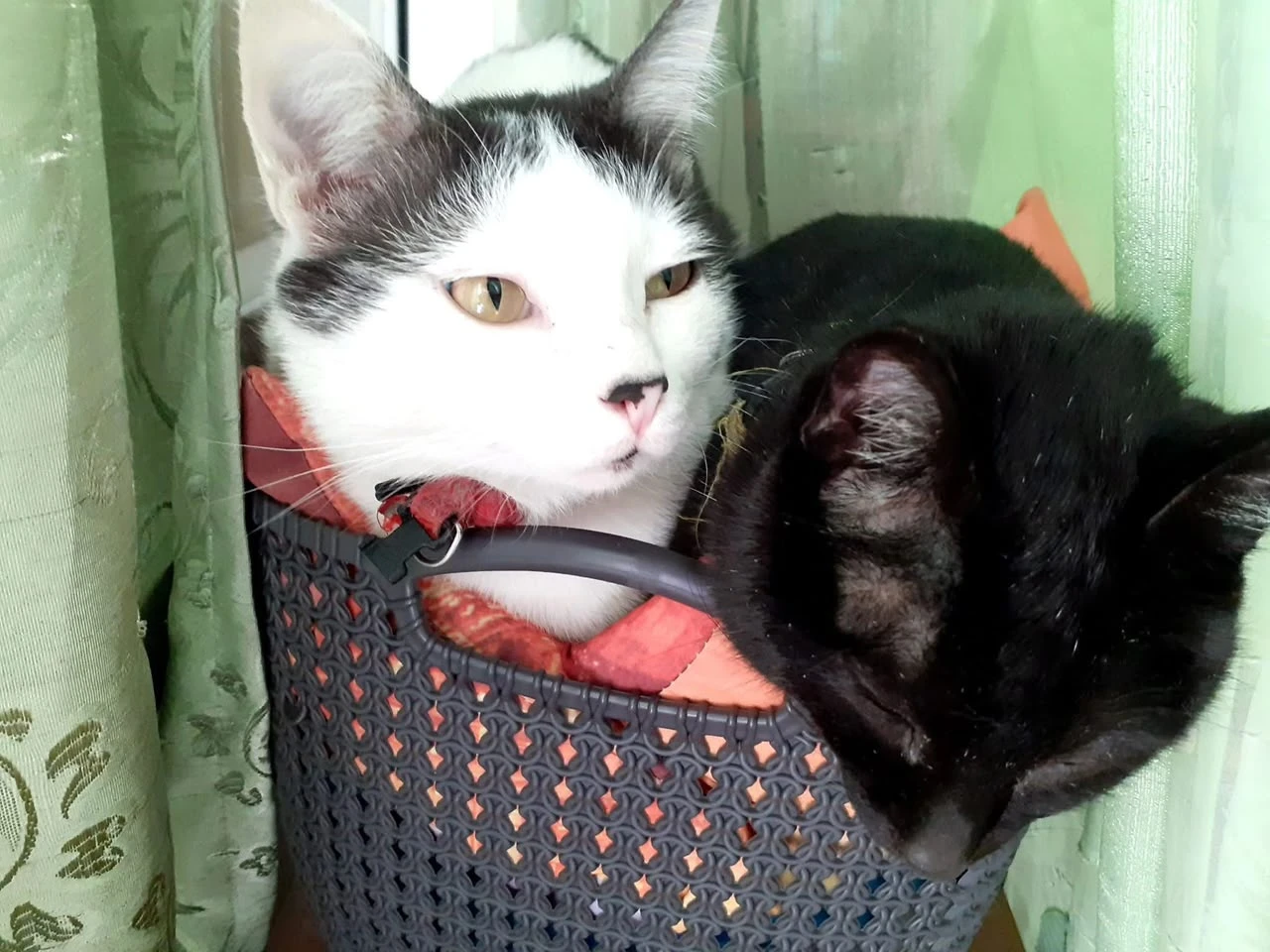
"A lot of people burned their documents, especially soldiers, because they feared the Azerbaijani side would arrest them. I didn't burn any of my son's papers. I kept them inside the basket carrying the cats.
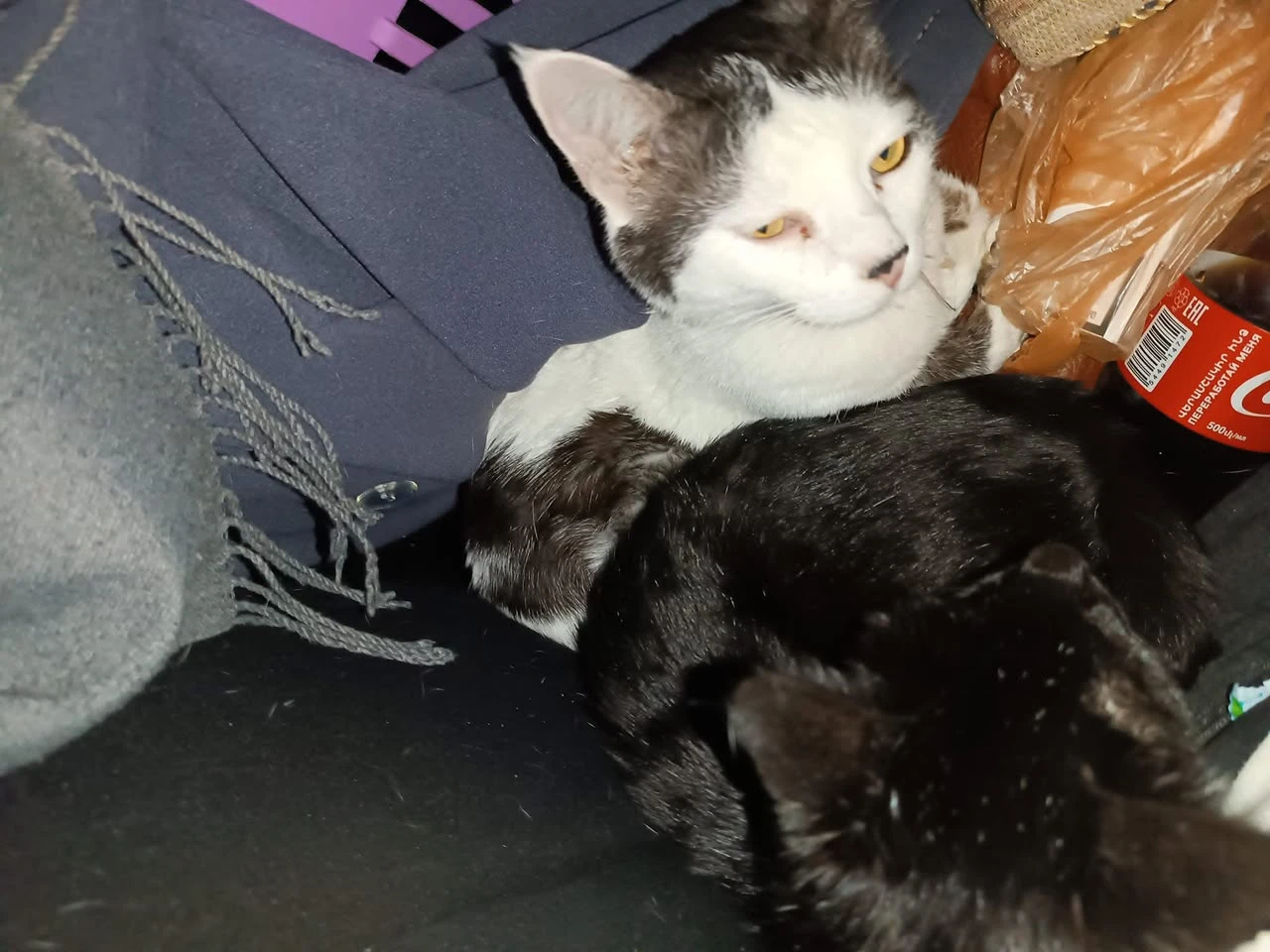
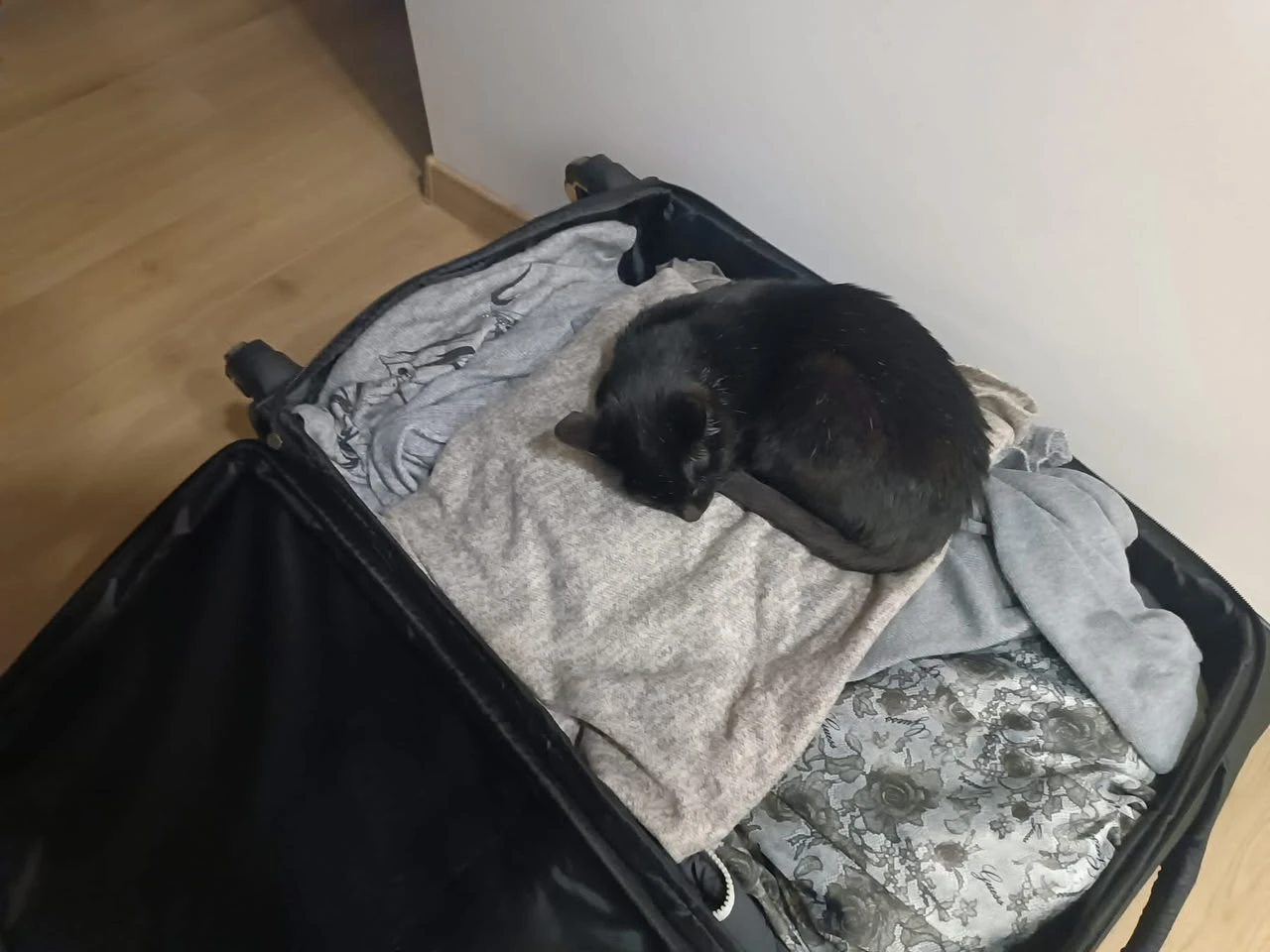
"The entire journey, the cats stayed curled up beneath the cloth cover. They were terrified. Can you imagine? For almost two days they didn't urinate, didn't eat and didn't make a sound. They simply sat there frozen with fear, but they behaved so calmly."
Two rabbits on a three-day journey
Avetis Stepanyan was 12 when his family was displaced from Nagorno-Karabakh.
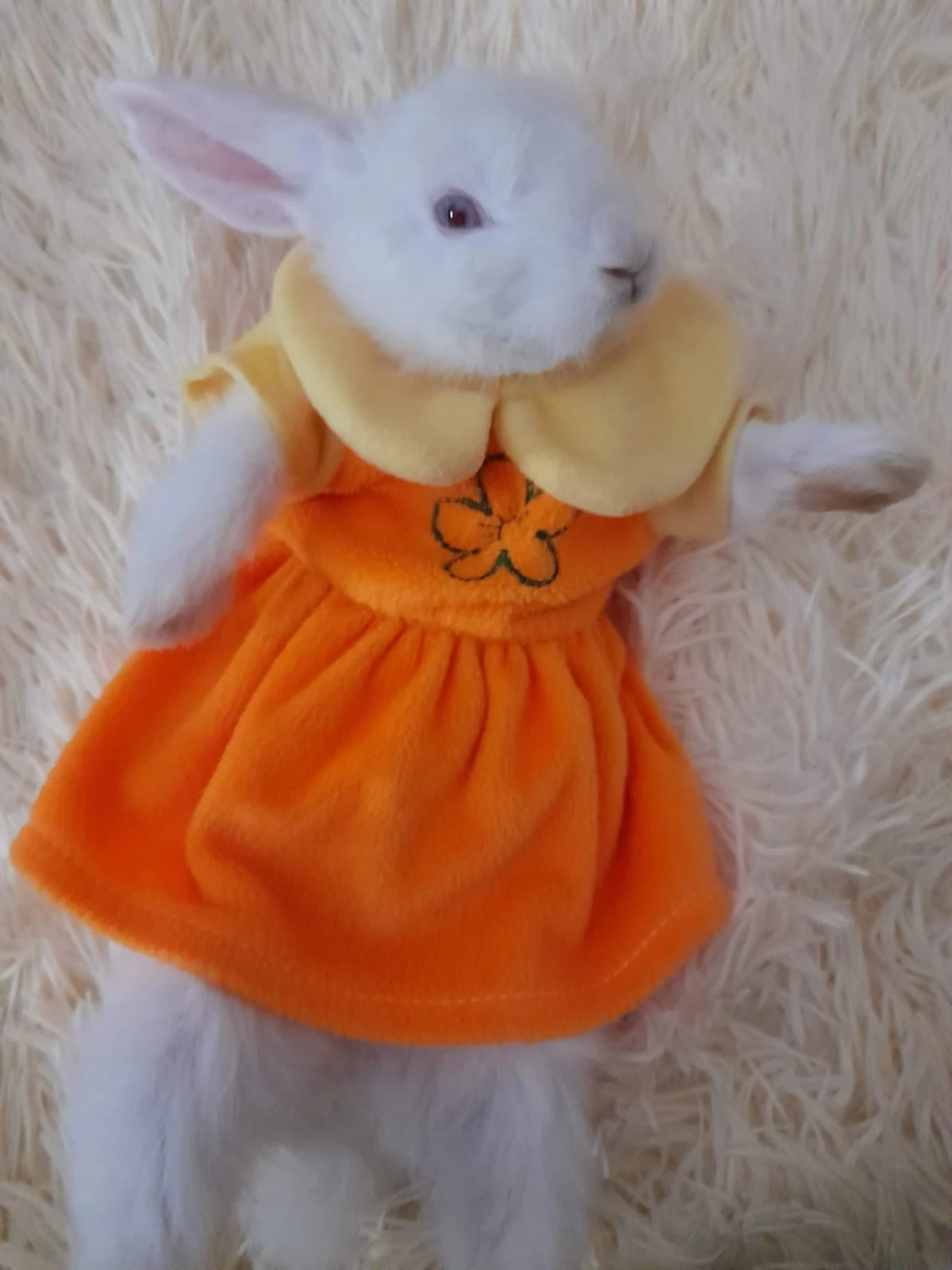
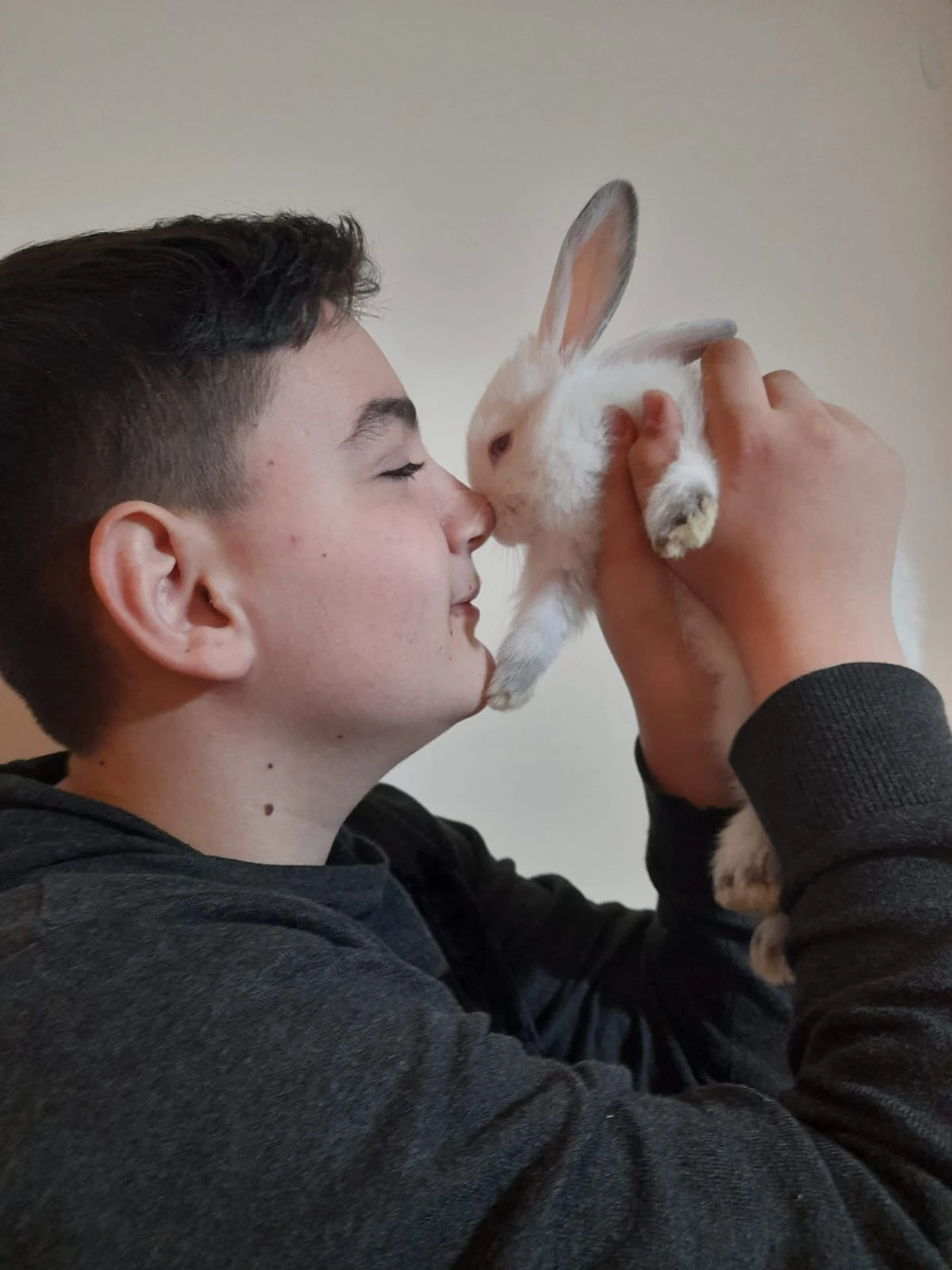
In their fourth-floor apartment in Stepanakert, they kept two rabbits, Zaya and Serri. At first they were simply pets, but over the months of the blockade they became part of the family's daily life.
On the day they fled, when the family was deciding what to take with them, Avetis's mother, Elen, never considered leaving the rabbits behind.
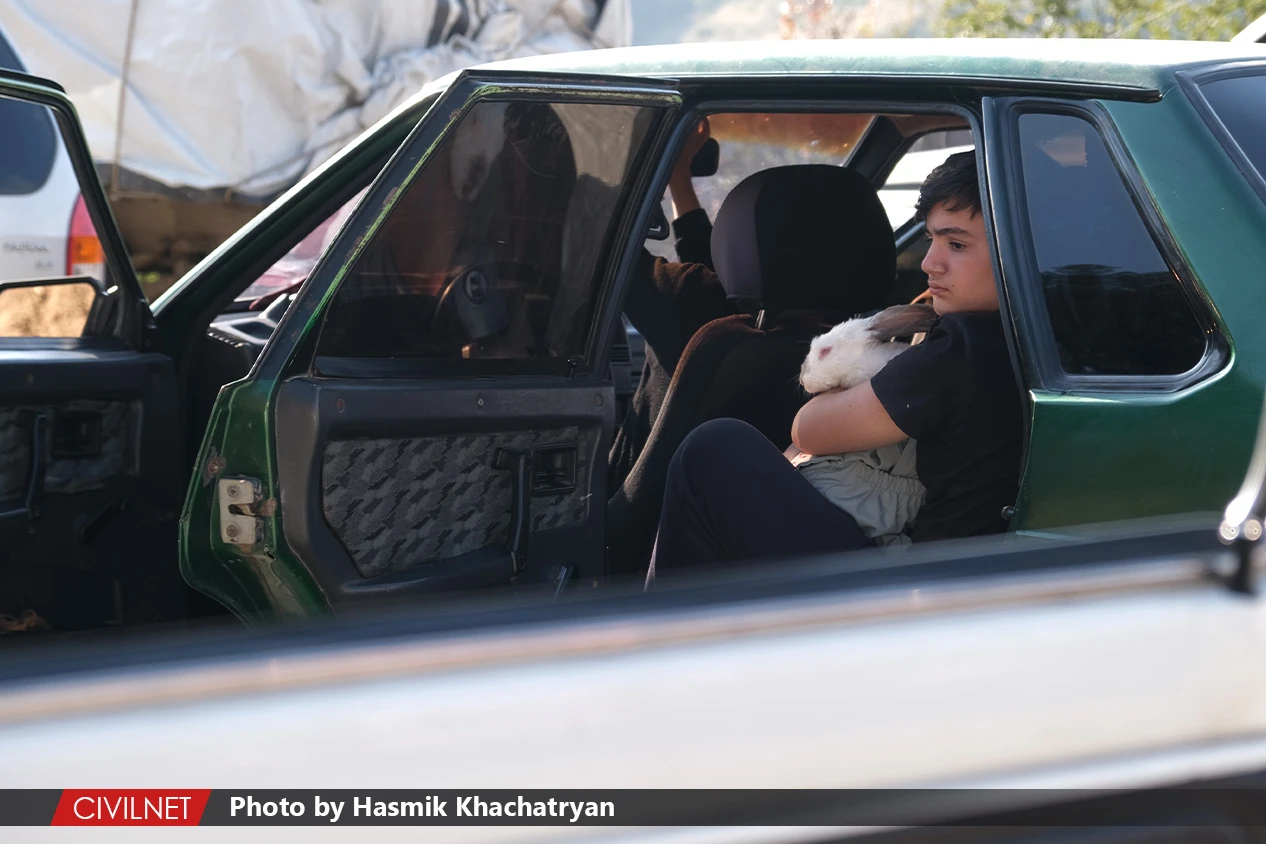
Elen packed three children, their elderly grandmother, a few essentials and the two rabbits into the family's small car. They also brought wheat to feed them along the way. The journey from Stepanakert to the Hakari Bridge took three days.
During one long traffic jam, one of the rabbits escaped from the car.
"I got out and looked underneath the car, but it wasn't there. Then I saw a girl holding it and petting it. I went over and said, 'That's ours.' At first they didn't believe me. I told them our other rabbit was still by our car. They came over, saw it, and then they believed me," Avetis recalls.
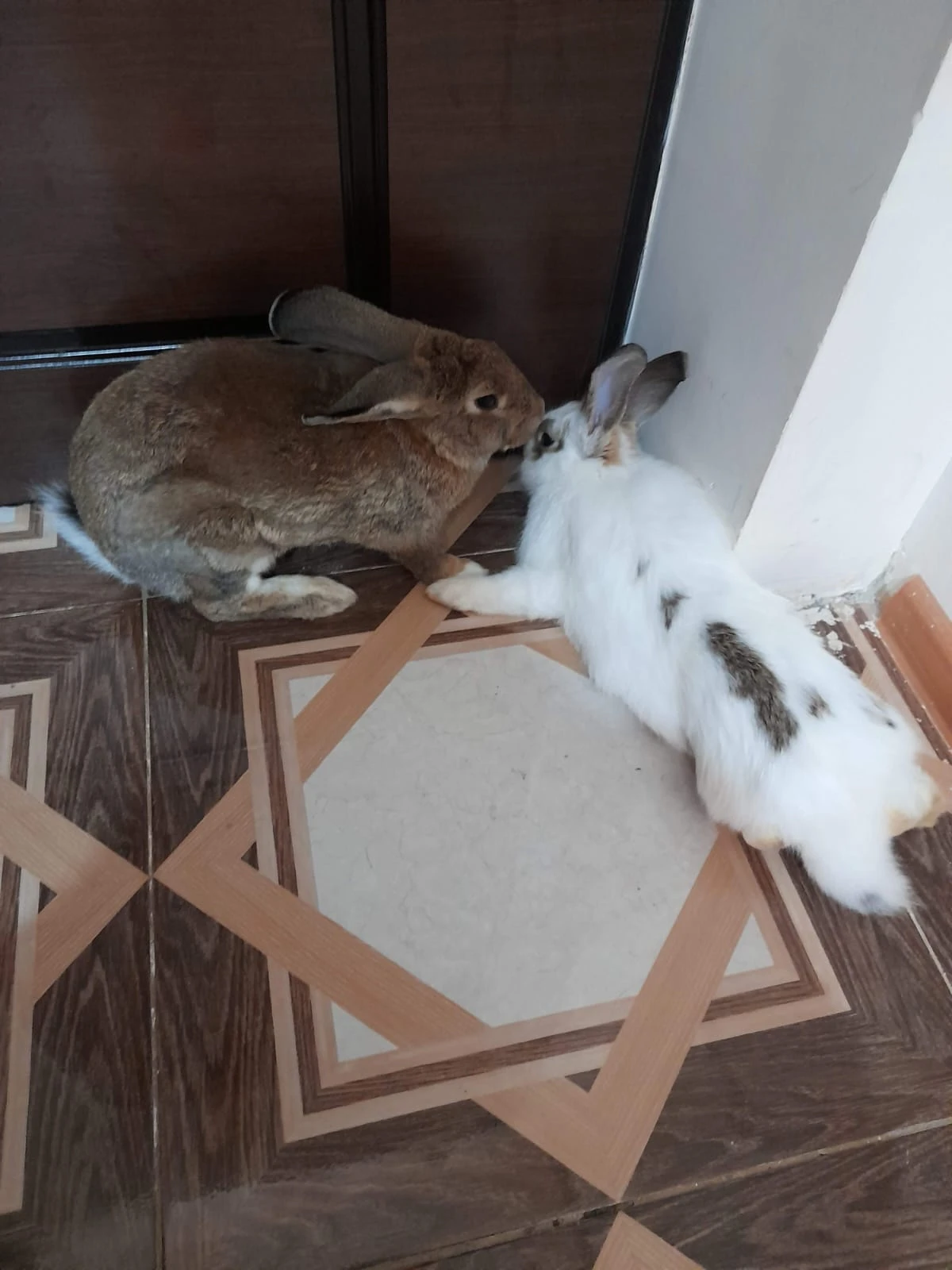
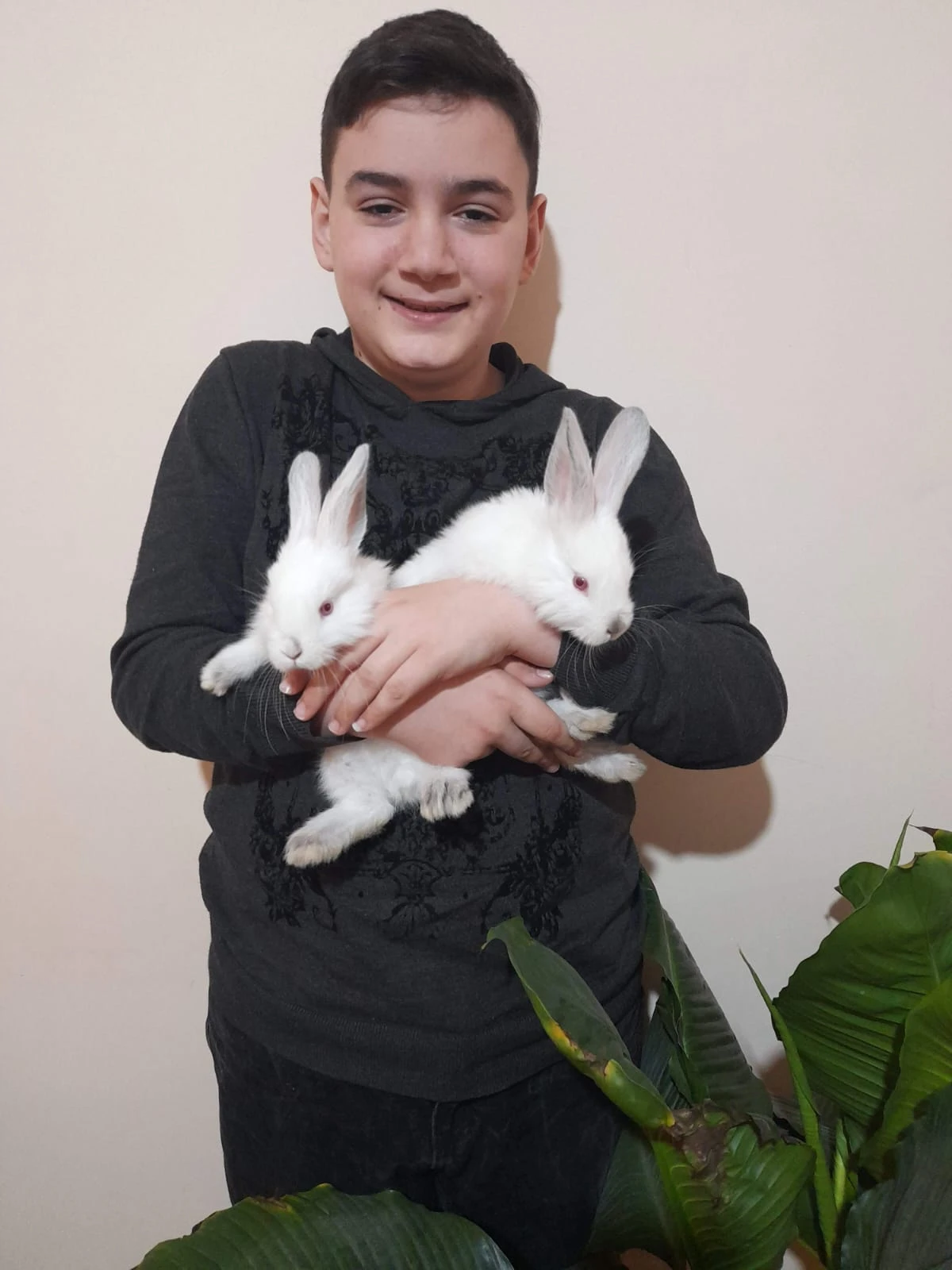
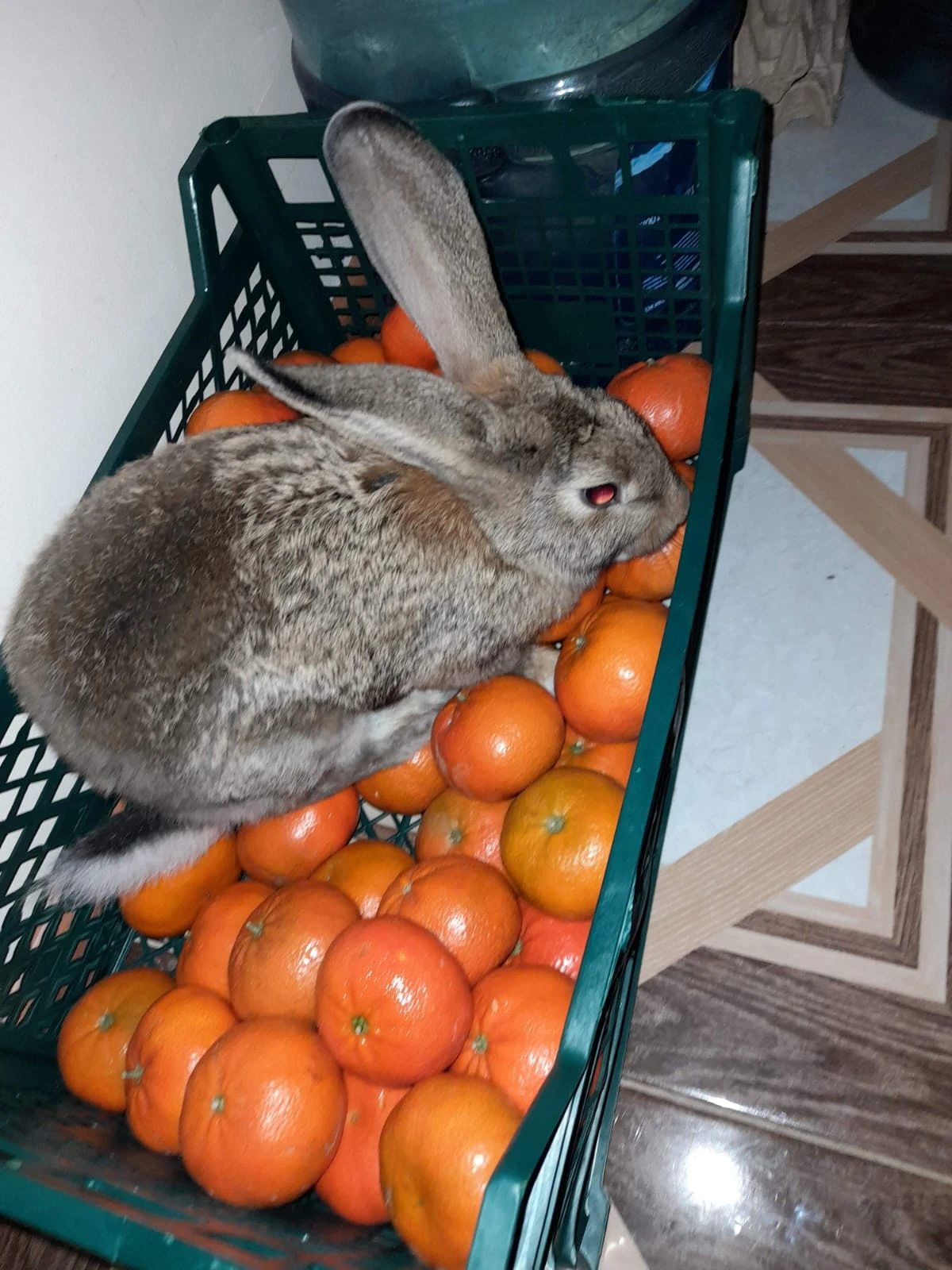
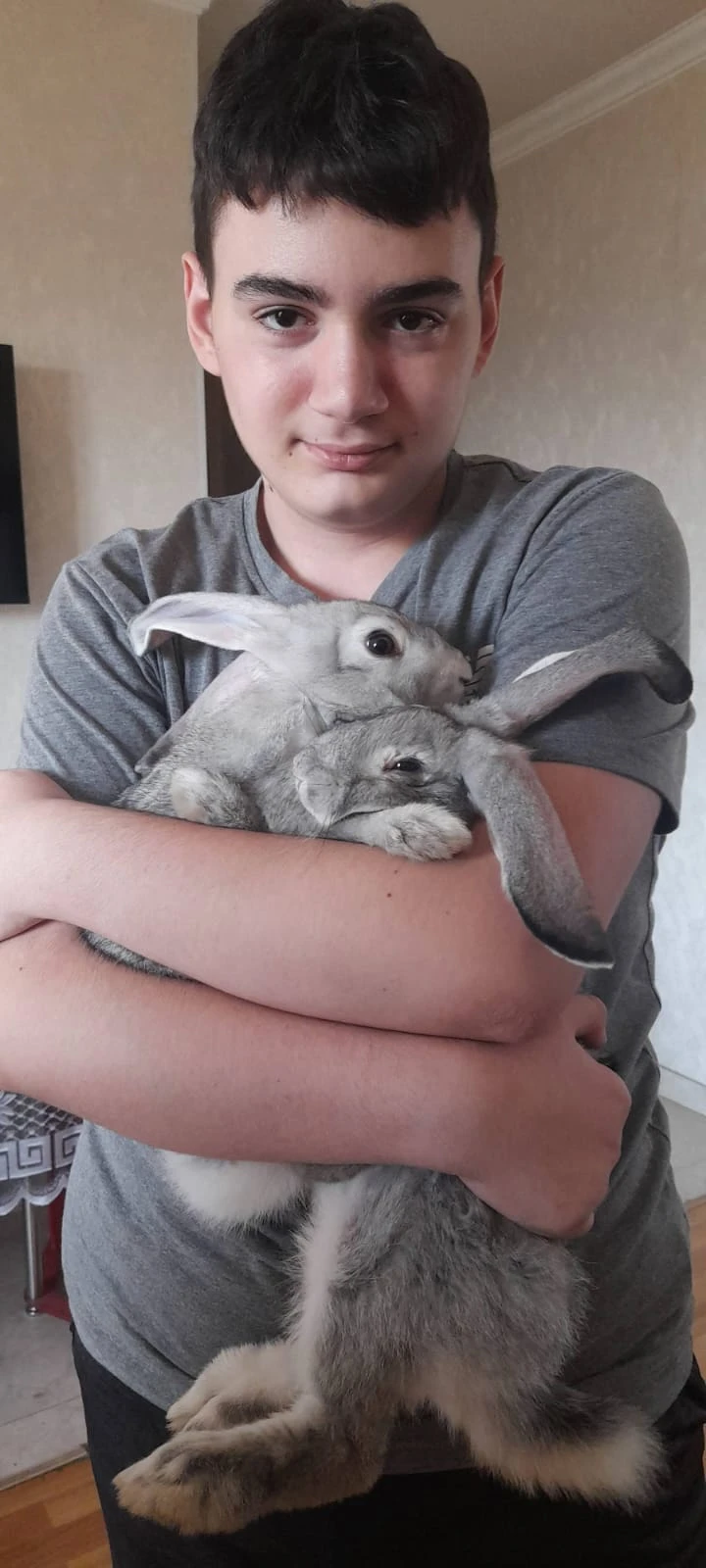
The journey was hard not only on people but on the animals as well. There was almost no room in the car, and whenever they were stopped for a long time, the rabbits were briefly let out to move around.
For Elen, the greatest responsibility on that road was her three children and her mother, who has a second-degree disability. Even so, she says she could not leave the rabbits behind.
"To me, they are living creatures too, like my own children. They just can't tell you what they need. I even felt sorry for the flowers in our garden. We'd already left behind the graves of my father, my brother and my husband. I'm not even talking about the house—I would have left everything. What mattered, I brought with me: my children and the two rabbits."
Space in the small car that might have been used for clothes was instead filled with the children's musical instruments—Avetis's whistle, his older brother's guitar and his sister's violin.
"I said we could buy clothes here," Elen recalls.
The journey was made even harder because the car kept breaking down.
"We were constantly stopping, pumping up the tires by hand, then continuing. By the time we reached Goris, the car wouldn't move anymore. They repaired it there, and only then could we continue. God got us out of there," Elen says.
Once in Armenia, the family could not keep the rabbits for long because it was impossible in a rented apartment.
Today, they still live in rented housing. Elen does not work, and she says state assistance barely covers the rent. But if they ever have a home of their own, she says the first thing they will do is keep animals again.
"That's exactly why I want my own home—so I can keep rabbits, keep birds and work the land."
They have already found a house. It just needs renovating.
From Gandzasar to Sevan on horseback
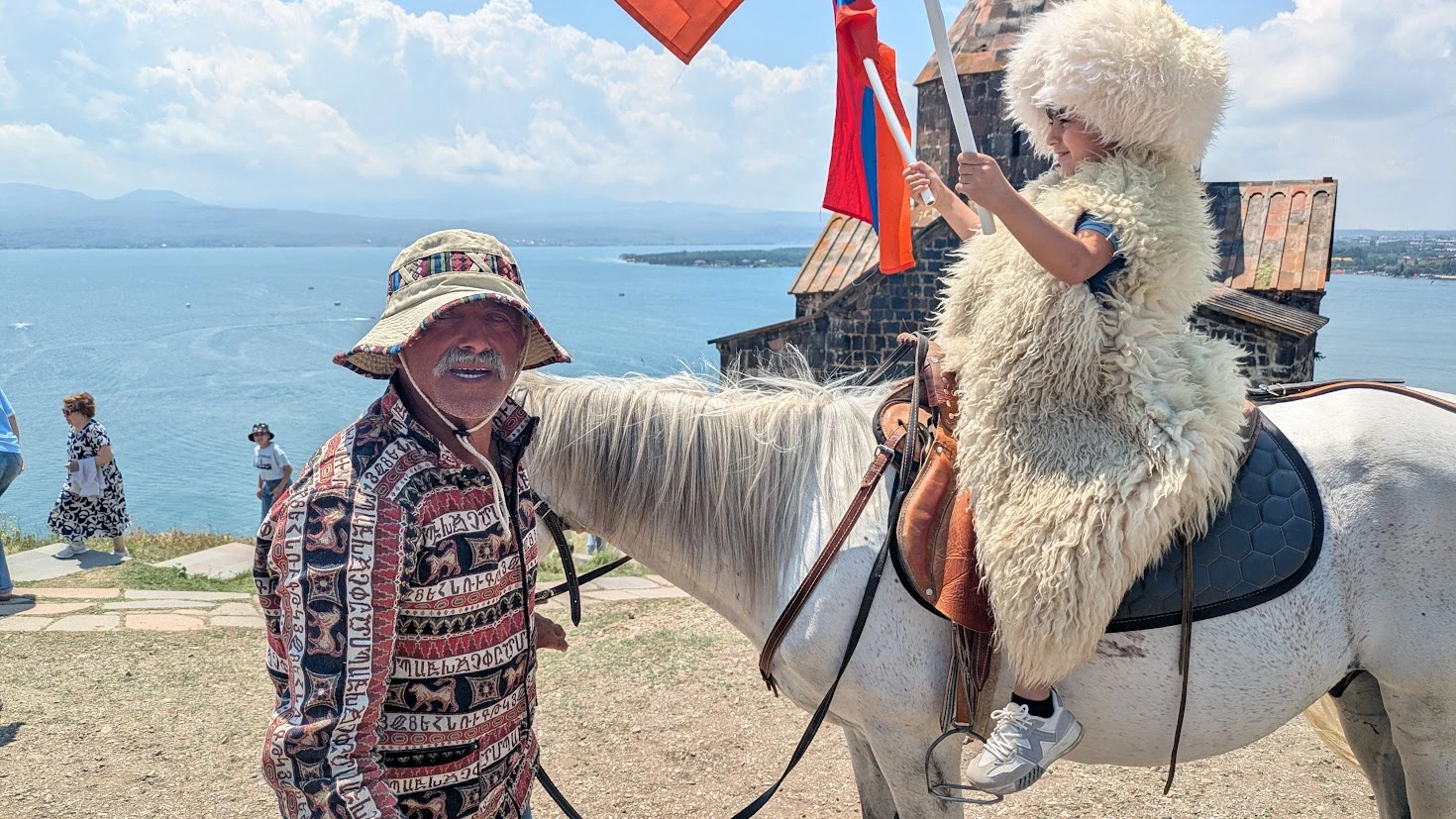
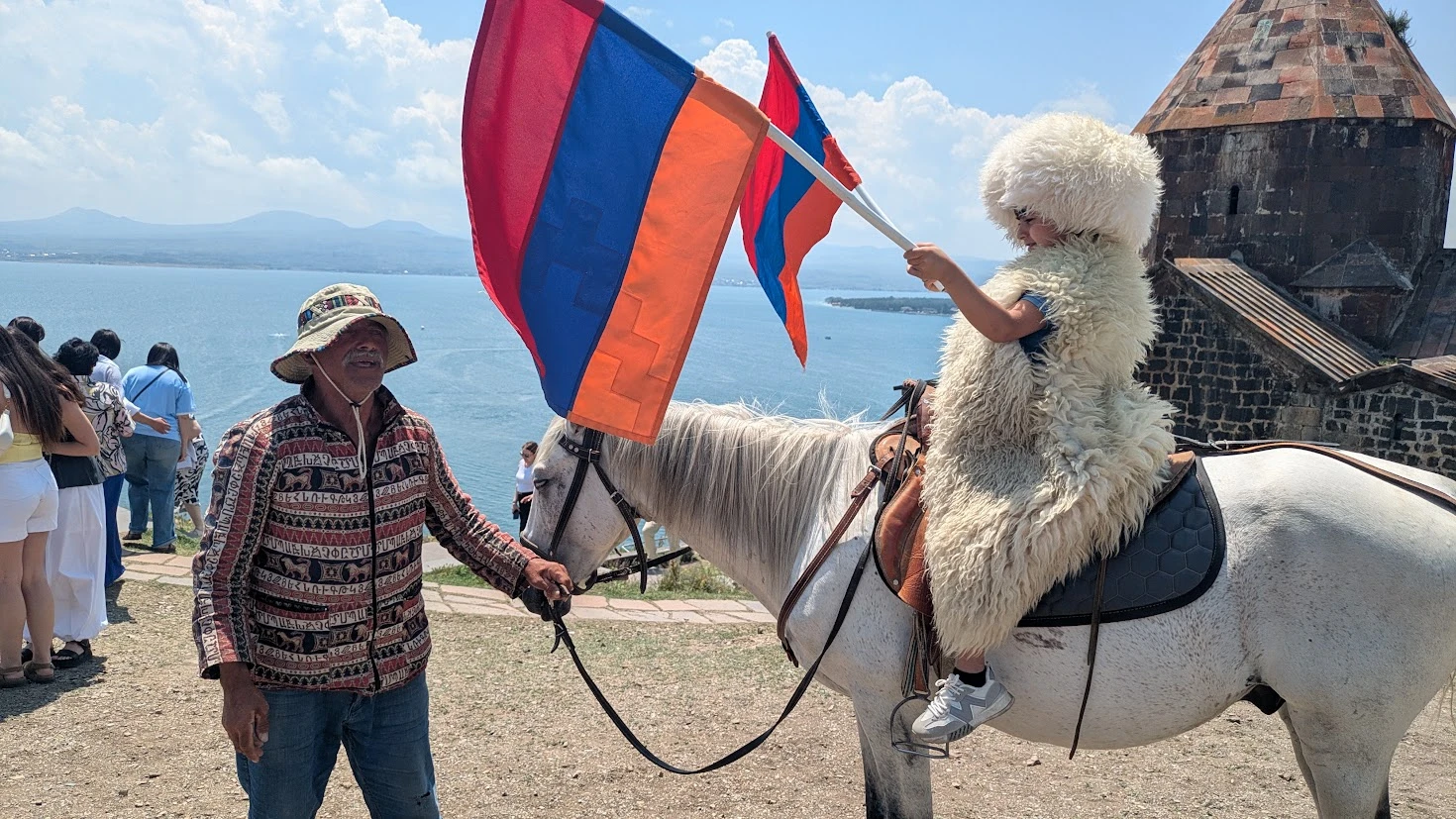
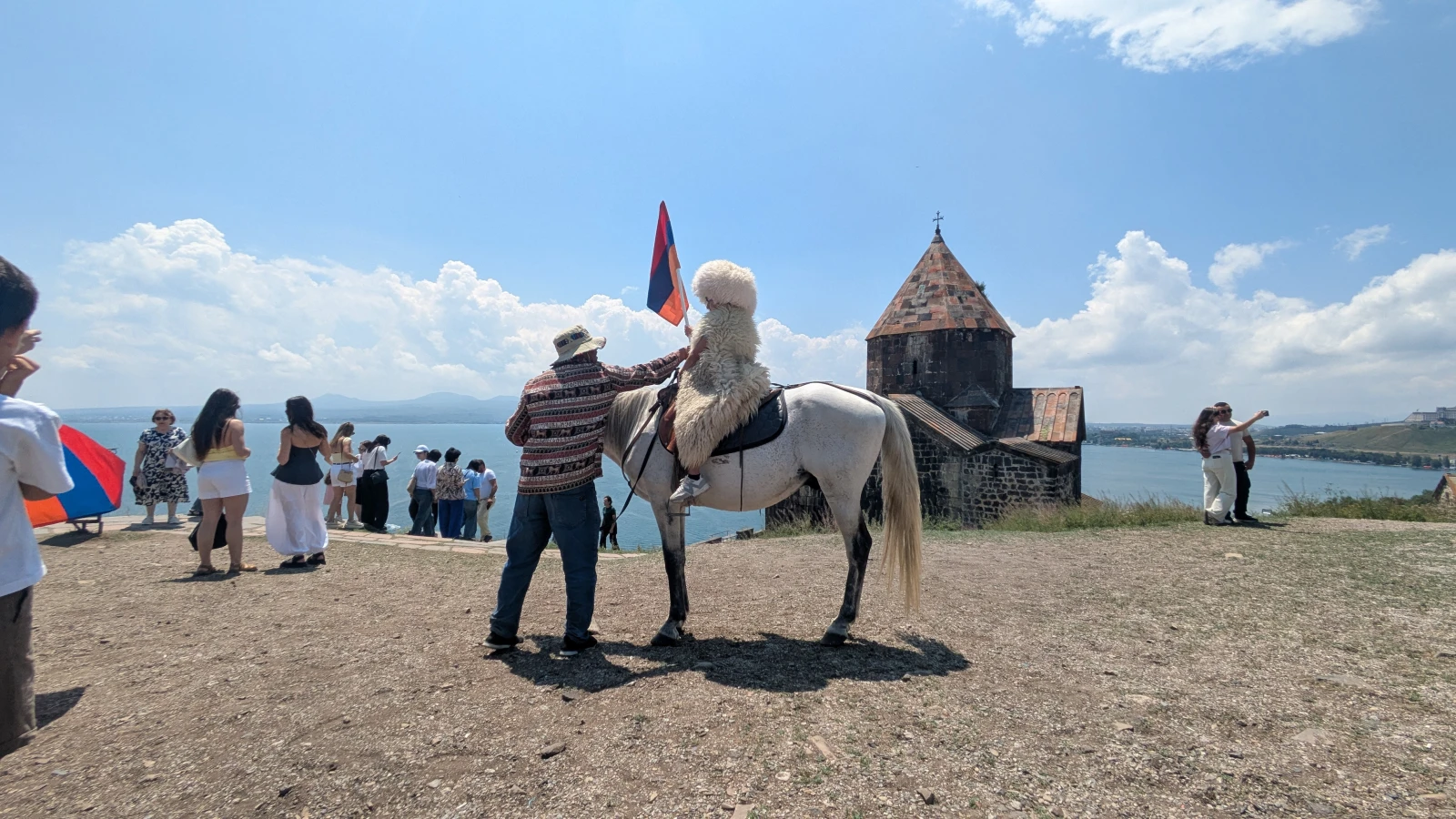
For 66-year-old Grisha Asiryan, his white horse is more than a pet. It was his companion, his means of escape during the displacement and today his only source of income.
In the summer months, Grisha can be found at the Sevanavank monastery complex on the Sevan Peninsula. He gives children rides on his horse, sings for visitors and earns a living leading them around the monastery grounds. He always carries two flags with him: Armenia's and Artsakh's.
"If you've come to Sevanavank and haven't had your picture taken on Grisha from Gandzasar's horse, you haven't really been to Sevan," he sings from the hillside above the monastery.
The distance from Gandzasar Monastery in Nagorno-Karabakh to Goris is about 140 kilometers. Grisha covered it on horseback in three days.
He says Azerbaijani forces waved him through without searching him.
"What did I have that they'd need to search or hold onto? It was just me, on my horse," he recalls.
Today, he and his horse live on a small plot of land near Sevanavank.
The animals left behind
War changes not only people but animals as well.
Ovsanna Hovsepyan says explosions and gunfire can have a profound effect on animals.
"We've spoken with many people whose animals ran away from their homes because of the stress and the constant explosions. Their owners were never able to find them again before fleeing," she says.
In her view, when an animal is displaced together with its owner, adapting to a new environment usually does not become a serious problem.
People also brought farm animals out of Nagorno-Karabakh. But many, unable to find pasture in Armenia, were eventually forced to slaughter them or sell them cheaply—another consequence of the social and economic devastation caused by the ethnic cleansing.
How Ukraine, Georgia and Moldova responded
The challenge of saving pets during war and mass displacement is far from unique to Nagorno-Karabakh.
Ukraine confronted it on an enormous scale from the first days of Russia's full-scale invasion in 2022, when millions of people fled their homes, trying to save their animals alongside themselves.
State institutions and civil society responded quickly.
Ukrainian Railways suspended its usual strict rules for transporting animals on evacuation trains, allowing people to travel with dogs, cats and other pets without special paperwork, carriers or additional tickets. Neighboring European Union countries also temporarily eased veterinary and passport requirements, allowing refugees to cross the border with their animals.
At the same time, a large volunteer movement emerged. Organizations such as UAnimals and Happy Paw, together with thousands of volunteers, evacuated hundreds of abandoned and wounded animals from combat zones, shelled cities and deserted villages.
Soldiers on the front lines often fed and cared for stray dogs and cats, treating them as companions amid the fighting.
Ukraine's experience showed that protecting animals during war is not only an emotional response. It also requires an organized system built through cooperation between state institutions and volunteer networks.
People who refused to abandon their animals while enduring the horrors of war demonstrated that humanity can survive even the harshest circumstances.
Georgia faced similar challenges during the five-day Russia-Georgia war in August 2008.
Thousands of people fled villages in the Tskhinvali region and the Gori district with little warning. Many had no choice but to leave their pets behind. Dozens of dogs and cats remained tied up in courtyards or locked inside abandoned homes.
In the days that followed, Georgian animal welfare activists and volunteers risked their own lives to enter deserted villages, feed the animals that had been left behind and evacuate them to safety.
Animal shelters in Tbilisi quickly filled with dogs rescued from the war zone. Many were eventually reunited with their owners.
Moldova's experience was different.
Rather than facing displacement within its own borders, it became one of the first destinations for people fleeing Russia's full-scale invasion of Ukraine in 2022. Among those arriving were thousands of refugees who refused to leave their animals behind.
From the very first days of the crisis, Moldovan authorities simplified border procedures, temporarily suspending the passport and vaccination requirements that normally apply to animals entering the country.
At the Palanca border crossing, in particular, international organizations established temporary veterinary clinics.
Veterinarians provided newly arrived animals with emergency treatment for exhaustion, dehydration and stress. Many pets also received vaccinations, microchips and official documentation, allowing families to continue their journeys into Europe without becoming separated from their animals.
Animal welfare organizations, local volunteers and international partners coordinated shelter, transport and veterinary care, ensuring that thousands of displaced animals remained with their owners instead of being abandoned at the border.
The response highlighted a lesson that humanitarian organizations have increasingly recognized in recent years: for many families, pets are not possessions but members of the household. Making evacuation possible often means creating conditions that allow people to leave with them.
For those displaced from Nagorno-Karabakh, no comparable system existed.
Many families succeeded in bringing their animals to Armenia through determination, improvisation and sacrifice. Others had no choice but to leave them behind.
Some carried cats in baskets. Others found room in overcrowded cars for rabbits instead of luggage. One man rode his horse for 140 kilometers. Another still returns to the Hakari Bridge, hoping the dog he could not save might somehow find its way home.
Their stories are not simply about animals.
They are about the choices people make when they lose almost everything—and about the humanity they refuse to leave behind.

 Stories