 Alexander Pracht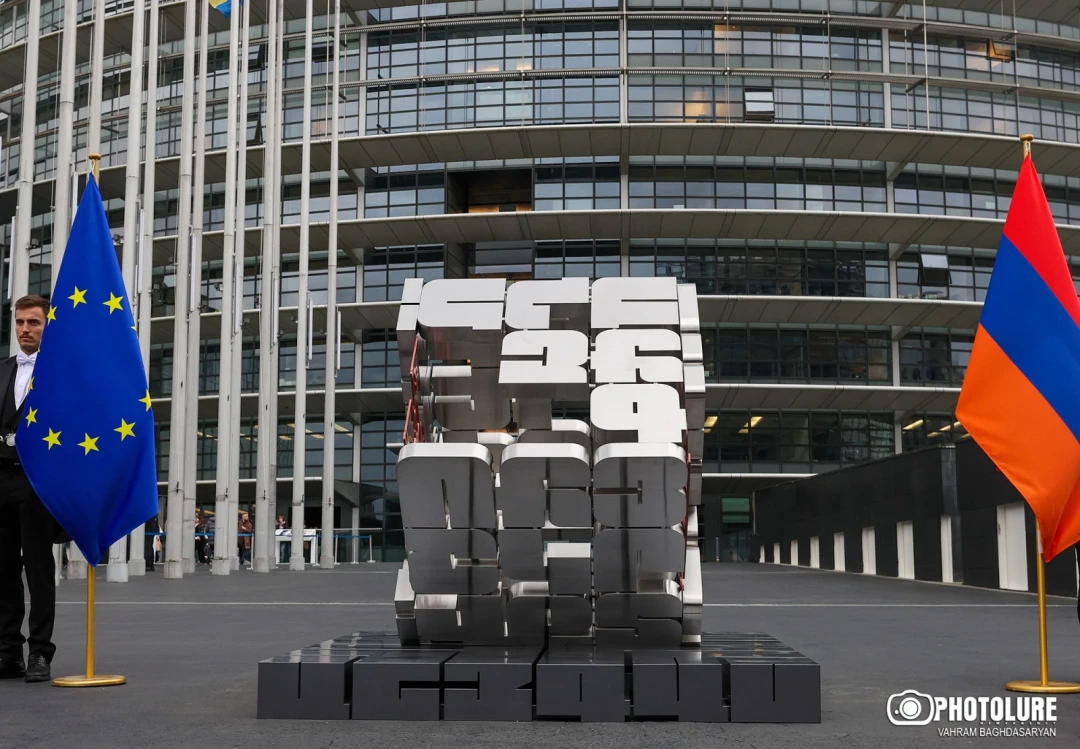
Armenia will soon apply for European Union membership, Prime Minister Nikol Pashinyan said in parliament on Monday, without specifying a deadline.
“To bring the issue of European Union membership to a nationwide referendum, Armenia must first submit a formal application to join the EU. This is something that requires extensive work, and we will probably begin this process in the near future,” Pashinyan said.
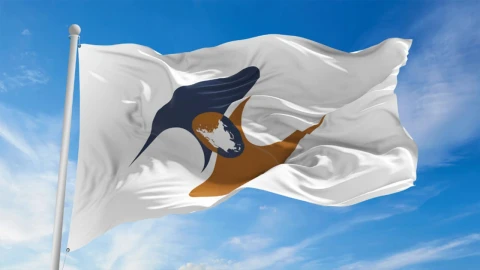
Pashinyan added that “calls coming from the Eurasian Economic Union partners” had influenced the decision. This is a reference to a joint statement by the leaders of the other countries in the Russian-led bloc, released in May, urging Armenia to hold a referendum on whether to join the European Union or remain in the Eurasian bloc as soon as possible. The call echoed similar demands from Russian President Vladimir Putin several weeks prior.
Also read: Putin warns Armenia’s EU pivot could mirror Ukraine scenario
Earlier this month, Russia’s Deputy Foreign Minister Mikhail Galuzin said Armenia should announce the referendum by the end of this year.
Pashinyan has consistently pushed back against the issue, arguing that although a referendum is inevitable, holding one before Armenia applies for EU membership would not make sense.
“This would mean that we expect the citizens of Armenia to choose between two options, one of which does not exist. It would be disrespectful to our people,” Pashinyan said at a Eurasian Economic Union summit earlier this month.
At the same event, he sharply criticized the bloc for failing to live up to its principles.
“One of the fundamental principles of the Eurasian Economic Union is to ensure the free movement of goods, services, capital, and labor. Unfortunately, in practice these principles are not fully implemented,” Pashinyan said.
Also read: Russia threatens to stop gas supplies to Armenia over EU ambitions
This was likely a reference to the sweeping restrictions on Armenian goods introduced gradually since April, which many commentators have described as retaliation for Armenia’s increasingly pro-Western foreign policy. The sanctions affected almost all of Armenia’s agro-food exports, which had been shipped almost exclusively to Russia for decades, causing major economic turbulence.
While Armenia has yet to apply for EU membership, it adopted a non-binding law last March, known as the EU Integration Act, which declared Yerevan’s aspiration to become a member within an unspecified timeframe.
The EU Enlargement Commissioner Marta Kos said last year that “for any country to apply for membership in the European Union, there are two conditions: it must be a sovereign state and be in Europe.” In a separate interview, she added: “Armenia is European.”
The European Union, created in its current form in 1993, last admitted a new member in 2013, when Croatia joined.
Speaking with CivilNet last September, Kos explained that for about a decade after Croatia’s accession, the EU had been reluctant to admit new members, but that the situation has now changed.
“Twenty-three of the 27 EU members are supportive of enlargement. [...] The [potential] expansion is not about gaining more square kilometers or more people, but about ensuring peace, freedom, and prosperity,” she said.
Also read: EU commissioner: ‘Helping Armenia on its European path is our responsibility’
The path to full EU membership from a formal application takes nine years on average, but can take as long as 14 years, as was the case with Malta and Cyprus.
Current candidates for membership include Armenia’s northern neighbor Georgia, Moldova and Ukraine, as well as Albania and the former Yugoslav countries that have yet to join the bloc. Montenegro is considered the closest to becoming a full member.
To join the European Union, a country needs to satisfy extensive requirements known as the Copenhagen criteria. These include, among other things, stable democratic institutions, the rule of law, human rights, respect for and protection of minorities, and a functioning market economy. These adjustments are made by candidate countries through negotiations with Brussels.

 Stories