By Zhanna Avagyan
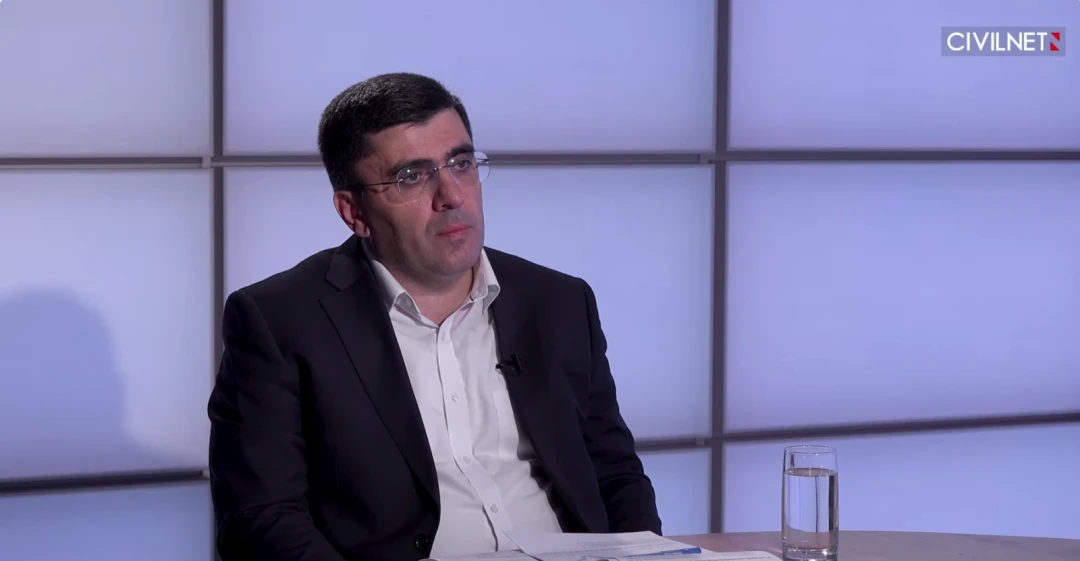
Armenia's Central Bank has not yet modeled a scenario in which Russia doubles or triples the price of natural gas it supplies to the country, but a recent reduction in Armenia's reliance on Russian gasoline and diesel could help cushion the economy if gas prices rise sharply, Central Bank board member Armen Ktoyan said in an interview with CivilNet on Tuesday.
Ktoyan said political tensions between Yerevan and Moscow are among the external risks the Central Bank weighs when setting monetary policy. He said Russia has already sent Armenia an official letter warning that it may revise the terms of their gas supply contract.
Also read: Russia’s economic pressure ahead of Armenia's elections: what to expect
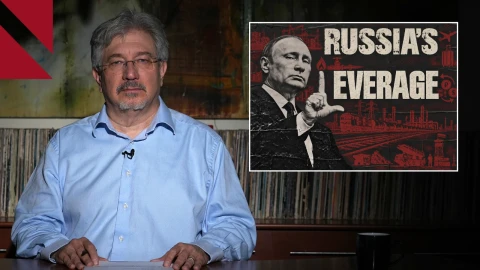
At a meeting with Prime Minister Nikol Pashinyan in April, Russian President Vladimir Putin said Armenia benefits from discounted gas priced at $177 per 1,000 cubic meters, compared to roughly $600 Russia’s energy giant Gazprom charges European countries for the same amount. He added that Yerevan could lose that discount should it continue to engage with the EU.
Russia’s energy giant Gazprom also controls Armenia’s gas sector through its subsidiary, which owns and operates the country’s distribution infrastructure. As a result, the $177 figure reflects the internal price at which gas is sold to its own monopoly subsidiary – known as “price at the border.” It does not include taxes, operating costs, salaries, infrastructure expenses, and Gazprom’s markup.
The final price paid by households is significantly higher, exceeding $390 per 1,000 cubic meters – more than double the figure cited by Putin.
Russia updates its price once each year, typically in January. Natural gas is a cornerstone of Armenia’s energy system, primarily used for heating homes, providing hot running water through gas boilers, and fueling kitchen stoves. More than half of Armenian households rely on gas for winter heating, with the share exceeding 70% in urban areas. The country also uses gas to generate electricity, meaning even households that use electric heating are indirectly reliant on it. Additionally, gas is a key element for Armenia’s greenhouse food production.
Also read: Russia threatens to stop gas supplies to Armenia over EU ambitions
Ktoyan said that a doubling or tripling of the gas price would significantly affect Armenia's economy. He noted, however, that Armenia has already cut its dependence on Russian gasoline and diesel imports over the past year, a shift he said would help offset the impact of a comparable change in the gas market.
Broader trade pressure
Russia has been introducing extensive restrictions on Armenian agricultural goods since May, expanding the list on June 12 to include most of the agricultural produce, fish products, and flowers. Ktoyan said the effect of those measures has so far been limited but could reach as much as 1.8 to 2% of gross domestic product in a worst-case scenario in which Armenian exporters find no alternative markets for the restricted goods, an estimate that matches one Central Bank Governor Martin Galstyan gave publicly last month.
Also read: Armenia faces sweeping Russian import restrictions across industries
The government has already announced support measures to help exporters process and redirect goods affected by the Russian restrictions, though Ktoyan said their impact has not yet been assessed.
He said the situation would worsen if restrictions expand to Russian imports into Armenia, particularly in energy and money transfers.
Russia remains Armenia's largest trading partner. Finance Minister Vahe Hovhannisyan said last week that Armenia is not considering leaving the Russian-led Eurasian Economic Union despite the trade friction.
EU steps in with trade relief
The European Union has moved to help offset some of the pressure. During a July 2 visit to Yerevan, European Commission President Ursula von der Leyen announced a proposal for autonomous trade measures that would scrap tariffs for nearly 80% of Armenian exports to the EU. She said the measures would affect almost 99% of Armenia's fresh fruit, vegetables, and plants, along with more than 90% of its beverage exports, describing Russia's trade restrictions as "nothing short of economic coercion."
Von der Leyen also announced an additional 18 million euros to help diversify Armenian trade, the final installment of a 52-million-euro support package, and said the EU would send experts to Armenia in mid-July to work directly with exporters.
Asked how the EU could help if Russian gas supplies to Armenia were disrupted, von der Leyen said Armenia needed a strategic, multi-layered, and comprehensive approach to energy, without offering further specifics.
Any relief from the proposed trade measures will still take time, as they require approval from the European Parliament and the Council of the EU before they take effect.


 Stories